
 English
  Polski
  Deutsch
  Nederlands
  Svenska
  Norsk
Norsk  Dansk
Dansk  Français
  Italiano
  Español
  Português
  Slovenčina
  Suomi
Suomi  Gaeilge
 Growing Strawberries Weed-Free Using Weed-Control Fabric and Sawdust as Smart Mulch
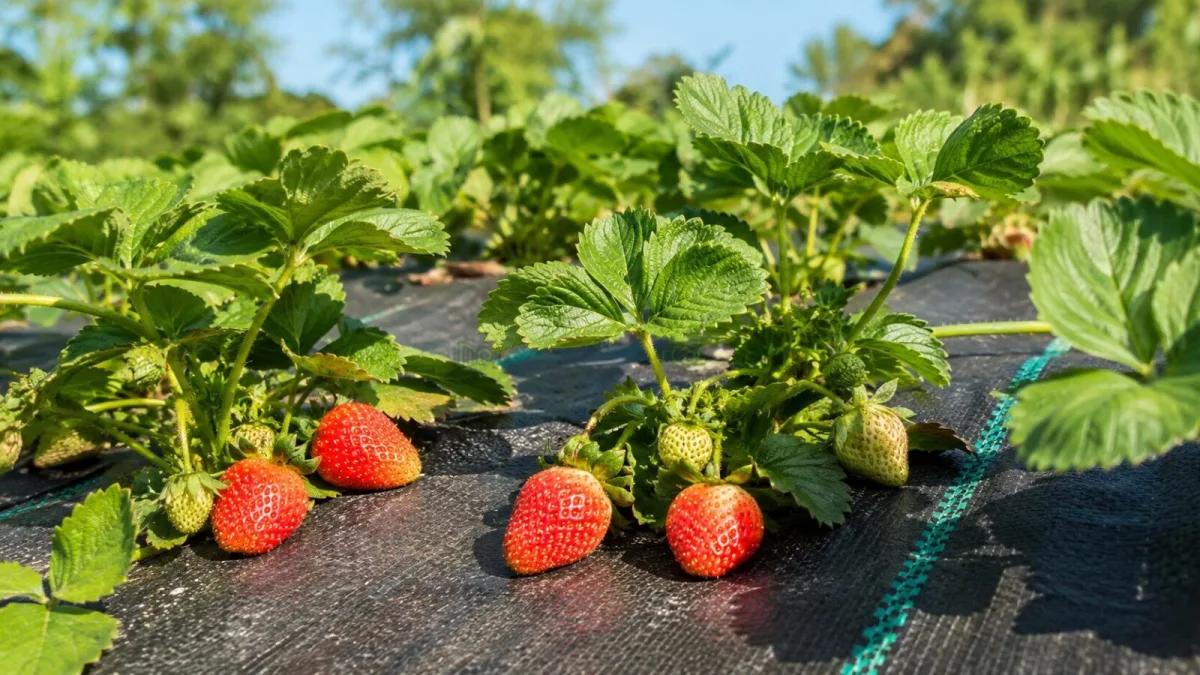
If you’ve planted strawberries, covered the soil with weed-control fabric, and scattered sawdust on top, you can leave it in place without worry. The fabric works as an artificial mulch that simplifies bed maintenance, and the sawdust on its surface can play mainly an aesthetic and partly practical role. In this combination, however, the sawdust doesn’t improve the soil right at the roots, because it’s separated by the layer of fabric.
Weed-control fabric, landscape fabric, and how strawberries are grown on it
For growing strawberries, black weed-control fabric is used most often, but in home gardens a white option or a more durable landscape fabric can also work. These are synthetic materials that let water through from rain and irrigation, while also slowing down how quickly the soil surface dries out. You can also buy strips of landscape fabric with pre-cut planting holes, which lets you plant directly into them, speeds up setting up the bed, and helps keep spacing even.
Benefits of mulching strawberries with weed-control fabric
Weed-control fabric brings several practical advantages when growing strawberries. It helps keep moisture in the soil by reducing evaporation, while still allowing water to pass through during rain or watering. This often reduces the need for frequent irrigation, which you’ll appreciate especially in hot summer weather. Another big benefit is strong weed suppression, so much of the hand-weeding is eliminated, and on larger areas you can also reduce the use of weed-control products.
The fabric also helps stabilise soil conditions through the year. In winter it can limit deep freezing, and in summer it slows down overheating of the soil. In addition, fruit usually stays cleaner because it doesn’t sit directly on bare soil. This is especially noticeable in rainy periods, when strawberries otherwise get dirty easily and are more prone to rot.
How long weed-control fabric can stay on the bed
You don’t need to remove weed-control fabric after the season. It commonly lasts for several years, often around three to four, depending on the quality and thickness of the material and on how much wear the bed gets. Over time, though, it may start to abrade in places. If you want a longer lifespan, landscape fabric usually holds up better, as it tends to be tougher than standard weed-control fabric.
What to watch for: weeds and runners rooting in
Even though weed-control fabric greatly reduces weeds, it won’t eliminate them completely. Some perennial or vigorous weeds can push through it, and then removing them becomes more difficult. At the same time, young strawberry plants produced on runners may start to root through the fabric into the soil. If you then want to pull them up or transplant them, the material can be easily damaged and torn.
Weed-control fabric saves work, but it’s worth keeping an eye on weeds breaking through and runners rooting in, so the fabric isn’t damaged unnecessarily.
Sawdust on top of fabric is decoration and a bonus, but not humus
Mulching with natural materials, such as sawdust, has primarily a visual effect when used over weed-control fabric. In this situation, the sawdust won’t turn into humus where the strawberries can benefit most, because it sits above the fabric. Still, if you already have sawdust on the fabric, there’s no need to remove it. It can partly protect the fabric surface from direct sun and help keep the area between plants cleaner.
What to do when the fabric eventually gets damaged
When the weed-control fabric has reached the end of its life and needs replacing, you don’t have to painstakingly collect the sawdust. Just shake it off or rake it onto the soil, where it can gradually break down and become part of the soil’s organic matter. If you’re planning a long-term bed and want higher durability, consider using landscape fabric next time, as it’s often longer-lasting for strawberry beds.
Summary: Leave the weed-control fabric in place and feel free to keep the sawdust on top. Sawdust on its own (without fabric) would have a different purpose, but in this combination it’s mainly about cleanliness and surface appearance, while the key functions of moisture retention and weed suppression are provided by the fabric.
Source: Niepodlewam, The Spruce, Pestrazahrada.cz

A lover of nature, gardens, and everything that moves, blooms, or grows. He literally grows everything, from herbs to rare species, and he enjoys caring for animals just as much. In his work, he connects modern technology with tried-and-tested grandmotherly methods and is happy when both paths lead to the same goal.
Related articles
A Simple Autumn Trick Will Protect Your Hibiscus Over Winter and Bring a Flush of Flowers
A thick mulch layer in autumn can be the deciding factor in whether hardy hibiscus comes through winter unscathed. Combine root protection with smarter watering and feeding, and you’ll be rewarded with stronger growth and heavier flowering next season.
Be careful with hydrangeas in autumn or one mistake will cost you blooms
Tidying up hydrangeas in autumn can be tempting, but cutting at the wrong time can remove next year’s flower buds. Everything depends on whether your hydrangea blooms on old wood or new wood.
Raspberries Need Gentle Feeding or You Can Damage Roots and Lose Up to a Third of the Crop
Raspberries have very shallow roots and don’t respond well to heavy, nitrogen-rich feeding worked into the soil. Choose a potassium-forward fertiliser and apply it gently on the surface to protect roots and improve flavour and yield.
Comments (0)
Be the first to comment.