
 English
  Polski
  Deutsch
  Nederlands
  Svenska
  Norsk
Norsk  Dansk
Dansk  Français
  Italiano
  Español
  Português
  Slovenčina
  Suomi
Suomi  Gaeilge
 Green roofs as natural insulation for a cooler summer and a warmer winter
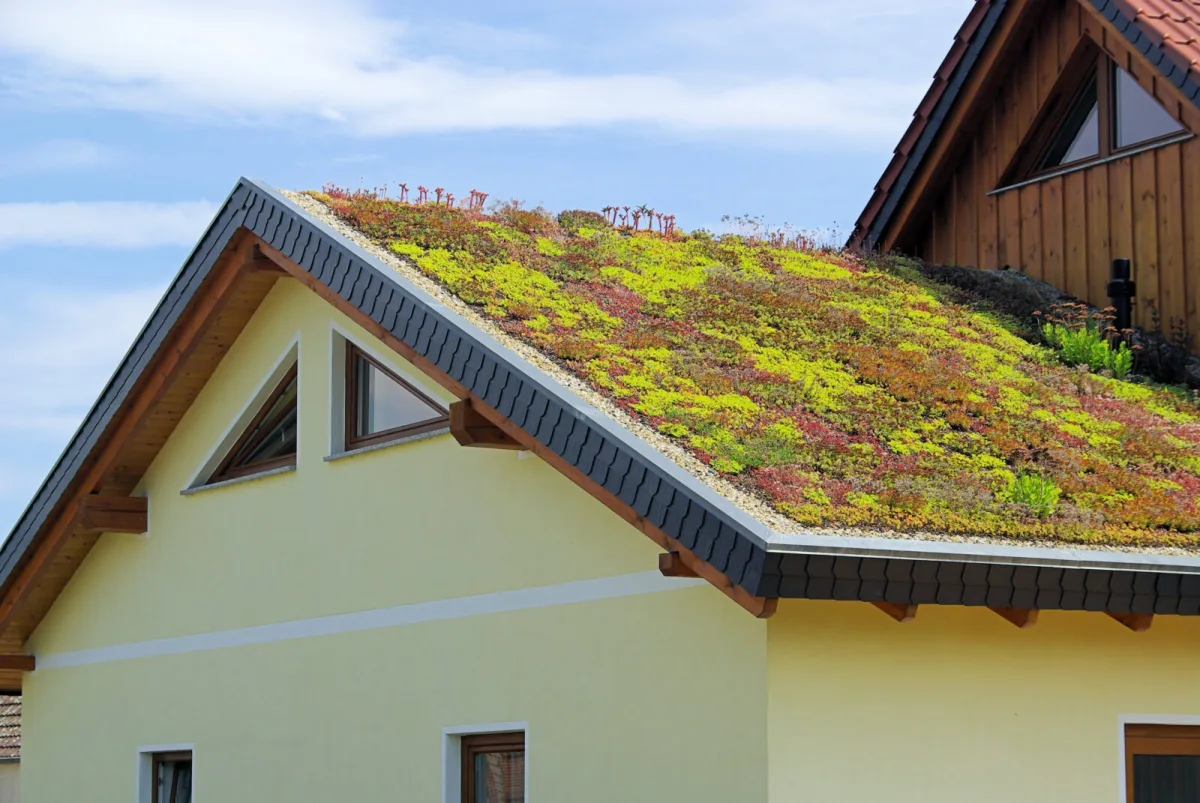
A green roof is a roof surface planted with vegetation, and it can take many forms. Sometimes it’s a fully fledged roof garden with raised beds and containers; other times it’s a simple cover that forms a green carpet of low-growing species. On smaller structures such as sheds or lean-tos, planting cells or modules filled with growing medium are often used, then planted with drought-tolerant perennials and grasses. The differences between the options aren’t only aesthetic but, above all, structural, because they determine weight, irrigation needs, and the level of maintenance required.
Key benefits of green roofs
The most commonly cited benefit is their ability to retain rainwater and slow runoff. The vegetation layer together with the growing medium acts like a sponge, capturing part of the rainfall and releasing it gradually, which helps during heavy downpours and in densely built-up areas. Green roofs also improve a building’s thermal comfort, because they reduce overheating in summer and add an extra insulating layer in winter. Added to this is the visual impact, which often turns an otherwise unused surface into a standout feature of the home.
The ecological dimension is important too. Vegetation creates habitat for insects and birds, contributes to better air quality, and can help cool urban environments that overheat in summer. Other benefits can include partial noise reduction and, in certain situations, a reduced risk of fire spreading between close buildings, because the planted build-up can act as a barrier.
What to consider before you build
Permissions, structural capacity, and design
Even before the design stage, it’s worth checking whether planning permission or other local approval is required. Just as crucial is an assessment of the structure’s load-bearing capacity, ideally by a certified structural engineer or an experienced technician. Weight can vary significantly depending on the roof type, the depth of the growing medium, and whether the roof is waterlogged. With more complex projects, it pays to work with an architect who regularly designs roof gardens.
Access for installation and ongoing maintenance
Logistics matter. You need to think through how materials will be brought up to the roof and who will install the system. It’s also wise to be clear in advance about how easily you’ll be able to return to the roof for maintenance, to check outlets and drains, and to make any repairs. A neglected detail, such as a poorly accessible drain, can later turn into a major problem.
Wind, drought, and waterlogging
Roof surfaces are often exposed to strong winds, and turbulence commonly forms on the sheltered side of solid walls. Where possible, slatted or mesh screens that break up airflow tend to work better than letting wind hit a solid barrier. You also need to account for extremes that show up faster on a roof than in a garden at ground level. The growing medium can dry out very quickly in hot weather, but during prolonged rain, or with poorly designed drainage, it can become waterlogged instead.
Types of green roofs and their build-up
Extensive green roofs
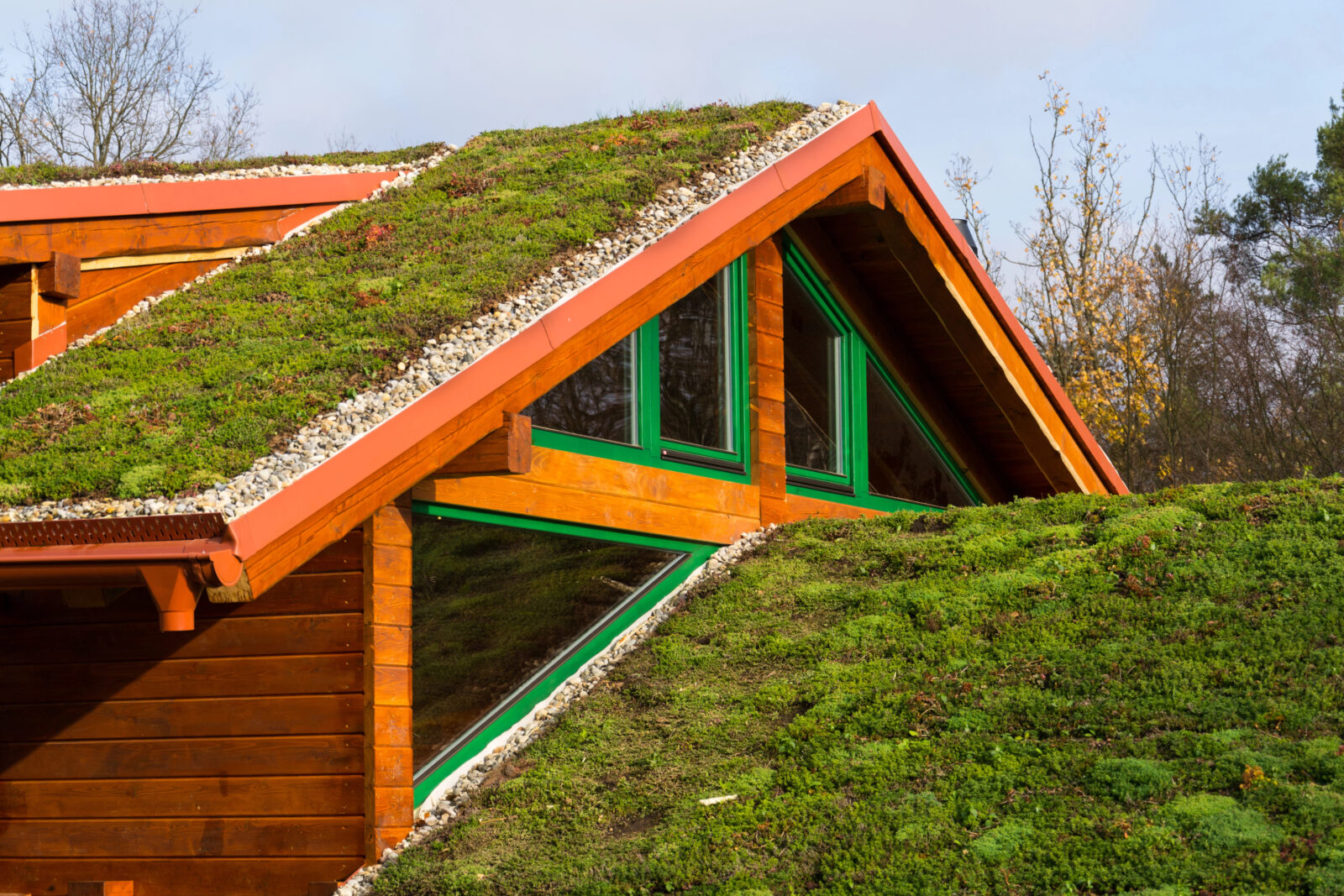
An extensive system is the lightest and usually the lowest-maintenance option. The growing medium layer is typically about 5 to 15 cm and is often made largely from lightweight inorganic materials, for example perlite, LECA (expanded clay), sand, mineral wool, or crushed brick or concrete. A typical build-up includes waterproofing and thermal insulation, then a root barrier, a drainage layer, a filter layer, and only above these the growing medium.
On some roofs it’s advisable to add additional drainage, and outlets must be protected so they don’t clog. In practice, pre-grown mats are often used, for example sedum mats grown in geotextile pockets filled with substrate. If the chosen species suit the local climate, these mats are largely self-sufficient and usually don’t require regular watering or weeding.
Semi-intensive green roofs
This type needs roughly 10 to 20 cm of growing medium. That already allows a wider range of perennials, but it still isn’t intended for woody plants such as shrubs and trees. A practical example is a gently sloping shed roof where a grid of timber cells is built on the structure and filled with substrate. Here too, high-quality waterproofing, a root barrier, drainage, and a filter layer are essential, because without them the planting won’t perform reliably in the long term.
Bear in mind that this kind of roof typically takes 12 to 18 months to settle and knit together. During this period it needs regular weeding, watering, feeding, and sometimes replanting in areas where the planting hasn’t taken.
Intensive green roofs
Intensive roof gardens are closest to a traditional garden. They’re often built as a system of containers or raised beds and require at least around 30 cm of growing medium, with a significant proportion usually made up of organic material. Built-in raised beds are more demanding structurally and generally require careful design and professional installation.
For containers, it’s worth choosing lighter materials such as plastic, metal, or fibreglass, and checking that they have enough drainage holes. Lightweight growing mixes are used, for example standard all-purpose composts blended with mineral wool, which can be lightened further with perlite. Even details like the drainage layer in a pot affect the total load, so lightweight fillers are sometimes used instead of broken terracotta shards.
You also need to consider that the lighter the mix you choose, the faster it dries out. At the same time, taller plants are less stable in wind when both the container and the growing medium are lightweight, so supports, anchoring, and sometimes fixing containers to the base are useful. Plants in containers generally need water year-round, except during freezing spells or prolonged very wet weather. In summer, watering may be necessary even twice a day, especially for small pots. If you know you can’t manage regular watering, it makes sense to consider an irrigation system.
The design must also include reliable water removal during intense downpours. In winter, raising containers slightly helps excess water drain away rather than sitting at the bottom.
Plants suitable for each option
For extensive roofs
The best performers are species that form low carpets and tolerate drought well. Reliable choices include sedums, houseleeks, and mosses. Among sedums, commonly used examples include biting stonecrop, reflexed stonecrop, and white stonecrop. In a warm, sunny spot protected from frost, you can also try some species from the genus Delosperma. For dry shade, selected ferns work well, such as common polypody or rustyback fern.
For semi-intensive roofs
Perennials from naturally drier habitats and ornamental grasses are a good choice. You can use plants such as coneflowers, yarrows, cinquefoils, thrift, and pinks, complemented by more prominent grasses. Among bulbs, grape hyacinths and smaller ornamental alliums are useful too, as they cope with drier conditions while still flowering well.
For intensive roofs
On rooftops, plants that can handle sun, wind, and occasional drought typically do well. Drought-tolerant species are often advantageous because they forgive irregular watering more easily. The exact selection depends on the depth of the growing medium, exposure, and how much regular care is possible, because an intensive roof garden operates much like a standard container garden.
Setting expectations and long-term care
A green roof isn’t just decoration but a technical system that has to work as a whole. The key is not to underestimate the layers beneath the vegetation, root protection, filtration, and drainage, as well as regular checks of outlets and drains. When structural capacity, build-up, and planting are combined correctly, you’ll gain a surface that helps manage rainwater, improves the microclimate around your home, and delivers a strong aesthetic impact.
Source: Rhs, Wikipedia , Pestrazahrada.cz
Related articles
Ten Minutes in Autumn Decide Your Currant Crop
Currants crop best on younger wood, while old stems drain the plant and shade out productive new growth. A quick autumn prune keeps the bush open, healthy, and reliably fruitful next season.
White Painted Trunks in Orchards Protect Trees from a Hidden Winter Threat
Whitewashing tree trunks in winter isn’t decoration. It helps prevent bark cracking caused by sharp day-to-night temperature swings and reduces the risk of disease entering through wounds.
What to do for currant bushes in October so they’re loaded with fruit next year
October is the best time to set currant bushes up for a strong spring and a heavy crop. With the right pruning, protection and autumn feeding, you’ll encourage more flower buds and better winter hardiness.
Comments (0)
Be the first to comment.