
 English
 Polski
 Deutsch
 Nederlands
 Svenska
 Norsk
 Dansk
 Français
 Italiano
 Español
 Português
 Slovenčina
 Suomi
 Gaeilge
Blueberries Won’t Crop in Unamended Beds, a Simple Soil Trick Can Triple the Harvest and Autumn Is the Best Time
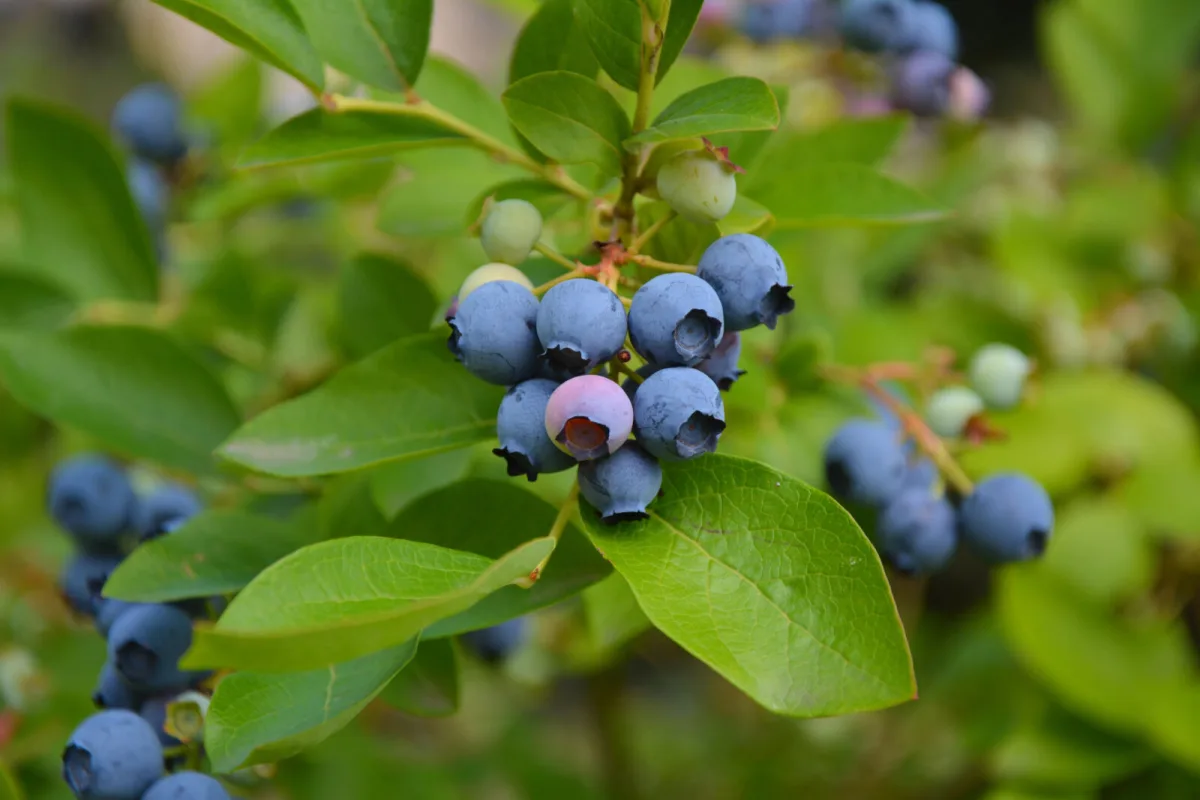
Many gardeners plant a blueberry bush into a regular border, water it faithfully, and expect a heavy crop. After a few years, though, they harvest only a handful of berries, or nothing at all. The main problem usually isn’t the cultivar or the care, but the soil. Highbush blueberry needs an acidic, airy, humus-rich growing medium that holds moisture over the long term. If it grows in typical garden soil, the bush may survive, but it can hardly fruit.
Soil acidity is decisive. It performs best at a pH of roughly 4.0 to 5.5, ideally even a little lower. As soon as the value rises, the roots lose the ability to take up key nutrients, especially iron and other trace elements. The plant then effectively starves, even if the soil looks fertile and has been fed.
Why a higher pH weakens blueberries
Blueberry is an ericaceous plant and has a very fine, shallow root system. It’s sensitive to any change in its environment. In higher-pH soil, some nutrients become chemically bound in forms the shrub can’t absorb. The result is often leaf yellowing, weak growth, smaller annual shoots, and reduced flowering. The plant then spends its energy on survival rather than setting fruit.
A typical warning sign is pale green or yellow leaves with pronounced veins, sometimes with a reddish tinge in summer. Such a bush doesn’t just look tired, it’s under long-term stress. In this condition, a season can end without a single berry.
Czech garden soils are often too alkaline for blueberries
In most Czech gardens, the soil is not acidic enough for blueberries. Average values often sit around pH 6, and in many areas even higher. That means even where the soil is considered normal and “good,” it may still be unsuitable for blueberries. The situation is worsened by calcareous subsoil, heavy clay, and leftover building materials in the ground around new-build homes.
The surest approach is to measure the pH. A simple garden-centre test kit will do, or a more precise lab analysis. Checking makes sense before planting and later on as well, ideally once a year. Without knowing the real soil reaction, growing blueberries becomes more trial and error than gardening.
A narrow planting hole isn’t enough and only postpones the problem
A common mistake is planting the shrub into a small hole with a bit of peat. At first the blueberry may look happy, but as soon as the roots grow into the surrounding soil, they hit unsuitable conditions and growth declines. The acidic “pocket” also loses its effect over time, water seeps in from the surrounding ground, and tap-water irrigation brings in even more lime.
The right solution is to create a wider root bed, not just a small planting hole. Width and good drainage matter more than depth. You can fill it with acidic peat or a quality blueberry substrate, ideally supplemented with pine bark or forest leaf mould. A surface mulch of bark, pine needles, or sawdust helps stabilise conditions, keeps moisture in, and reduces fluctuations.
How to rescue a bush that’s already yellowing and not fruiting
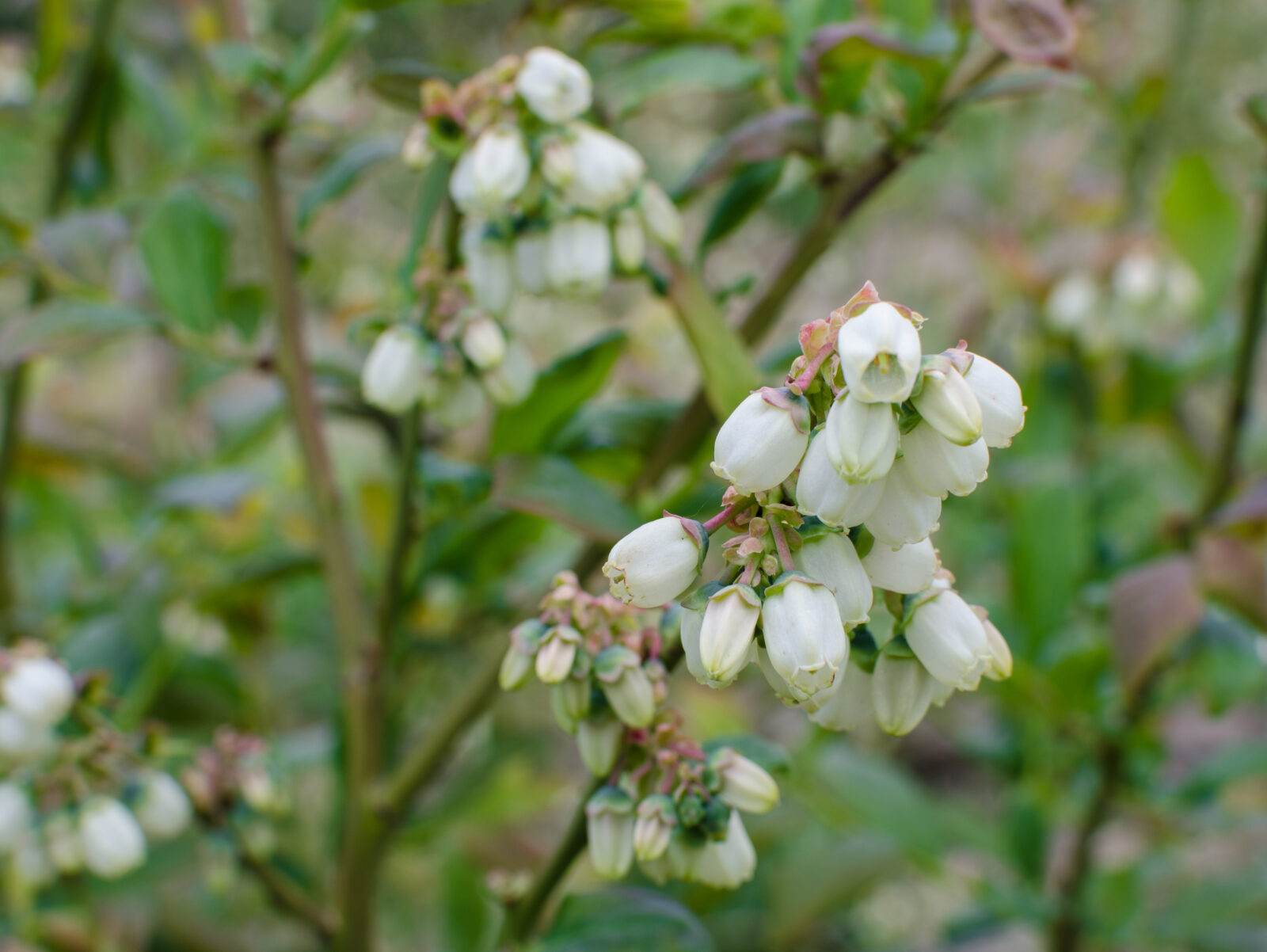
With blueberries that are already planted, it’s worth starting by measuring the pH directly in the root zone. If it’s too high, you can gradually acidify the soil with elemental sulphur. It doesn’t work instantly, though, because its effect depends on soil bacteria and shows only after a longer period. That’s why adjustments are best done in autumn, then checked in spring.
Renewing the acidic mulch can also help, along with careful use of fertilisers formulated for azaleas, rhododendrons, and blueberries, and watering with rainwater. Ordinary hard tap water pushes the pH up again. If the soil is so heavy and lime-rich that adjustments don’t work, it’s often more sensible to transplant into a newly prepared bed or into a large container.
A good cultivar only helps in the right conditions
Once blueberries have suitable conditions, they can crop very well. Proven cultivars include Duke, Patriot, Bluecrop, Chandler, and Darrow. The difference between a bush in an acidic bed and a plant in ordinary soil can be huge. In good conditions, yields are counted in kilograms; in poor ones, only in handfuls.
It pays to grow at least two cultivars with the same flowering period, because cross-pollination often increases both fruit set and berry size. Patience matters too. Blueberries usually start cropping more strongly around the third year and reach full performance later on. But every year spent in unsuitable soil unnecessarily delays that progress.
With blueberries, it’s not mainly the plant that decides, but what you plant it into. A properly prepared acidic bed is the foundation of the entire future harvest.
Source: Polskie Borówki, MZe, Oregon University, Pestrazahrada.cz

A lover of nature, gardens, and everything that moves, blooms, or grows. He literally grows everything, from herbs to rare species, and he enjoys caring for animals just as much. In his work, he connects modern technology with tried-and-tested grandmotherly methods and is happy when both paths lead to the same goal.
Related articles

Feed Blueberries in Autumn with a Homemade Mix That Ferments for a Few Weeks and Shows Results in Spring
If you want your blueberries to flower and fruit more heavily next year, try a simple homemade feed made from stale bread and used coffee grounds. Left to ferment for a few weeks, it can gently support soil life and the root zone going into winter.
Stonecrop is the easiest perennial for lazy gardeners but one common mistake ruins it
Stonecrop (Sedum) is a tough, drought-tolerant perennial, but it isn’t indestructible. Give it sun and sharply draining soil, and avoid overwatering to keep it compact and floriferous.
Lift cannas for winter: mistiming can ruin them and one extra week can decide next season
Cannas are spectacular summer plants, but in colder regions their rhizomes won’t survive hard frost in the ground. Lift them at the right moment, dry them properly, and store them cool and dry for replanting in spring.
Comments (0)
Be the first to comment.