
 English
  Polski
  Deutsch
  Nederlands
  Svenska
  Norsk
Norsk  Dansk
Dansk  Français
  Italiano
  Español
  Português
  Slovenčina
  Suomi
Suomi  Gaeilge
 A Simple Trick for Heathers to Flower Profusely and Grow Strong Roots

Heathers are inseparable from autumn. As soon as the weather cools and most summer flowers slowly fade, heathers can brighten up the garden, terrace and balcony. They are low, dense little shrubs with tiny flowers, most often pink, purple or white. They bloom in late summer and early autumn, which is why they are such a popular choice for planting at a time when borders have less colour.
Beyond their looks, they also bring practical benefits for wildlife. They provide food for insects, especially bees, at exactly the time when other flowers are in short supply. Although heathers are often considered tough plants that cope with cold and less-than-ideal conditions, if you want truly abundant flowering and a healthy root system, it pays to think about suitable feeding and the right soil environment.
What soil heathers need and what matters most
Heathers do best in moist but well-draining soil that is slightly acidic. Acidity is the key, because heathers have a fine, sensitive root system made up of delicate root hairs. These take up nutrients most efficiently when the soil is at the right acidity. If the compost is too alkaline, the plant can struggle even if you water and try your best to care for it.
In spring, it’s often recommended to add organic compost to improve soil structure and help retain moisture. However, compost on its own doesn’t always solve the acidity issue. That’s why gentle acidification and topping up nutrients using simple household materials can be helpful.
Coffee grounds as a home helper for more abundant flowering
One of the simplest tricks is to use coffee grounds, which many people already have at home. Coffee grounds can slightly acidify the soil and at the same time add valuable substances. They contain nutrients such as nitrogen, phosphorus and potassium, and in smaller amounts also magnesium, calcium, iron and zinc. This combination can support the vigour of heathers and their ability to produce new shoots and flowers.
Correct use matters, though. It’s not a good idea to simply tip a thick layer of grounds straight onto the soil surface, because it can form a dense crust that restricts air and water reaching the roots. It’s safer to mix the grounds into the compost when planting, or use them as a liquid feed.
Recipe for a coffee feed for heathers
The method is straightforward. Mix 1 tablespoon of coffee grounds with 1 litre of water. Water your heathers with this solution about once or twice a month. Treat it as an addition to normal care, not a replacement for regular watering. If your heathers are in containers, pay even closer attention to drainage so the roots aren’t left sitting in wet compost for long periods.
Pruning after flowering encourages bushiness and new growth
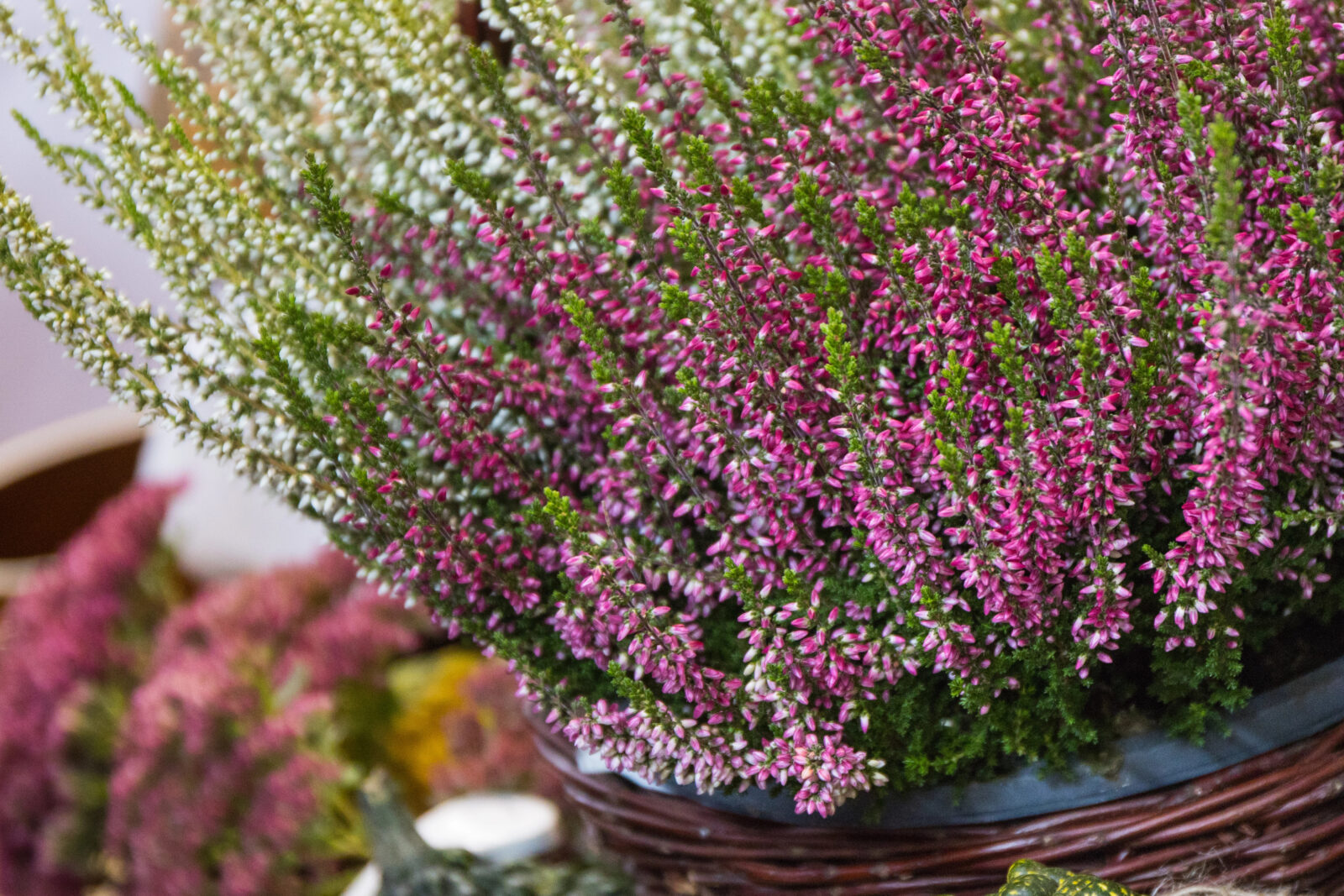
Once the flowers have finished, it’s worth giving heathers a light trim. Simply remove the spent tips so the plant doesn’t waste energy on drying parts. A gentle shortening also encourages branching and helps the shrub thicken up and look more compact next season. Regular, light pruning is often the difference between a thin, straggly plant and a dense heather that flowers well.
Other natural ways to create an acidic environment for heathers
If you want to refine your care even further, there are other natural options that support soil acidity while staying gentle. The aim of these approaches is to mimic the conditions in which heathers naturally thrive: light, acidic soil with plenty of organic matter.
Water with a few drops of lemon
Lemon juice can help create a more acidic environment that suits heather’s sensitive roots. It’s enough to water with water to which you add just a few drops of lemon. Alternatively, you can use citric acid. Moderation is important, because an overly strong acidic drench could irritate the roots. Used sensibly and regularly, this method can support growth and flowering by improving nutrient availability in the soil.
Pine needle mulch for slow, natural acidification
A mulch of needles, for example from pine or spruce, also works very well. The needles break down gradually, naturally increasing soil acidity while adding organic matter. They also help reduce drying out and protect the soil surface from sharp temperature swings. For heathers, it’s a practical option that works in borders as well as larger containers.
Oak leaf compost for healthier growth
Oak leaves are rich in tannins, which help maintain soil acidity. If you compost oak leaves, you’ll get a nourishing material that’s ideal for plants that require an acidic environment. Such compost can help heathers stay in good condition, support the root system and improve the overall vitality of the shrubs throughout the season.
What to take away for beautiful heathers
If you want heathers to look their best while staying resilient, focus on two things: free-draining, slightly acidic soil and regular but gentle feeding. Coffee grounds, used carefully in a liquid feed or mixed into the compost, can be a simple household helper. Add a light trim after flowering and, if needed, support acidity with a lemon-water drench, pine needles or oak leaf compost, and your heathers will reward you with denser growth and more striking blooms.
Source: To je nápad, Gardening Know How, Pestrazahrada.cz

A lover of nature, gardens, and everything that moves, blooms, or grows. He literally grows everything, from herbs to rare species, and he enjoys caring for animals just as much. In his work, he connects modern technology with tried-and-tested grandmotherly methods and is happy when both paths lead to the same goal.
Related articles

Next year you can harvest better if you don’t sow carrots where they won’t thrive
Carrot root fly can ruin carrots, parsley and celery from the inside out, often without obvious warning until harvest. Better site choice, rotation, later sowing and simple physical barriers can dramatically cut damage next season.

How to Propagate Roses from Cuttings at Home and Fill Your Garden with Blooms Almost for Free
Want more roses without paying for new plants? With a few healthy cuttings and a simple plastic-bottle mini greenhouse, you can root new bushes at home in just a few weeks.
Heathers can cope where other plants won’t, but one soil detail decides everything
Heathers and heaths are tough evergreen shrubs that can flower across the seasons when you choose the right types. Success hinges on matching the plant to your soil pH and ensuring free drainage.
Comments (0)
Be the first to comment.