
 English
  Polski
  Deutsch
  Nederlands
  Svenska
  Norsk
Norsk  Dansk
Dansk  Français
  Italiano
  Español
  Português
  Slovenčina
  Suomi
Suomi  Gaeilge
 When to Plant Staghorn Sumac and Where to Place It for Spectacular Colour
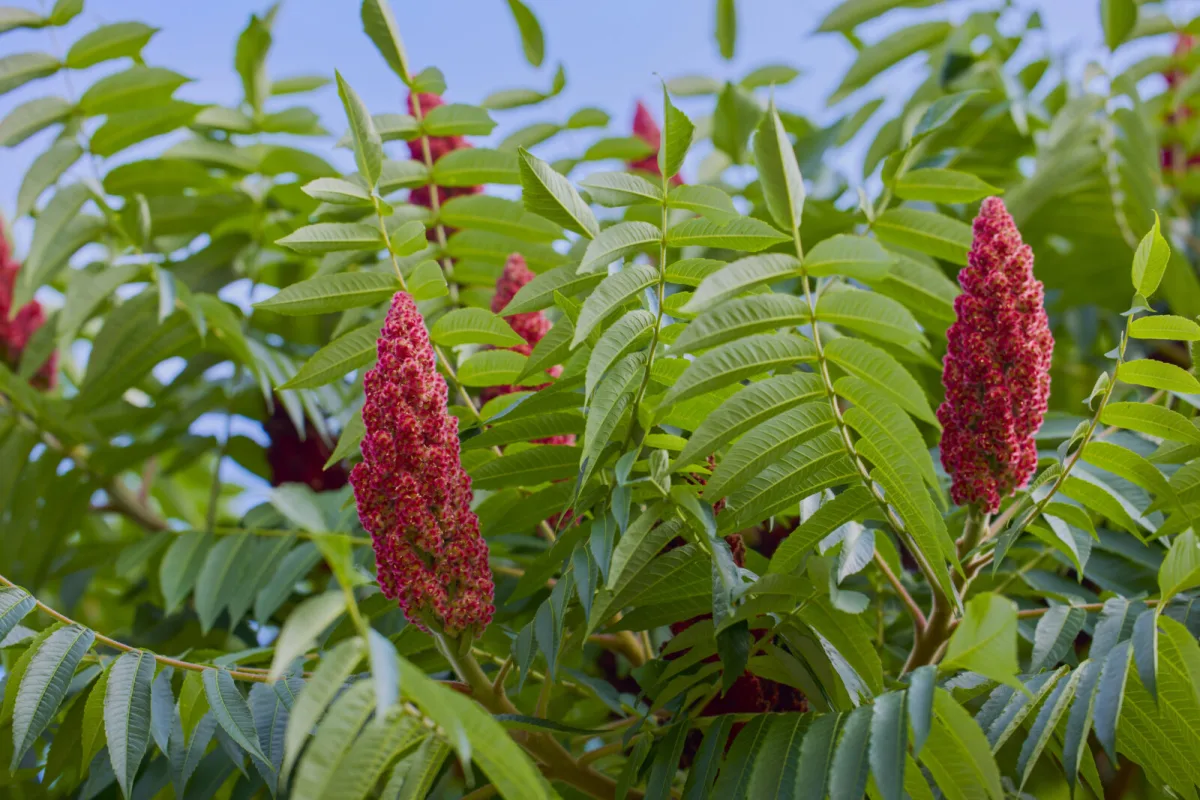
Sumac of the genus Rhus is one of those woody plants that can look impressive even in a garden with less-than-ideal soil and occasional drought. The most commonly grown is staghorn sumac (Rhus typhina), valued for its exotic-looking foliage, broad habit and vivid autumn colour. For it to look good long term, the key factors are choosing the right spot, ensuring the soil drains well, and planting at the correct depth.
The biggest mistake usually isn’t poor feeding, but a poorly chosen site: too little light, too little space, or permanently waterlogged ground.
Where to plant sumac so it has light and room
A sunny position is the foundation for good shape and colour
Sumac does best in full sun. In a bright, open spot it forms its characteristic spreading crown, shoots ripen properly, and autumn colour is at its most intense. If you want it as a specimen plant, sun is usually the single most important condition for a compact, healthy look.
It will cope with partial shade, but deep shade robs it of impact
In light partial shade, sumac will grow, but expect a looser habit and weaker autumn colour. It generally doesn’t belong in deep shade under dense tree canopies or against a north-facing wall, where vigour and appearance can decline unnecessarily.
Think about future size and nearby plantings
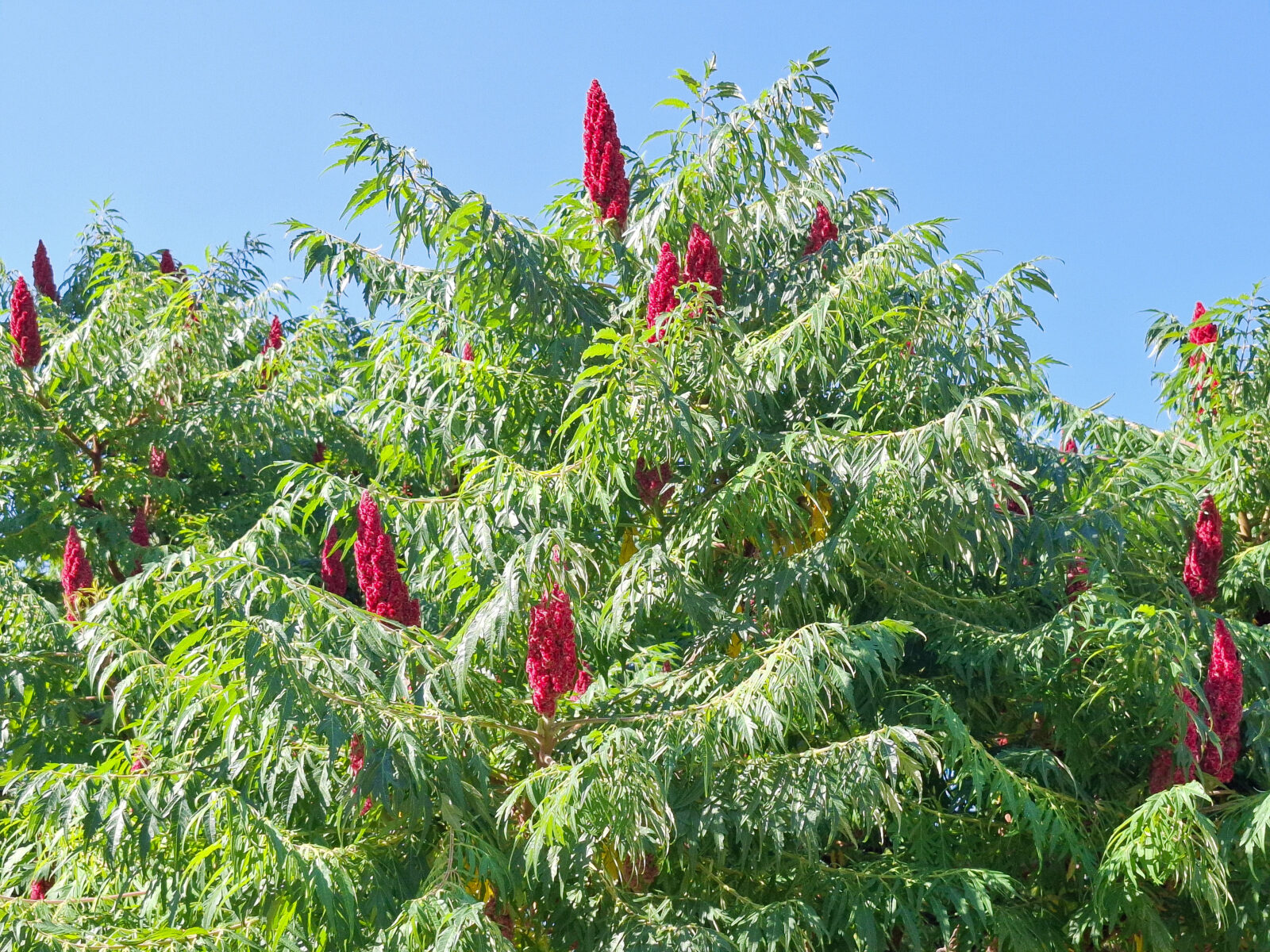
Don’t judge by the size of the young plant. Staghorn sumac can, over time, become a woody plant several metres tall and wide, often multi-stemmed. Give it plenty of open space not only for the crown, but also for routine maintenance around it. In a cramped border between a path, a wall and delicate perennials, sumac is problematic by nature, because its natural character suits an “open area” more than a “small bed”.
What soil sumac needs and what to avoid
Ordinary garden soil is usually enough
Sumac is not demanding when it comes to high fertility. It adapts well to typical garden soils and will cope with poorer ground that would limit more demanding shrubs and trees. There’s no need to create a large planting pocket of “premium” compost-rich substrate, which can also hold water and make it harder for roots to transition into the surrounding soil.
Drainage matters more than fertility
The crucial point is that the soil is free-draining and roots don’t sit in water for long periods. Constant wetness, compacted clay, or spots where water stands after rain are not good for sumac. If you have heavy soil, loosen it over a wider area so excess water has somewhere to go and roots have access to air.
Once established, it handles drought better than waterlogging
A well-established sumac tolerates short dry spells quite well and suits gardens where you don’t want to rely on frequent watering. This resilience mainly applies to older plants with a developed root system. A newly planted sumac has roots concentrated in the root ball, and without monitoring moisture it can struggle in dry weather.

When to plant sumac so it establishes well
Spring and autumn are the most practical times
Container-grown plants can be planted for most of the season as long as the soil isn’t frozen. The best times are usually spring or autumn, when there’s less risk of rapid drying and the plant has better conditions for forming new roots.
Summer planting is possible, but it requires careful watering
You can plant in summer too, but in hot weather you must ensure the root ball doesn’t dry out. With a fresh planting, it’s safer to water thoroughly in one go and then check moisture, rather than repeatedly “sprinkling” the surface with small amounts.
The correct planting method step by step
The planting hole should be wide above all
For good establishment, the hole needs adequate width. Roots then grow more easily into the loosened surrounding soil. Excessive depth isn’t necessary and can encourage planting too deep. If the native soil is usable, loosen it and backfill it around the root ball.
The most common mistake is planting too deeply
After planting, the top of the root ball should remain roughly level with the surrounding ground. Burying the base of the stems under an extra layer of soil is not desirable. Once backfilled, firm the soil gently to remove air pockets and water thoroughly to settle soil around the roots.
In the first season, watch moisture and don’t overfeed
In the first year, the most important thing is to check the moisture in the root ball regularly, especially during prolonged dry spells. Once roots grow into the surrounding soil, drought tolerance improves significantly. Don’t overdo starter fertiliser, because for establishment free-draining soil, correct depth and water matter more than high nitrogen inputs.
Where not to plant sumac and what to consider near paths and buildings
Sumac is not ideal for areas that stay wet for long periods, nor for narrow spaces where it will eventually obstruct with its crown. Near paths, kerbs and small intensively planted beds, leave a margin, because the plant gradually spreads in width and looks best where it can develop naturally. It’s wise to plan its future footprint when choosing the site, not only once it starts encroaching on functional areas.
Overall recommendations for planting sumac successfully
Plant sumac in a sunny, open position in ordinary, free-draining soil. Poorer ground is usually fine, but long-term waterlogging is a problem. Leave enough space for its eventual size, plant it roughly level with the surrounding ground, and monitor moisture carefully in the first season. If you follow these principles, sumac will typically establish without complications and, over time, become a striking focal point in the garden.
Frequently asked questions about planting sumac
Does sumac need full sun
It thrives best in full sun. It can cope with light partial shade, but in deep shade it becomes sparser and colours up less.
What soil can sumac tolerate
It tolerates most ordinary garden soils, including less fertile ones, as long as they are free-draining. A site that stays waterlogged long term is not suitable.
How often to water after planting
Water according to the weather and how quickly the root ball dries out, not by a fixed schedule. In the first year, monitoring moisture is important; later, sumac copes with drier periods much better.
How far from a path or border should it be placed
There isn’t one universal distance, because it depends on the species, cultivar and how it’s trained. In general, assume a crown several metres across and give it enough room so it won’t eventually be forced into paths, walls and small plantings.
Source: Plantura Magazine, Gardenia, Pestrazahrada.cz

A lover of nature, gardens, and everything that moves, blooms, or grows. He literally grows everything, from herbs to rare species, and he enjoys caring for animals just as much. In his work, he connects modern technology with tried-and-tested grandmotherly methods and is happy when both paths lead to the same goal.
Related articles
Autumn planted grapevines bud earlier the most common mistake happens before they even go in the ground
Planting grapevines in November can give them a head start in spring, as roots can still establish in warm soil. Success depends mainly on proper planting depth and reliable winter protection.
Ten Crops to Sow Before Winter for an Earlier Spring Harvest
Autumn sowing lets hardy vegetables and herbs root in before frosts, so they spring into growth as soon as temperatures rise. With the right timing and bed preparation, you can harvest noticeably earlier in the new season.
Planting Garlic Has One Rule Most Gardeners Break Right at the Start
Autumn is the ideal time to plant garlic, but timing it by soil and air temperature matters more than the calendar. Planting once temperatures stay below 9 °C and using good cloves in well-prepared soil sets you up for a strong spring start and a better harvest.
Comments (0)
Be the first to comment.