
 English
  Polski
  Deutsch
  Nederlands
  Svenska
  Norsk
Norsk  Dansk
Dansk  Français
  Italiano
  Español
  Português
  Slovenčina
  Suomi
Suomi  Gaeilge
 When Roses Flower Nonstop Simple Rules for Summer Success

Roses can put on a spectacular show in the garden when you give them a few basics at the right time. There are no secret tricks here, just consistent care that keeps the plant in good condition and encourages new buds. When roses get support, enough moisture, the right nutrients and regular tidying, they can flower repeatedly and often stay attractive for most of the season. Just as important is catching the first signs of disease and pests early, and choosing a variety that genuinely suits your conditions.
In the chapters below you’ll find five practical steps you can easily build into your routine. Together they make a big difference not only to the number of flowers, but also to leaf health, shoot strength and the overall look of the shrub.
Removing spent blooms encourages the next flush of flowers
One of the simplest ways to prolong flowering is to deadhead regularly. The plant then doesn’t waste energy forming hips, but puts it into new buds and fresh shoots instead. On strong, healthy stems it’s usually enough to snip off just the faded flower head, or a short section of stem above a well-developed leaf.
On weak, thin, leggy growth it pays to cut back more decisively. The aim is to get down to where the wood is sturdy enough, ideally at least pencil-thick. Sometimes that means shortening the entire shoot quite low, but that’s exactly what spurs the rose to push new, stronger growth. While you’re at it, remove anything clearly dead, damaged or diseased so the problem doesn’t spread.
After flowering, roses respond best to regular attention that keeps them vigorous and promotes the formation of new blooms.
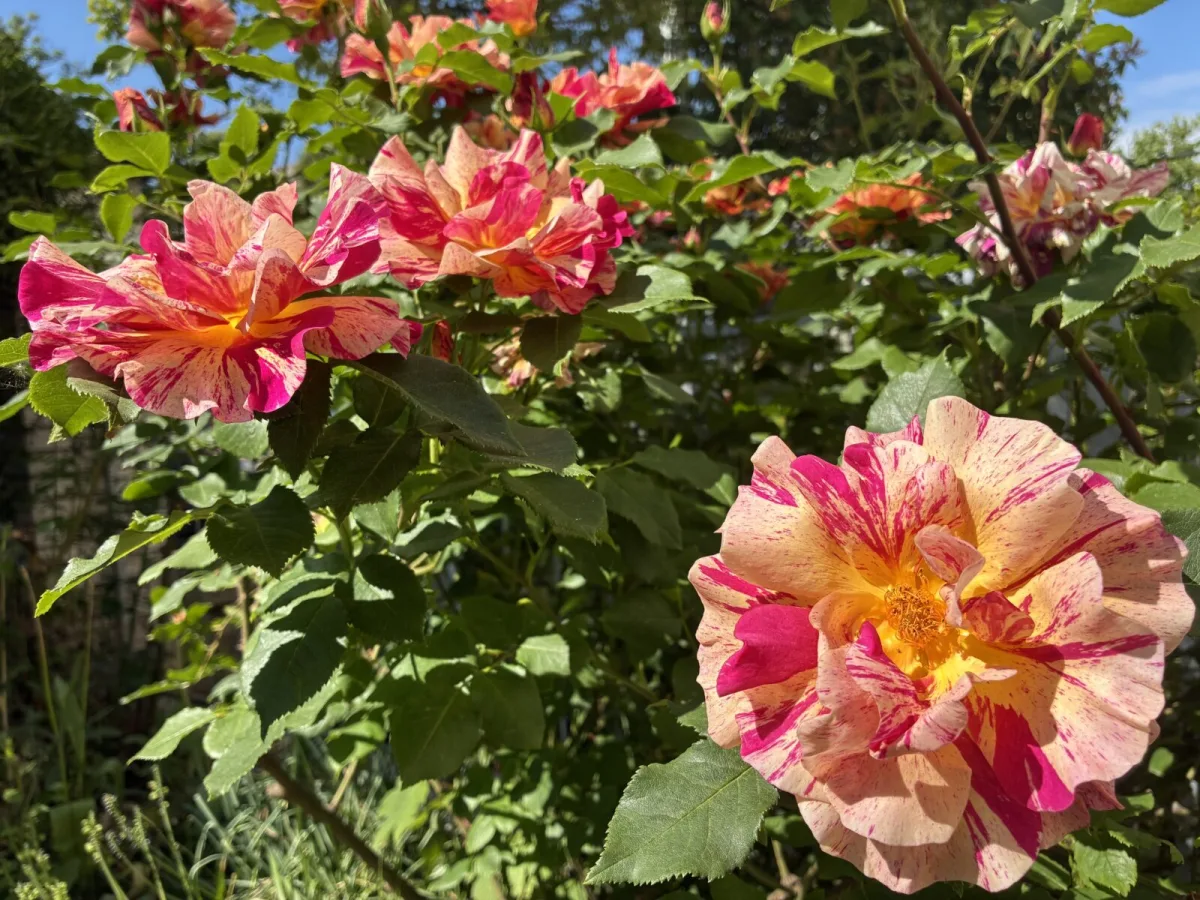
Feeding and mulching as the foundation for strong shrubs and quality blooms
Roses are fairly hungry plants, and if they’re to flower for a long time, nutrients need topping up regularly. It’s practical to combine feeding with mulching. In spring and again in autumn, you can spread a layer of well-rotted manure, quality compost or bark chips around the shrubs. The key is not to pile mulch right up against the stems. Leave a clear ring around the base of the plant about 10 cm wide so the crown doesn’t stay wet for long periods and the risk of rot doesn’t increase.
Feeding is best done in spring as growth starts, and again in mid-summer, after the first main flush of flowers. For heavier bud set and more vibrant blooms, products containing potassium and magnesium are useful. These elements often show up not only in flowering, but also in leaf vigour and overall resilience.
A sensible watering routine is also part of good care. Direct water straight to the roots at the base of the plant, not onto the leaves. Regular watering is essential especially after planting and during dry spells. Steady moisture helps reduce plant stress and can lower susceptibility to certain issues, such as powdery mildew, which often takes hold when conditions swing back and forth.
Support and tying-in keep shape and protect shoots from damage
Not all roses stand firmly on their own. Older shrub types with long shoots can flop open, especially after rain or when in full flower. A simple support made from a few stakes placed around the plant will help. Tie the shoots in loosely so they’re secure but not constricted. The difference is often immediate: the shrub holds its shape and the flowers are easier to see.
Climbing and rambling roses need to be trained onto a structure. Pergolas, vertical posts, arches or obelisks all work well. Regularly fastening in new growth spreads the plant out, improves airflow, and often increases flowering because the shoots can be positioned so they bud along their full length.
With standard roses, support is practically essential. The original stake they are often sold with may not be sufficient after a few years. It’s worth replacing it with a sturdier stake and securing the head with suitable tree ties that won’t damage the material.
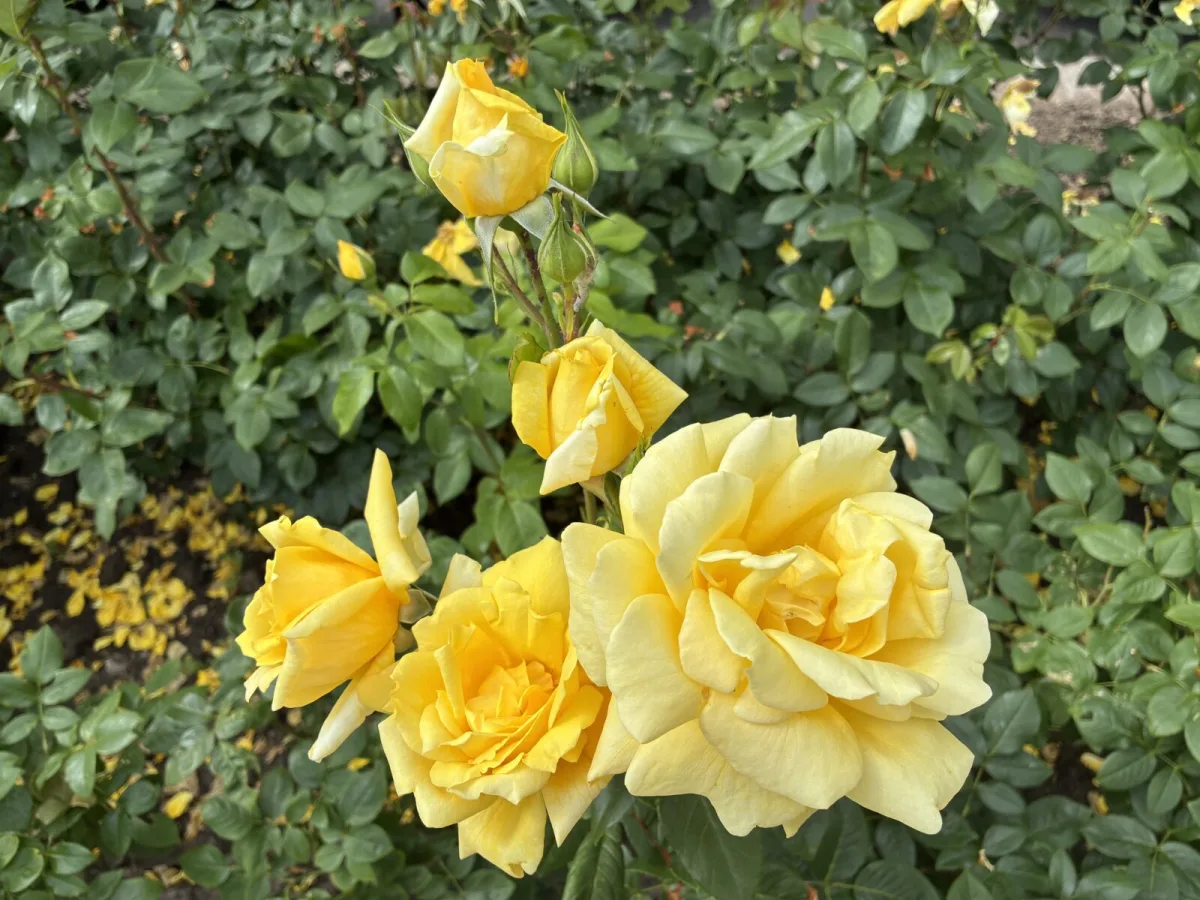
Disease prevention and quick action at the first signs
Among the most common rose problems are black spot, powdery mildew and rust. The easiest way to save yourself work is to start by choosing a more resistant variety. Even so, in warm, damp summers it can trouble roses that are otherwise considered healthy. That’s why it’s worth checking shrubs regularly and acting as soon as suspicious spots or coatings appear on the leaves.
A key part of garden hygiene is clearing fallen leaves. This is where disease spores can overwinter and then infect new growth again in spring. So it’s better to rake up fallen leaves and remove them. If the issue keeps returning or the infection is severe, using a suitable fungicide may be appropriate, ideally matched to the specific disease and used in line with the instructions.
Choosing the right rose determines how long it will flower
Before you’re tempted by a photo of the bloom alone, think about what type of rose you actually need for your garden. Many heritage and older varieties are beautiful and fragrant, but they often flower in just one main flush and then don’t repeat much. If your goal is flowering all summer, modern varieties bred for repeat bloom and better resistance are usually the better choice.
The rose you choose should suit your site and your style of care. Anyone who doesn’t want to constantly battle disease will appreciate healthy cultivars with good tolerance to black spot and powdery mildew. One example is Rosa Sophy, known for being vigorous and reliably repeat-flowering. When the right variety is matched with regular maintenance, roses will reward you with a long season filled with blooms.
Source: Gardeners World, Rhs , Pestrazahrada.cz
Related articles
Overwintering Geraniums in a Box Ensures Stronger Growth and More Abundant Spring Bloom
Many people throw balcony geraniums away after the season, even though they can overwinter very well. Stored correctly in a box in cool, dark, dry conditions, they’ll come back stronger and flower generously in spring.
This perennial flowers when others are finishing, thrives in shade and is still little known in the Czech Republic
Liriope is a tough, evergreen perennial with grassy foliage that comes into its own at the end of summer, when many other plants are fading. It thrives in partial shade to shade, needs little care, and adds structure to borders year-round.
When an Orchid Stops Blooming, a Homemade Fertiliser Made from One Unexpected Ingredient Can Wake It Up
Orchids often survive just fine indoors, but getting them to flower again is the real challenge. The right feeding routine—and a few gentle kitchen-based fertilisers—can help encourage strong growth and the next round of blooms.
Comments (0)
Be the first to comment.