
 English
 Polski
 Deutsch
 Nederlands
 Svenska
 Norsk
 Dansk
 Français
 Italiano
 Español
 Português
 Slovenčina
 Suomi
 Gaeilge
Why you shouldn’t always leave fallen leaves like in the woods
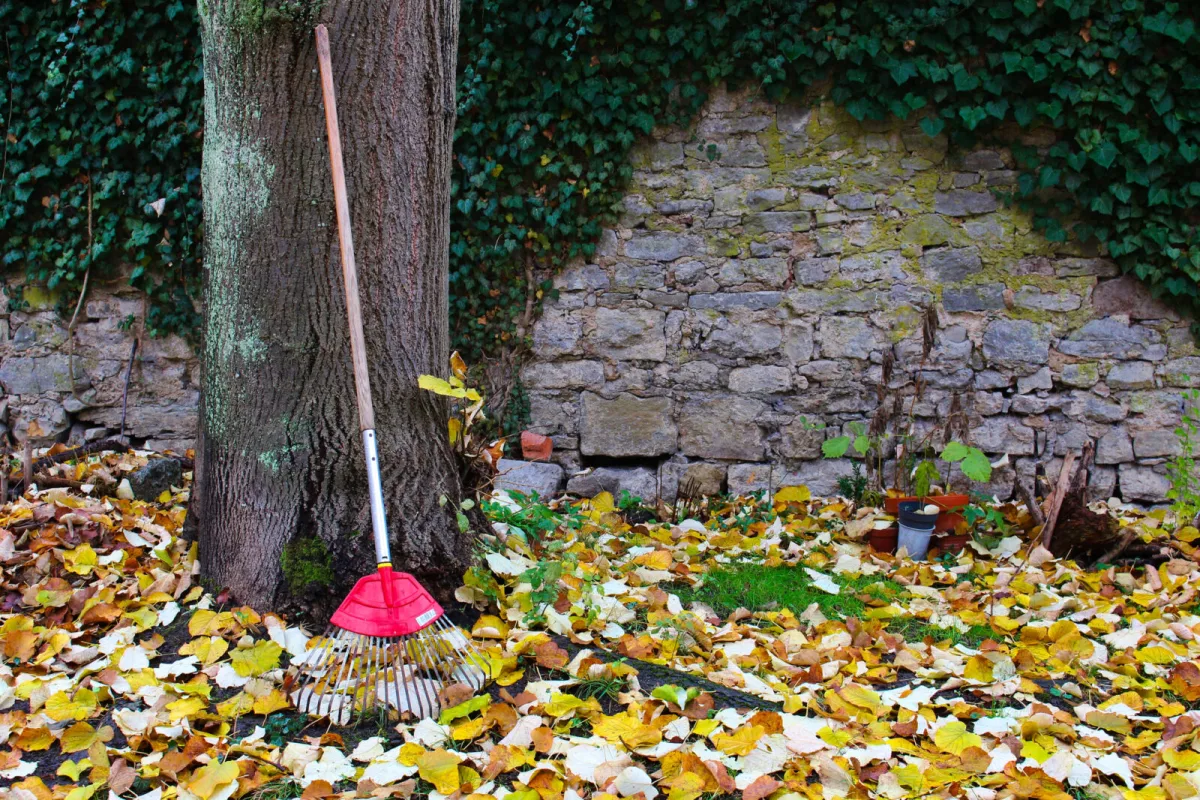
Autumn is the most beautiful time of year for many people. The softer light, cooler air, and changing colours in the tree canopy have their own magic. For gardeners, though, autumn’s real value arrives when leaves start falling to the ground. What looks like mess and extra work can actually be one of the best natural ways to improve your soil.
Raking up leaves can feel like a tiring chore. But when you look at them as a storehouse of nutrients and organic matter, the job takes on a whole new meaning. Instead of hauling them away as waste, you can return leaves to where they came from—back into the garden—where they’ll continue to benefit plants and soil.
Leaves hold a large share of a tree’s nutrients
A surprisingly large amount of what a tree draws up from the soil during the year remains in its leaves. It’s estimated that fallen leaves can contain roughly 50–80% of nutrients such as nitrogen, phosphorus, and other elements. If leaves end up bagged and sent to landfill, your garden needlessly loses these valuable materials.
Returning leaves to beds is a simple way to support the natural nutrient cycle. Your garden gets back what the trees removed over the growing season. It’s a sensible approach for fertility—and for reducing waste.
How leaves help soil and plants
When leaves are spread over the soil surface as mulch, a very useful natural process begins. Earthworms, fungi, and soil bacteria move in and gradually break the leaf material down. They pull it deeper into the ground and convert it into forms that plant roots can readily use.
This slow-release nutrition works more naturally and evenly than many synthetic fertilisers. Over time the soil becomes more alive, more crumbly, and more resilient. Leaf mulch brings several other benefits that matter throughout the year.
Key benefits of leaf mulch
Protects soil from temperature swings. In cold weather it helps hold warmth around roots; on warmer days it reduces overheating at the surface.
Retains moisture. A layer of leaves slows evaporation, keeping the soil damp for longer.
Reduces erosion. During heavy rain, leaves cushion the impact of raindrops and help prevent soil being washed away.
Suppresses weeds. A covered surface gets less light, so weed seeds germinate less readily.
Improves soil structure. As leaves break down they add organic matter, helping soil aerate better and drain excess water more effectively.
Improving heavy soil takes time, but it’s worth it
Any soil type can be improved by regularly adding organic material. Leaves won’t transform soil overnight, but used repeatedly over several years they can significantly change even dense clay. The top layer becomes more crumbly, darker, and easier to work. Bed preparation gets easier and plants grow more vigorously.
There’s an environmental bonus too. If more people used fallen leaves on their own properties, the amount of green waste sent to landfill would drop noticeably.
What to watch for when choosing leaves
Worries that leaves from some trees, such as oak, will drastically acidify soil are usually unfounded. In typical garden practice this effect isn’t a problem. It’s worth being cautious, however, with black walnut leaves, which contain compounds that can inhibit the growth of other plants. It’s best not to use those leaves on beds.
How to prepare leaves for mulching
You can spread whole leaves directly on the soil, but you’ll get faster results if you shred them first. Smaller pieces break down more quickly, form a more even layer, and are less likely to blow around in the wind.
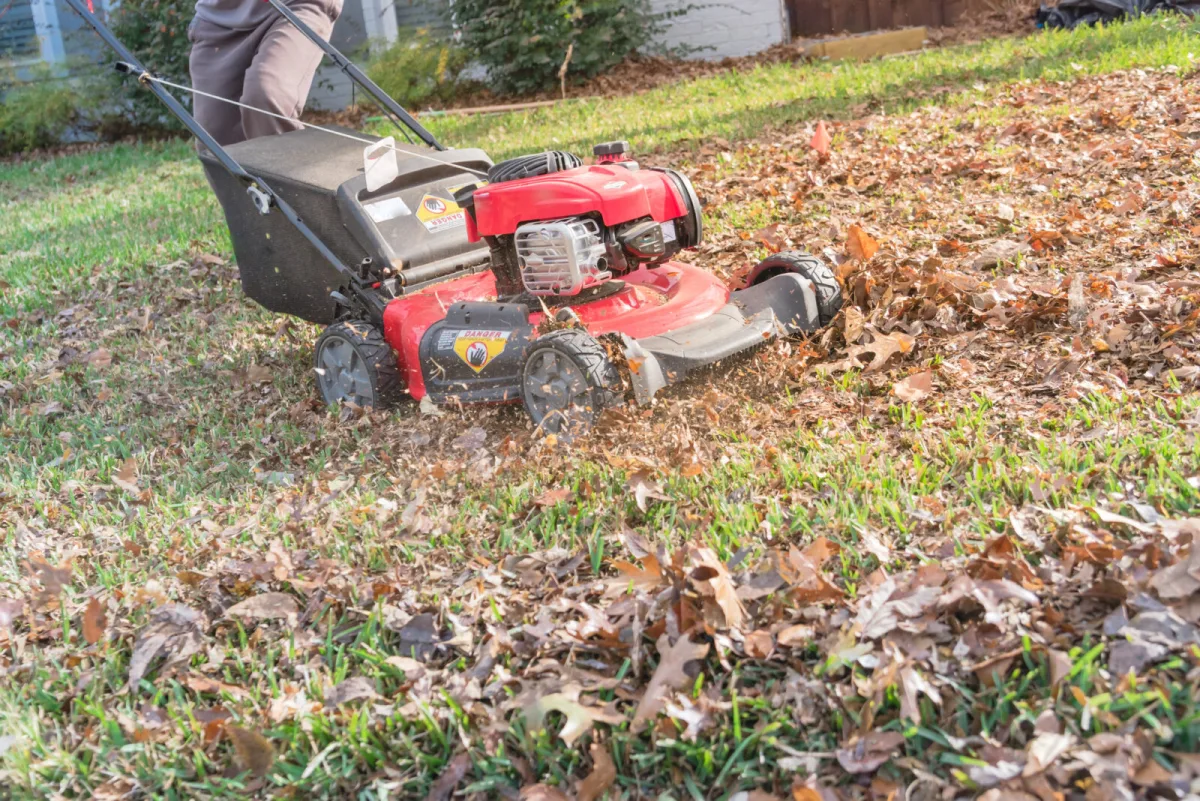
The simplest method is to pile leaves where you can run a mower with a mulching function over them. The layer shouldn’t be too deep, so the mower doesn’t bog down. It’s best to work with dry leaves, which shred much more easily than wet ones. Usually one or two passes are enough to produce material you can use right away.
If you don’t have a mower, a large container and a string trimmer can work too. Fill the container to about two-thirds, then chop the leaves inside it. You’ll end up with similarly fine pieces that spread neatly between plants.
Correct application in beds
Shredded leaves can be moved straight onto bare soil in beds. A layer of about 5 cm works well. On a lawn, only a very light cover should remain—it’s not a good idea to leave grass completely smothered under a thick layer. In beds, leaves work brilliantly around perennials and shrubs, and over veg plots after harvest.
Some gardeners prefer to add another mulch layer on top of the leaves, such as wood chips or pine needles. This is especially practical where wind might blow leaves away or where a tidier look is wanted. The overall layer still shouldn’t be too thick, so the soil can breathe and water can soak in properly.
Leaves as an important part of compost
Fallen leaves are also excellent for compost. They’re a great source of carbon, which is essential for good composting. If you shred them first, decomposition happens much faster and the compost heap heats up more readily. That boosts microbial activity and speeds up the whole process.
Within a few weeks, shredded leaves in an active compost heap begin to disappear among the other ingredients. Gradually, a dark, crumbly, earthy-smelling material forms, similar to rich woodland soil. This compost is exceptionally valuable for improving beds and planting new plants.
When you leave leaves to sit naturally
It isn’t always necessary to collect and shred leaves. In some parts of the garden you can leave them where they fall, much like in the woods. Decomposition will be slower, but the leaves will still turn into organic matter over time and enrich the soil. This approach is ideal under trees and shrubs, or in less managed corners of the garden.
Leaves aren’t waste—they’re a natural tool for restoring soil, holding moisture, and supporting life in the garden.
A natural way to improve your garden every year
Using autumn leaves is a great example of gardening that works with nature rather than fighting it. Each year, this simple step helps renew the soil, brings more life into it, and supports healthier plant growth. The garden becomes tougher, more fertile, and less dependent on outside inputs.
Once you start seeing leaves as a valuable resource, you’ll quickly find that autumn clean-up doesn’t have to be just a necessary job. It can become an important investment in the future quality of your soil and the whole garden. Simply don’t throw fallen leaves away—put them back where they can do the most good.
Source: Joe Gardener, RHS , Pestrazahrada.cz

A nurse by profession, she is passionate about healthy living, nature, and everything that benefits both people and the world around them. In her free time, she enjoys gardening, cooking, sewing, and caring for her family. In her articles, she loves combining professional expertise with practical experience from the garden and everyday life.
Related articles
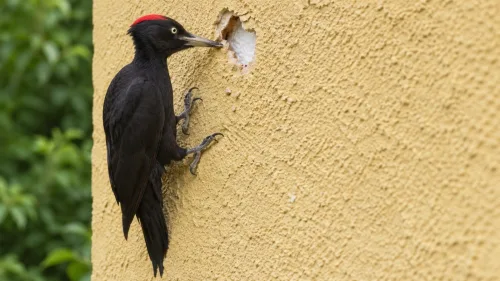
Is a Woodpecker Destroying Your Insulated Façade Here’s a Surprisingly Simple Fix
Woodpeckers can quickly turn an insulated façade into a patchwork of holes. Offering a more attractive food source away from the house may redirect their attention and reduce damage.
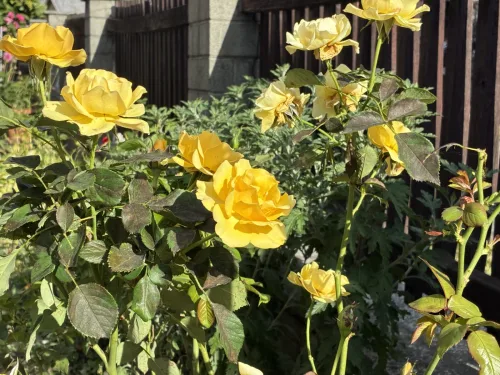
Do You Prune Roses in Autumn You Might Be Doing More Harm Than You Think
Autumn rose care is less about hard pruning and more about helping plants slow down naturally and protecting the crown from winter swings. Stop deadheading and feeding, tidy up only what’s necessary, and focus on mulching the base well.
One mistake when winterising hydrangeas will cost you flowers
How your hydrangeas come through winter directly affects next season’s flowering. Don’t mulch too early, protect buds and roots from cold and wind, and avoid rushing pruning.
Comments (0)
Be the first to comment.