
 English
  Polski
  Deutsch
  Nederlands
  Svenska
  Norsk
Norsk  Dansk
Dansk  Français
  Italiano
  Español
  Português
  Slovenčina
  Suomi
Suomi  Gaeilge
 Want Blue or Pink Hydrangeas We Explain How to Change Their Colour
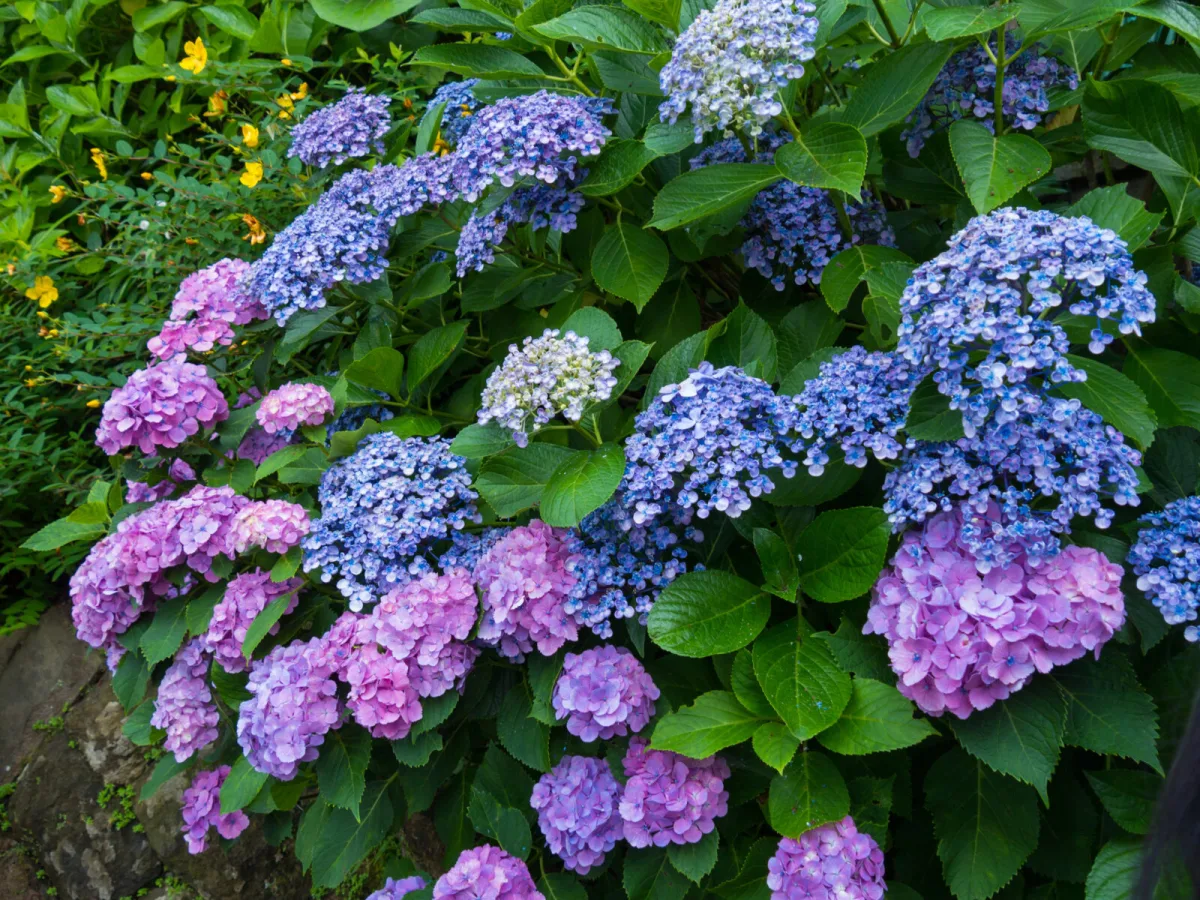
Hydrangeas are among the most popular ornamental shrubs because they can produce large, showy flower heads in soft pastels as well as rich, saturated shades. Many growers are surprised, though, that the final colour isn’t always determined by the cultivar alone. With certain hydrangeas, you can influence the bloom colour quite deliberately—especially when the plant is in good condition, has a suitable position, and the soil around it is kept within the right parameters over the long term.
If you have hydrangeas in your garden that flower pink and you’d prefer a blue version, the most important thing is to understand what the colour mainly hinges on. This isn’t a one-off fix, but a gradual adjustment of the environment so the plant takes up nutrients differently.
Why hydrangeas colour differently
The key to flower colour is the soil reaction—its pH. In more acidic conditions, hydrangeas are more likely to colour blue, while in more alkaline soil they tend to shift into pink tones. Neutral soil usually results in paler shades, and for some types, even white.
That leads to a simple conclusion: if you want blue flowers, you need to gradually lower the soil pH and keep it stable. When the care changes—for example through unsuitable feeding or watering—the soil can drift towards a higher pH over time and the shrub will start reverting to pink.
A simple old-sock trick that helps with a blue shade
One accessible at-home method is to use an old sock and a fertiliser made for rhododendrons. These feeds are formulated for acid-loving plants, so they can supply hydrangeas with nutrients that encourage bluer colouring while also gently helping to acidify the soil.
The method is simple. Pour the fertiliser into the sock, tie a firm knot, and leave the sock overnight in a container of water. In the morning you’ll have a liquid you can use to water the hydrangea—ideally earlier in the day. It’s best to repeat the process after a few days, because the colour change is usually gradual and the plant responds to a longer-term shift in soil conditions.
Blue colouring is most often a response to more acidic soil, which is why it’s important to repeat the process and keep conditions stable.
What can quickly ruin the blue colour
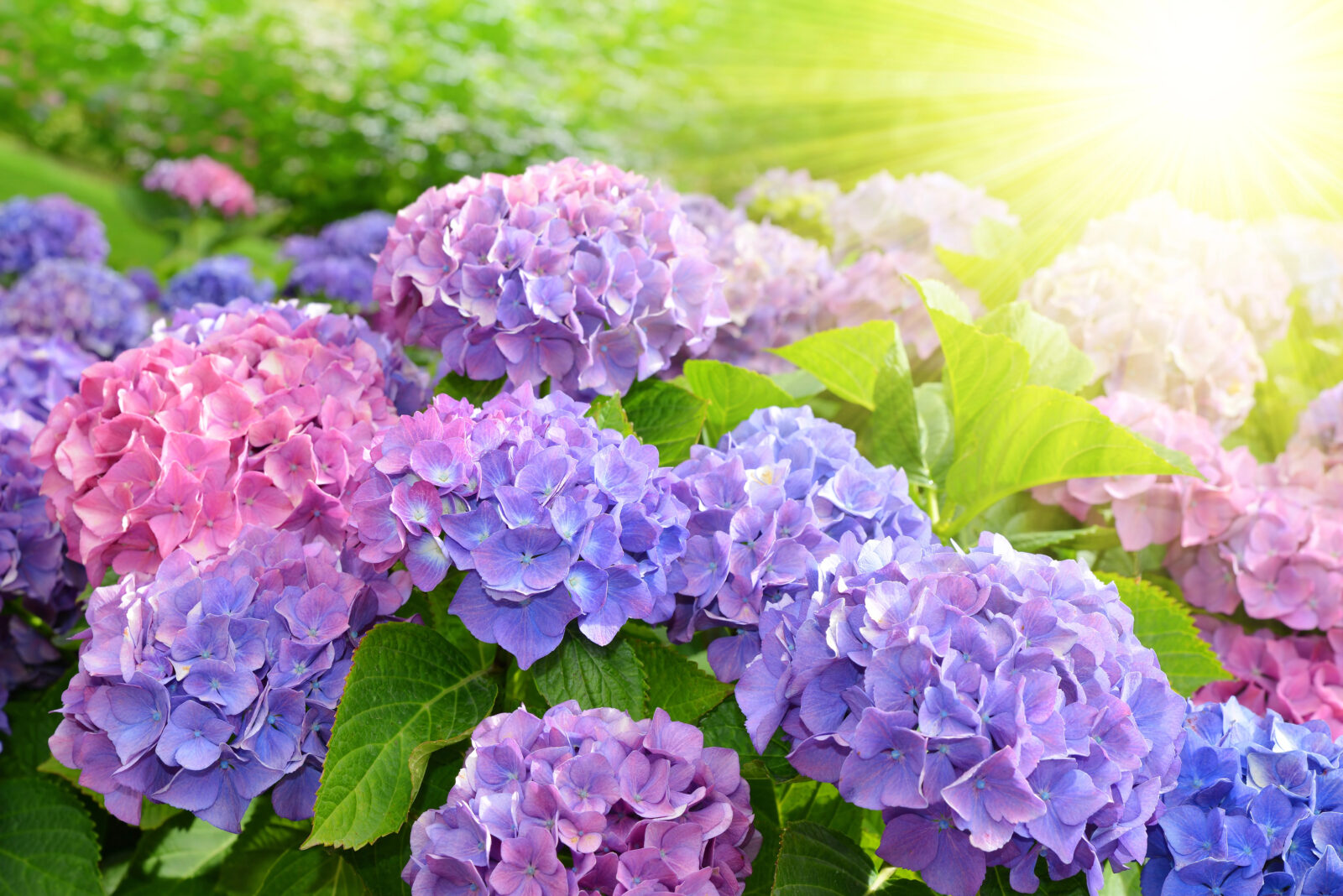
If you’re aiming for blue flowers, it pays to avoid actions that gradually push the soil towards more alkaline values. A potential issue, for example, is frequent feeding with compost, because its effect on the soil may not be ideal for blue colouring. Watering with tap water can play a part too—often it’s harder water, and over time it may alter the soil reaction.
This doesn’t mean you must give these things up completely, but if you want a reliable, stable blue, you need to keep track of what you’re adding to the soil and what water you’re using. With hydrangeas, small changes often show only after a delay, so it’s easy to miss the cause.
How to keep hydrangeas blue for future seasons
Changing the colour is only the first step. Even more important is maintaining conditions so the plant doesn’t switch back to pink next year. Adding organic material that naturally supports a more acidic environment can help. You can use, for example, leaf litter from deciduous and coniferous trees, which breaks down gradually in the soil and contributes to the desired soil reaction.
Another option is to continue watering regularly with the sock-made infusion—sensibly, and with the shrub’s overall health in mind. Some growers also reach for products such as alum, used to support blue colouring, or simple home sources of mild acidification, such as used coffee grounds. It’s always better to proceed gradually, though, because sudden changes in the soil usually don’t suit plants.
The best results come when the hydrangea is healthy, watered regularly, and the soil is kept in the more acidic range over the long term.
Source: Gardener’s World, Epic Gardening, Pestrazahrada.cz

A lover of nature, gardens, and everything that moves, blooms, or grows. He literally grows everything, from herbs to rare species, and he enjoys caring for animals just as much. In his work, he connects modern technology with tried-and-tested grandmotherly methods and is happy when both paths lead to the same goal.
Related articles
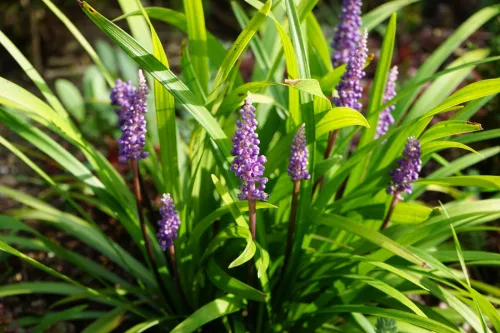
This perennial flowers when others are finishing, thrives in shade and is still little known in the Czech Republic
Liriope is a tough, evergreen perennial with grassy foliage that comes into its own at the end of summer, when many other plants are fading. It thrives in partial shade to shade, needs little care, and adds structure to borders year-round.
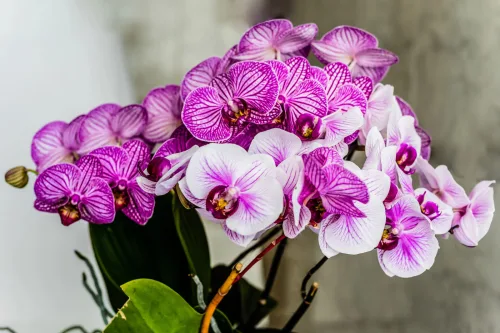
When an Orchid Stops Blooming, a Homemade Fertiliser Made from One Unexpected Ingredient Can Wake It Up
Orchids often survive just fine indoors, but getting them to flower again is the real challenge. The right feeding routine—and a few gentle kitchen-based fertilisers—can help encourage strong growth and the next round of blooms.
Pumpkins Spoil in Winter Because of a Harvesting Mistake
Pumpkins store well only if they’re picked at the right time and cut correctly. The condition of the stem often reveals where things went wrong and why fruit starts to rot in storage.
Comments (0)
Be the first to comment.