
 English
  Polski
  Deutsch
  Nederlands
  Svenska
  Norsk
Norsk  Dansk
Dansk  Français
  Italiano
  Español
  Português
  Slovenčina
  Suomi
Suomi  Gaeilge
 Three Steps That Decide Whether Your Carrots Will Be Straight and Sweet
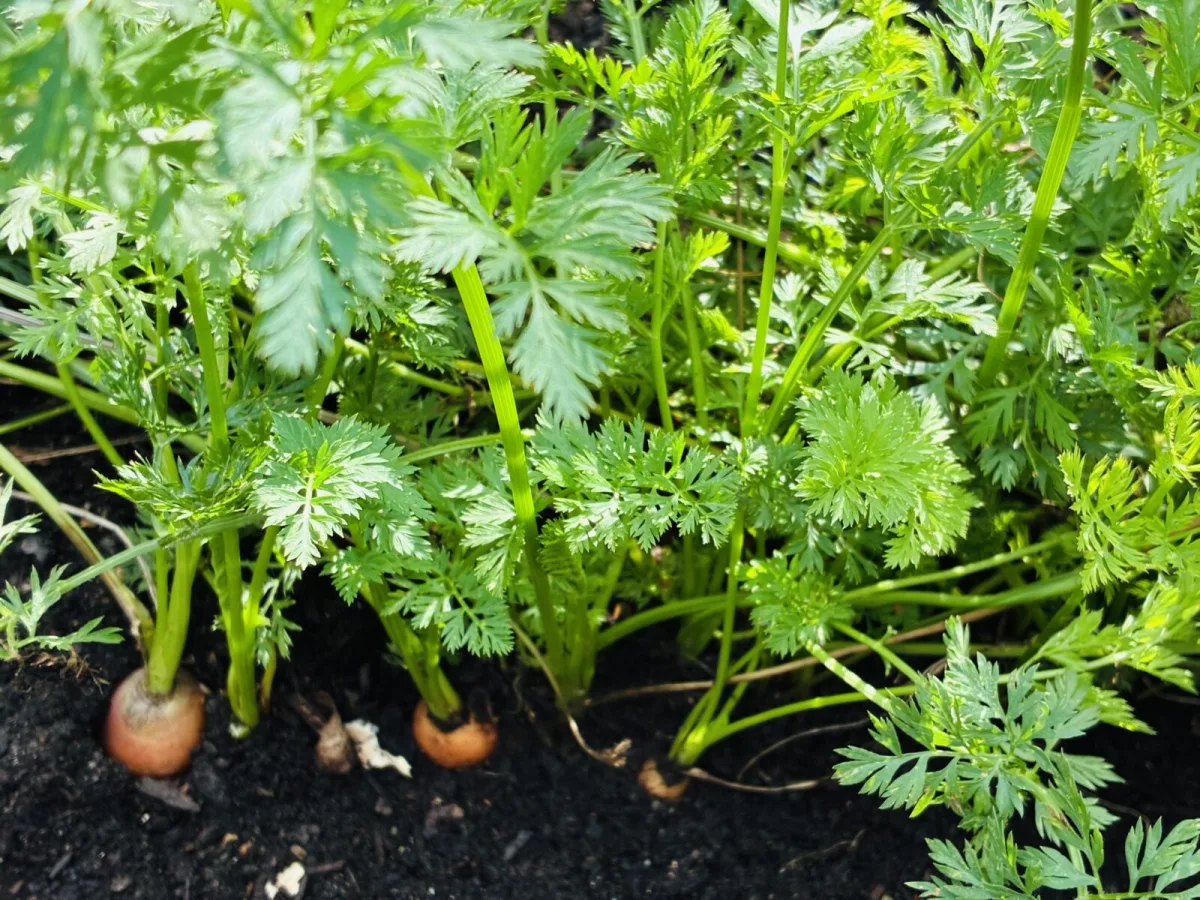
Carrots are among the most popular vegetables to grow at home. They’re naturally sweet, packed with vitamins, and when harvested straight from the bed they have a stronger flavour than shop-bought roots. Even if home-grown roots aren’t always perfectly straight and uniform, the freshness and scent more than make up for it. A big advantage is that carrots don’t take up much space and can be grown successfully in containers on a balcony or terrace.
Carrots like a sunny position and lighter, free-draining soil. They’re fairly drought-tolerant, so in beds they usually don’t need frequent watering. From sowing to harvest it’s typically around three months, but baby carrots for bunching can be ready in roughly four to six weeks.
Choosing a variety to suit your soil and harvest time
There’s a wide range of varieties on the market, differing in root length, shape and colour. Alongside the classic orange types, you can also grow purple, white or yellow varieties. For season-long growing it pays to distinguish early varieties for early sowings from maincrop varieties, which are sown later and suit summer to autumn harvesting.
Soil type has a major influence on how the roots look. In stony, shallow, or heavy clay soil, long varieties often become distorted, fork, or grow crooked. In those conditions it’s usually more practical to choose shorter roots, or even round types. By contrast, deep, light, sandy soil suits long varieties, which can form straight roots. Irregular shapes don’t mean worse flavour, but they can make cleaning and even slicing more difficult.
If you want to reduce the risk of problems, choose varieties with a strong reputation and reliable results. Some types also offer partial resistance to carrot root fly, which is especially useful in areas where this pest is a recurring issue.
Preparing the bed and soil before sowing
Success starts with soil preparation. Before sowing, weed the bed thoroughly, loosen the soil, and break up any hard clods. It’s also important to remove stones, which cause roots to fork, and to level the surface to a fine tilth. The finer the surface preparation, the more evenly the seed will germinate and the better the roots will develop.
If you garden no-dig, you can mulch the surface and choose shorter varieties that can be sown directly into the mulch layer. With this approach, it’s practical to make sure young seedlings aren’t lost in weeds and that the mulch doesn’t dry into a hard crust.
Sowing in the bed and succession sowings for a continuous harvest
Carrots are best sown directly where they are to grow, because transplanting often disturbs the taproot and can result in forked or twisted carrots. The main sowing period is usually from April to early July. Early varieties can be sown as early as February or March, but only with protection from cold, for example under cloches or fleece.
In prepared soil, make a shallow drill about 1 cm deep. It helps to water the bottom of the drill first, so the seed has steady moisture. Sow the seed as thinly as possible along the length, and place the next rows about 15 to 30 cm apart depending on how you plan to hoe and maintain the bed. Germination can take a while, so patience and even moisture in the surface layer are important.
For a longer harvest window, it works well to sow small batches repeatedly, roughly every three to four weeks. This gives you a steady supply of carrots for bunching as well as roots for everyday kitchen use. If seedlings come up too thickly, thin them so the roots don’t compete. The target spacing between plants is about 5 to 7.5 cm, as overcrowded crops more often produce misshapen roots.
Growing carrots in containers
Carrots can be grown very well in pots and planters, which is ideal for anyone without a traditional bed. Use a good-quality peat-free multipurpose compost and a container that matches your chosen variety. For round and short varieties, a deeper window box is usually enough, but for long carrots you need a genuinely deep container—otherwise the roots will twist or stay short.
Sowing in containers is similar to sowing in the ground. Sow the seed thinly on the surface or in a shallow drill and cover with about a 1 cm layer of compost. Then water thoroughly. Containers dry out faster than garden soil, so you’ll need to check moisture more often, especially in warm weather.
Seasonal care and watering
Carrots are generally robust and in beds often manage without regular watering. Still, during extended dry spells they benefit from a deep soak about once every two weeks so growth stays even. Big swings in moisture can lead to roots splitting. In containers, watering is needed more often, because compost dries out quickly and uneven moisture shows up sooner.
Protecting against pests and the importance of crop rotation
The biggest threat is usually carrot root fly. Its larvae tunnel into the roots, which reduces harvest quality and increases the risk of rot. Prevention matters, because damage often only becomes obvious at harvest. Timing can help: later sowings after mid-May may miss the first flight, and harvesting before the end of August can reduce the risk from the second.
The most reliable protection is to cover the crop completely with a fine mesh that prevents the pest from reaching plants. The cover must be carefully sealed all around the edges. Crop rotation is also important, because growing carrots in the same place repeatedly increases problems and can leave a source of infestation in the soil for the following year.
Weeding without unnecessary risk
Carrots grow more slowly at first, so fast weeds can easily overtake them. Regular weeding is therefore essential. Between the rows you can hoe carefully, but right next to the plants it’s better to pull weeds by hand to avoid damaging the crown. When working, try not to crush or disturb the foliage unnecessarily, because the smell can attract pests. If you use a protective mesh, put it back in place as soon as possible after weeding.
Harvesting at the right time for the best flavour
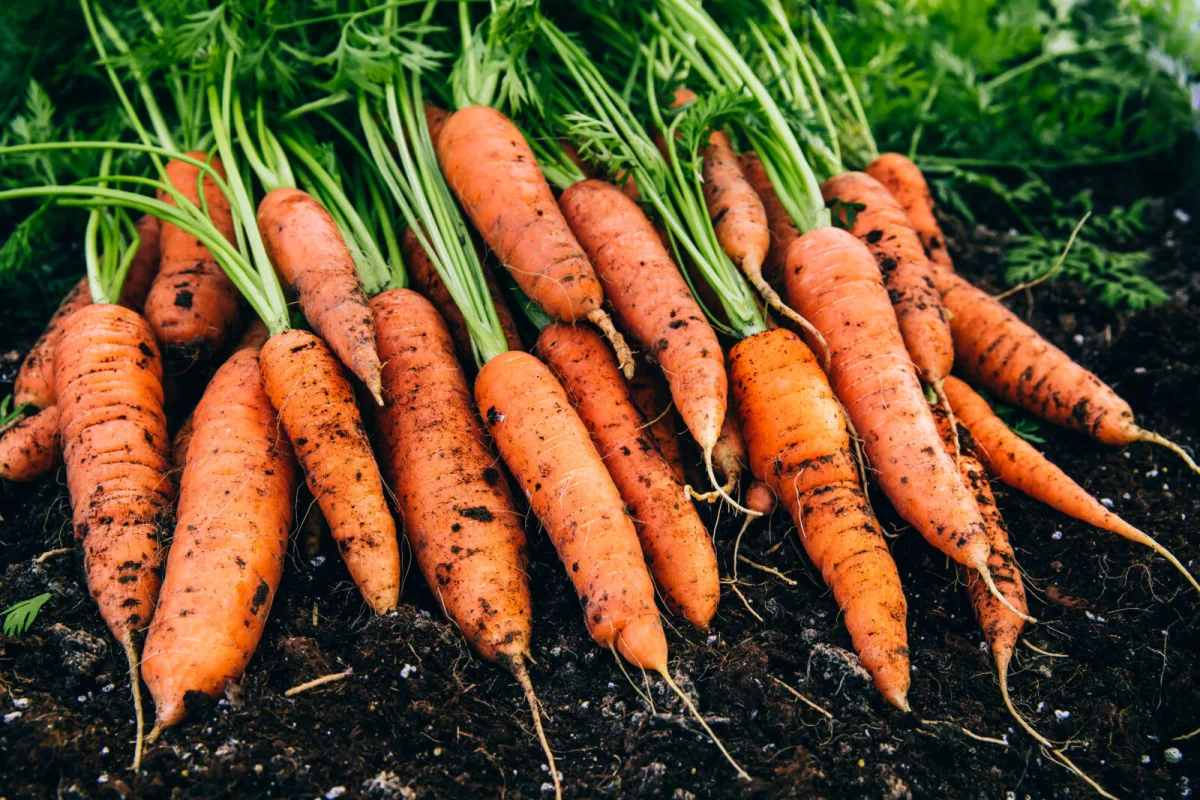
Carrots are usually ready to harvest about 12 to 16 weeks after sowing, depending on the variety and conditions. It’s best to harvest gradually as soon as the roots are large enough for kitchen use. Chasing maximum size doesn’t always pay off, because as roots overgrow they often lose tenderness and sweetness. Spring sowings taste best when they’re young, crisp, and good eaten raw.
You can pull baby carrots for bunching after just one to two months, when they have a strong flavour. Maincrop varieties are usually harvested in summer and early autumn, but part of the crop can be left in the ground longer. In heavier soil, use a garden fork to loosen the roots carefully so they don’t snap.
Storing and leaving carrots in the ground over winter
At the end of the season you have two options. You can leave carrots in the ground and lift them as needed. In that case, remove the tops and cover the bed with an insulating layer such as straw or cardboard so the roots don’t suffer in frost. This is practical if the soil doesn’t stay waterlogged for long periods in winter.
However, if the bed often becomes soggy in winter, it’s usually safer to lift the roots and store them. Storing in a box or crate helps keep carrots in good condition into late autumn and often into winter too, provided conditions are cool and stable.
Common issues and how to prevent them
Carrots are usually a low-trouble crop, especially if you harvest them young. The most vulnerable stage is freshly germinated seed and small seedlings, which can be damaged by slugs. Another common issue is root damage from carrot root fly larvae, as well as deformities caused by stones or compacted soil. Prevention comes down to careful bed preparation, choosing a suitable variety for your conditions, regular weeding, and consistent protection with a fine mesh where the pest is present.
Practical rule: thin sowing, timely thinning, and even soil moisture are the three steps that most often decide whether roots will be straight, sweet, and free from cracks.
Source: Rhs, Almanac , Pestrazahrada.cz
Related articles
The Christmas Amaryllis That Can Bloom for Years but Most People Throw It Away After Flowering
Hippeastrum is a spectacular winter-blooming bulb that, with the right care, will flower again year after year. Learn how to plant it correctly, look after it after flowering, and bring it into dormancy so it reliably reblooms.
How to Grow Winter Garlic for a Much Bigger Harvest
Autumn planting is the key to strong, healthy winter garlic, but the details make all the difference. With the right timing, bed choice, seed-clove treatment and a simple bicarbonate trick, you can noticeably boost yield.
A tree or shrub planted properly in autumn can outpace spring stock and improve fruiting
Many fruit trees and soft-fruit shrubs establish better when planted in autumn, because roots keep growing while the top is dormant. Done well, this head start means stronger spring growth, less watering, and a healthier first year.
Comments (0)
Be the first to comment.