
 English
  Polski
  Deutsch
  Nederlands
  Svenska
  Norsk
Norsk  Dansk
Dansk  Français
  Italiano
  Español
  Português
  Slovenčina
  Suomi
Suomi  Gaeilge
 The Secret to a Thriving Dracaena Getting Watering and Timing Right
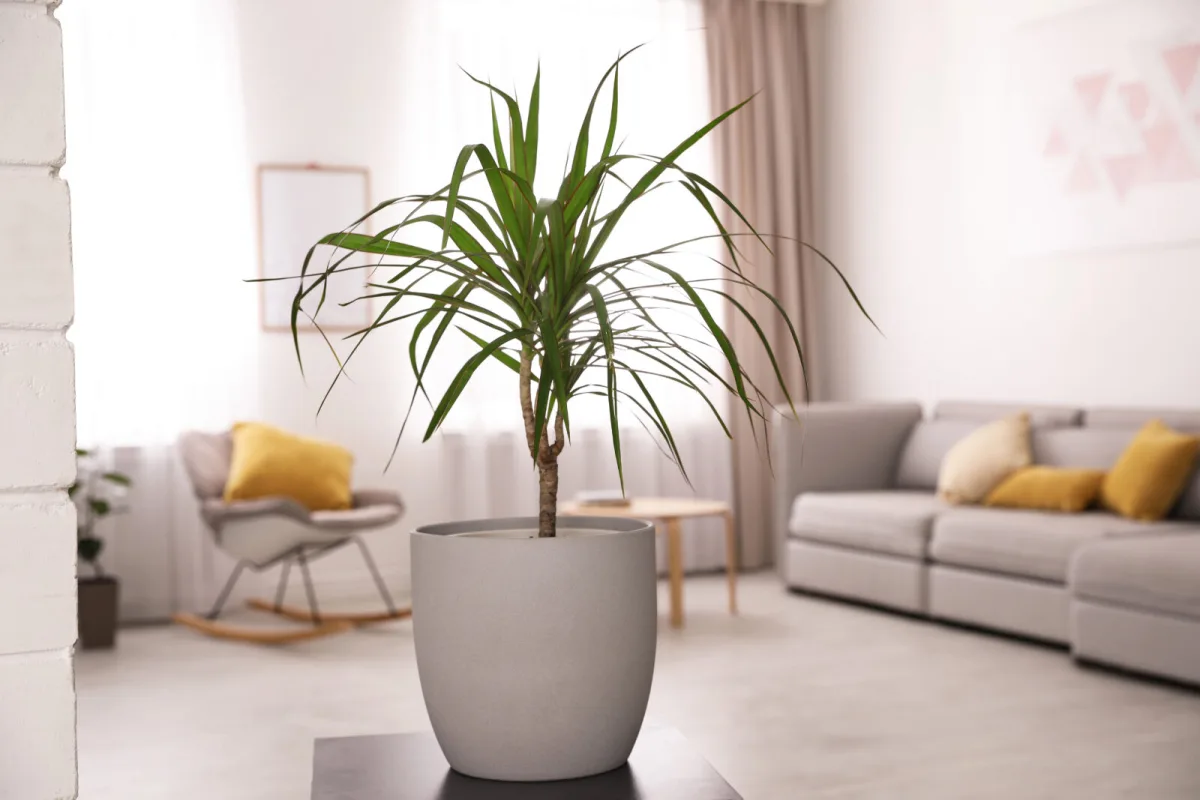
Watering is the most important requirement for Dracaena marginata if you want the plant not only to survive, but to thrive long term. Poor watering shows up faster than most other care mistakes. When deciding when to water again, it pays to watch the amount of light and the season above all. The more light and warmth the plant gets, the faster it uses water and the sooner the compost dries out.
You can lightly mist the leaves all year round, ideally with soft water. In general, dracaenas do better with higher humidity around them, because in drier air they tend to drop their lower leaves and the cane can end up bare at the base.
Light and season determine how often to water
In lower light and at cooler temperatures, dracaena grows more slowly and therefore needs less water. On the other hand, in a warm, bright spot it will grow more actively and will need watering more often. Whatever the conditions, one rule always applies: only water when the compost is genuinely dry.
A simple check with your finger works well. Push it in to a depth of about 5 to 8 centimetres. If your finger comes out with dry, dusty compost and you can’t feel any moisture, it’s time to water. If it’s still a little damp inside, delay watering.
Two reliable ways to water dracaena
Water from the top with a watering can or bottle
The most common method is classic top watering. With dracaena, a rhythm of roughly once every 5 to 7 days often works in practice, but always go by how dry the compost is and the conditions in your home. The key is not to overwater, so the roots don’t suffer from lack of air.
As a guide, you can adjust watering like this: in a hot summer in full light, the plant may need a small amount even daily or every other day, while in heat but with less light, roughly a glass of water per week is often enough. In cooler weather in a bright spot, you’ll usually stick to watering about once a week, and in winter in a lower-light position a smaller amount about once every two weeks can be sufficient. For younger, smaller plants give less; for larger specimens you can gradually increase the amount, but as a rule don’t change the frequency.
With potted plants, consistency matters especially because their only source of water is what you provide. At the same time, the pot must be able to drain excess water away, otherwise the risk of waterlogging increases dramatically.
Dunk, soak and drain method
For growing in pots, the dunk-and-drain method is also very practical. In summer you can do it about once a week; in winter, twice a month is usually enough, again depending on how quickly it dries out. Fill a larger container or the sink with water, place the pot in so the water level reaches the surface of the compost, and let it soak for about 10 minutes. Then take the pot out and allow it to drain thoroughly. Once it stops dripping, put the plant back in place. This technique helps moisten the entire root ball evenly.
Watering in spring and summer
Spring and summer are usually the period of most vigorous growth. Water regularly, but only after the surface and then the deeper layer of compost have dried out. In most homes, an interval of about 3 to 7 days is sufficient. The goal is to keep the roots in a cycle of moist compost that then dries down, not in compost that stays wet all the time.
During the growing season you can add a liquid houseplant feed about once every two weeks. Make sure the compost is slightly moist before feeding, because fertiliser applied to completely dry compost can unnecessarily stress the roots. If you prefer a natural option, you can occasionally use gentle homemade plant teas, always at a sensible concentration.
Watering in autumn and winter
In winter, dracaena slows down and moves into a quieter phase. The compost can then take much longer to dry, sometimes several weeks. In practice, watering roughly once every 15 to 30 days is often enough, unless the plant is in a very bright, warm spot. Start reducing watering gradually and water only when the compost has dried at least through the top few centimetres.
This is also the time when feeding is usually stopped, typically from October until March or April. If the dracaena gets more direct sun in winter or sits close to a heat source, it may use water faster, so it’s worth checking dryness in the pot rather than relying on the calendar.
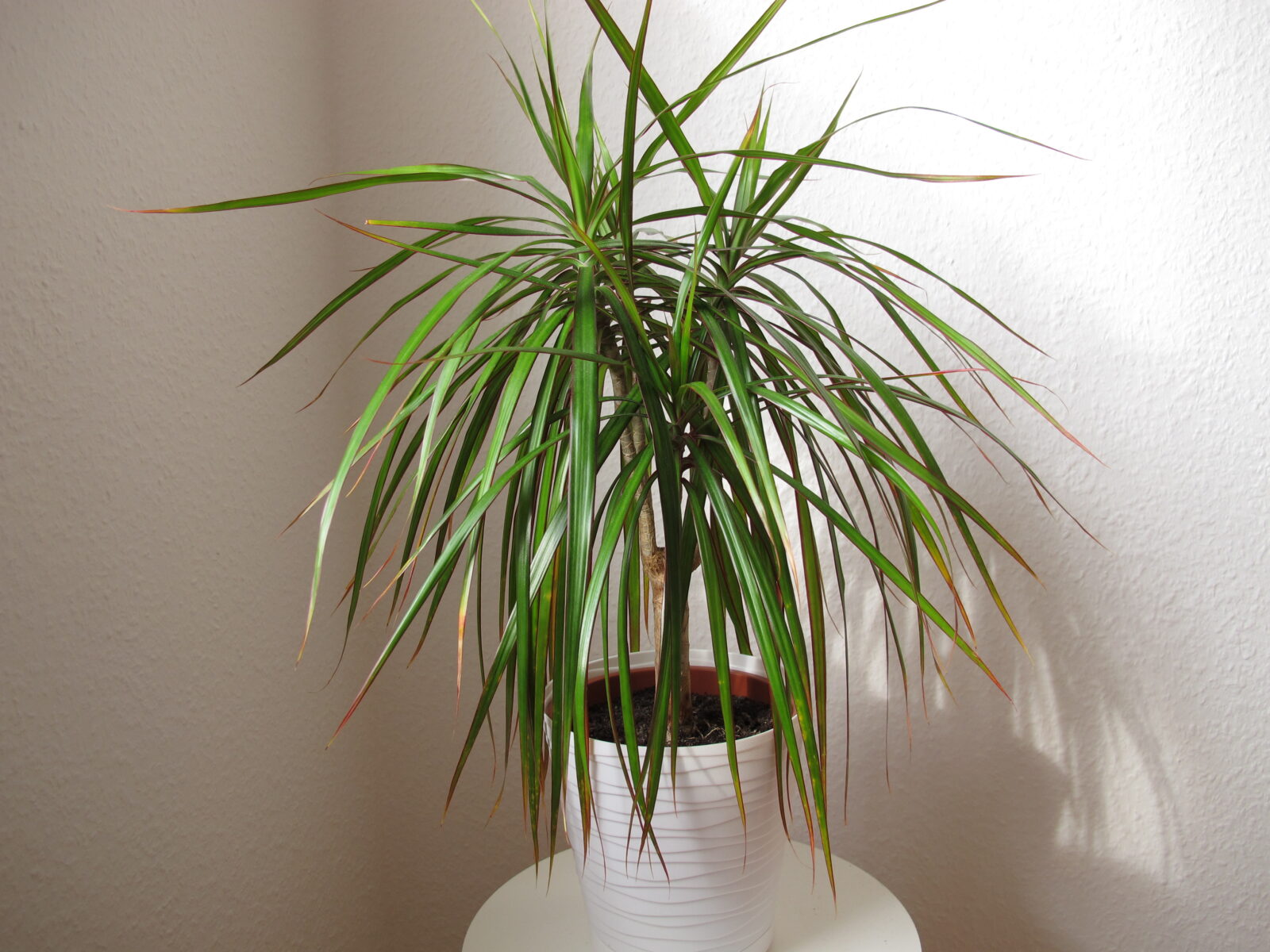
The most common watering mistakes and how to spot them
Overwatering often shows up as yellowing leaves and general decline. Roots in waterlogged compost suffer from lack of oxygen, and the plant then reacts by taking up water and nutrients less effectively.
Too little water, on the other hand, leads to drying stems, brittleness and leaf drop. If this happens, go back to checking the compost regularly and water in a way that re-wets the root ball evenly.
Humidity has virtually no upper limit for dracaena. The higher you can keep it, the better the plant will look, especially at the base. Along with misting, an occasional shower for the leaves helps too, and it also removes dust. Clean leaves breathe better and use light more efficiently, making this a surprisingly important part of care.
A practical trick to slow down drying
A thin layer of mulch intended for houseplants on the surface of the compost can also help. This layer holds moisture and can push back the need for the next watering by a day or more. It makes it easier to maintain a more stable environment in the pot, and the plant copes more easily with temperature swings and dry indoor air.
Source: Nature & Garden, Pestrazahrada.cz

A lover of nature, gardens, and everything that moves, blooms, or grows. He literally grows everything, from herbs to rare species, and he enjoys caring for animals just as much. In his work, he connects modern technology with tried-and-tested grandmotherly methods and is happy when both paths lead to the same goal.
Related articles
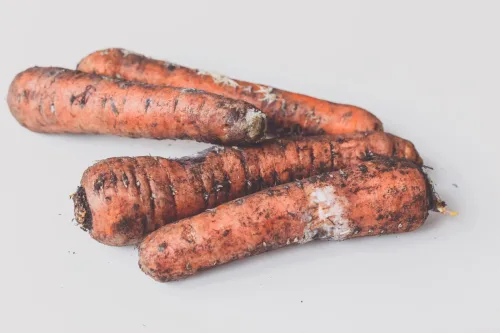
Next year you can harvest better if you don’t sow carrots where they won’t thrive
Carrot root fly can ruin carrots, parsley and celery from the inside out, often without obvious warning until harvest. Better site choice, rotation, later sowing and simple physical barriers can dramatically cut damage next season.
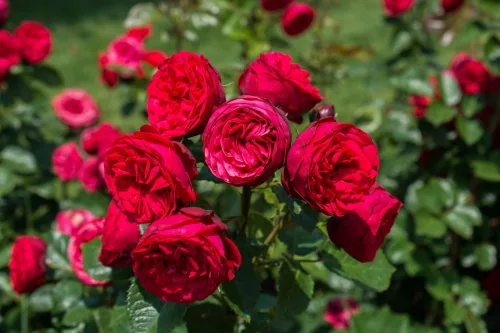
How to Propagate Roses from Cuttings at Home and Fill Your Garden with Blooms Almost for Free
Want more roses without paying for new plants? With a few healthy cuttings and a simple plastic-bottle mini greenhouse, you can root new bushes at home in just a few weeks.
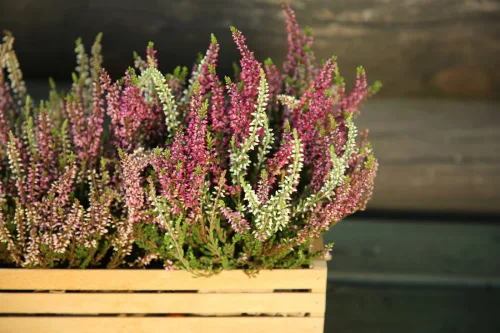
Heathers can cope where other plants won’t, but one soil detail decides everything
Heathers and heaths are tough evergreen shrubs that can flower across the seasons when you choose the right types. Success hinges on matching the plant to your soil pH and ensuring free drainage.
Comments (0)
Be the first to comment.