
 English
  Polski
  Deutsch
  Nederlands
  Svenska
  Norsk
Norsk  Dansk
Dansk  Français
  Italiano
  Español
  Português
  Slovenčina
  Suomi
Suomi  Gaeilge
 Ten Proven Tips for a Thick, Green Lawn All Year Round

A dense, deep-green, well-kept lawn doesn’t happen by accident. It needs consistent care throughout the season, the right tools, and a few key steps that are worth repeating every year. When you combine cleanup, feeding, mowing, and improving soil structure, the lawn strengthens, copes better with drought and weeds, and looks compact and crisp.
Lawn cleanup and a soil check
After winter—and regularly through the year—it’s important not to leave layers of leaves, twigs, needles, and plant debris on the grass. This litter blocks light and airflow, holds moisture, and increases the risk of disease. In spring, before growth really kicks in, you can safely rake the lawn through and remove anything that doesn’t belong there.
Part of the spring start should also be a quick check of soil pH. The ideal range for turf grasses is roughly 6 to 7. Outside this range, grass may struggle to take up nutrients, even with diligent fertilising. More acidic soil can be corrected with liming; overly alkaline soil can be adjusted with, for example, peat or sulphur.
Scarifying as the key to density and health
If you want a lawn that looks fresh and isn’t greyed by moss or thatch, you can’t do without scarifying. A scarifier disrupts the top layer of turf, pulls out moss, dead material, and some weeds, and opens space for new growth. Most commonly, this is done twice a year—spring and autumn—so the sward has time to recover.
Overseeding and choosing the right seed
After scarifying, the lawn is often thinner, which makes it the perfect moment to overseed. Regular overseeding once a year helps maintain density, fill bare patches, and improve the overall look. For a fine, compact lawn, mixes with a higher share of fescue are often chosen, as it forms a dense sward and is also used on showpiece areas.
Fertilising by season
A lawn needs nutrients not only for growth, but also to cope with wear, mowing, and weed competition. In spring, a fertiliser with a higher nitrogen content is useful because it supports faster green growth and recovery after winter. In autumn, a potassium-rich fertiliser is more suitable; potassium improves resilience and helps build a stronger root system ahead of winter.
How often to mow for a dense sward
How often you mow depends on the result you want. For a truly neat, dense lawn you need to mow more frequently—potentially even twice a week during periods of vigorous growth. With regular cutting, grass tillers more, thickens up, and instead of stretching upward it forms a compact turf.
A quality mower and a sharp blade are essential
It’s not only the frequency that matters, but also the quality of the cut. Dull blades tear the grass; the tips then dry out, the lawn looks dull, and it becomes more prone to problems. That’s why it pays to sharpen blades regularly and keep the mower in good condition. On larger plots, a garden tractor can make the work significantly easier—just be sure to consider the terrain, cutting width, and handling.
It’s better to remove the clippings

Leaving cut grass on the surface can, in some situations, increase the risk of mould and other diseases—especially when you mow often and the clippings build up in a layer. The remnants also stick easily to shoes and get tracked around the garden and into the house. A cleaner option is collecting in the grass box or raking up after mowing, so the sward has access to air.
Watering in heat determines colour and vitality
A closely cut lawn loses moisture quickly during hot spells. Turf grass roots tend to be shallower, so without regular water the sward can dry out and yellow easily. It works well to water so the moisture reaches the roots, ideally in the morning and evening when evaporation is lower. This keeps the grass springy, fresh, and evenly green.
Treat weeds as competition, not decoration
Daisies, dandelions, and other plants often appear in lawns. They can look pretty, but in terms of lawn density they are competitors. If they spread, they can crowd out the grasses and create a patchy, uneven surface. The simplest route is regular hand removal, roots and all, so the weeds don’t return quickly.
Aeration helps the soil and the roots
Aeration is a simple way to improve the flow of air and water into the soil. For smaller areas, ordinary garden forks are enough—regularly spike the turf. If you want to boost the effect, you can gently lift the spiked section and loosen the soil slightly. The lawn then breathes better, the roots strengthen, and the surface recovers more easily after wear and after heavy rain.
The best results come from combining steps, not a one-off fix. When cleanup, scarifying, overseeding, fertilising, mowing, watering, and aeration are rotated through the year, the lawn gradually thickens and looks smart and presentable.
Source: Hoselink, Swardman, Extension USU, Pestrazahrada.cz

A lover of nature, gardens, and everything that moves, blooms, or grows. He literally grows everything, from herbs to rare species, and he enjoys caring for animals just as much. In his work, he connects modern technology with tried-and-tested grandmotherly methods and is happy when both paths lead to the same goal.
Related articles

Overwintering Geraniums in a Box Ensures Stronger Growth and More Abundant Spring Bloom
Many people throw balcony geraniums away after the season, even though they can overwinter very well. Stored correctly in a box in cool, dark, dry conditions, they’ll come back stronger and flower generously in spring.
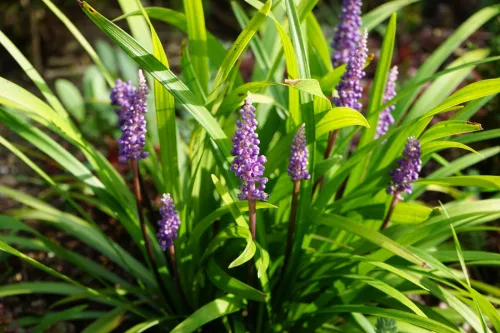
This perennial flowers when others are finishing, thrives in shade and is still little known in the Czech Republic
Liriope is a tough, evergreen perennial with grassy foliage that comes into its own at the end of summer, when many other plants are fading. It thrives in partial shade to shade, needs little care, and adds structure to borders year-round.

When an Orchid Stops Blooming, a Homemade Fertiliser Made from One Unexpected Ingredient Can Wake It Up
Orchids often survive just fine indoors, but getting them to flower again is the real challenge. The right feeding routine—and a few gentle kitchen-based fertilisers—can help encourage strong growth and the next round of blooms.
Comments (0)
Be the first to comment.