
 English
  Polski
  Deutsch
  Nederlands
  Svenska
  Norsk
Norsk  Dansk
Dansk  Français
  Italiano
  Español
  Português
  Slovenčina
  Suomi
Suomi  Gaeilge
 A Smart Garden Design for Children with Safety and Room for Imagination
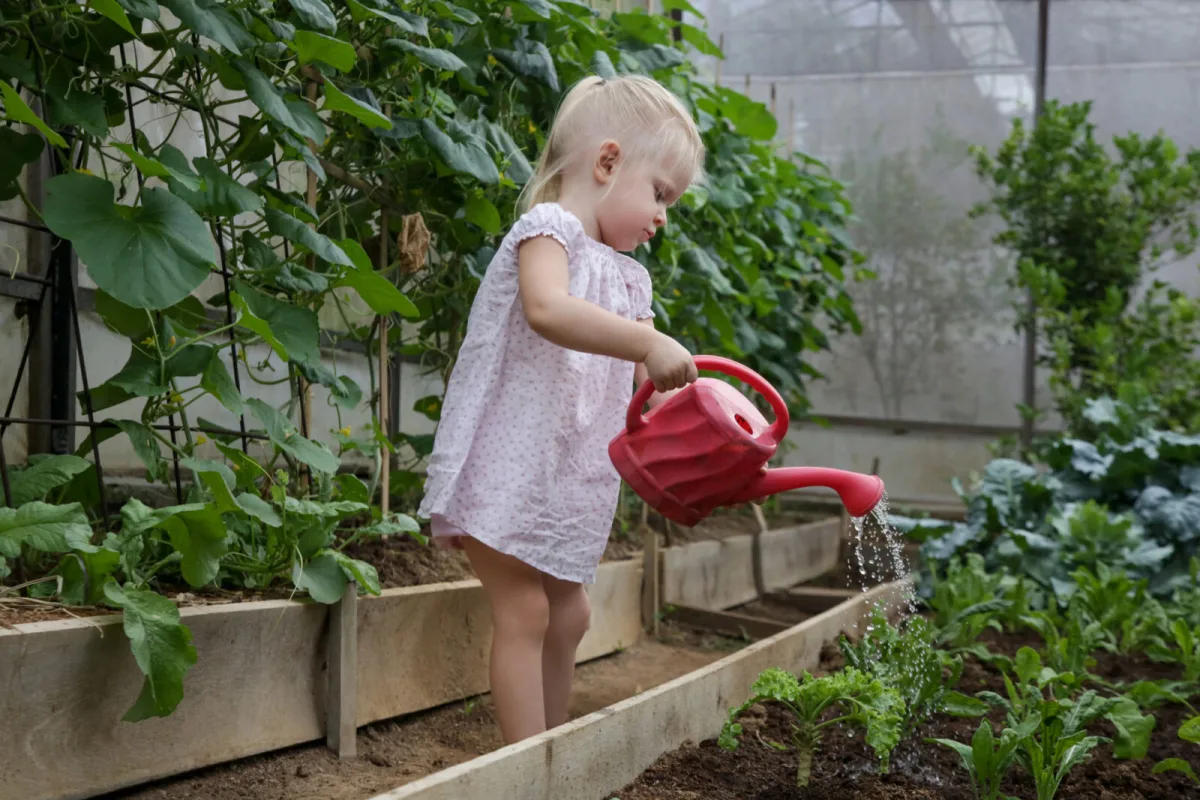
Creating a garden that’s safe for children and still keeps them happily engaged at different ages is often easier than it seems. It doesn’t matter whether you have a toddler, a primary schooler, teenagers, or whether grandchildren and friends with children only visit now and then. Even without a slide, trampoline or other fixed play structures, you can shape a space that looks beautiful while encouraging movement, imagination and calm moments.
We don’t stop playing because we grow old; we grow old because we stop playing.
A good children’s garden is built first and foremost on smart use of space. Children often need only a few prompts and the freedom to choose, and their imagination fills in the rest. It’s also important to remember how quickly a child changes, and that the garden should be able to change along with them.
Five practical principles for a child-friendly garden
Room to move, even in a small garden
The most common worry is that without a large lawn it won’t work. In reality, even a smaller plot can offer plenty of opportunities for movement if you build in a route and a destination. Winding or looped paths work brilliantly, visually extending the distance and naturally inviting children to run. The surface can vary too, such as a mown strip through grass, mulch, or recycled materials that create interesting texture underfoot.
For developing coordination, simple natural features are ideal. Chunky log rounds can become a bridge over an imaginary ravine; a larger stone can be an island that must be jumped onto. If you have a safe place to hang them, a ladder or climbing ropes can be an irresistible goal. If space doesn’t allow, it’s not a failure; some of those movement needs can be met with regular trips to parks or public gardens that are accessible year-round.
A hiding place that grows with your child
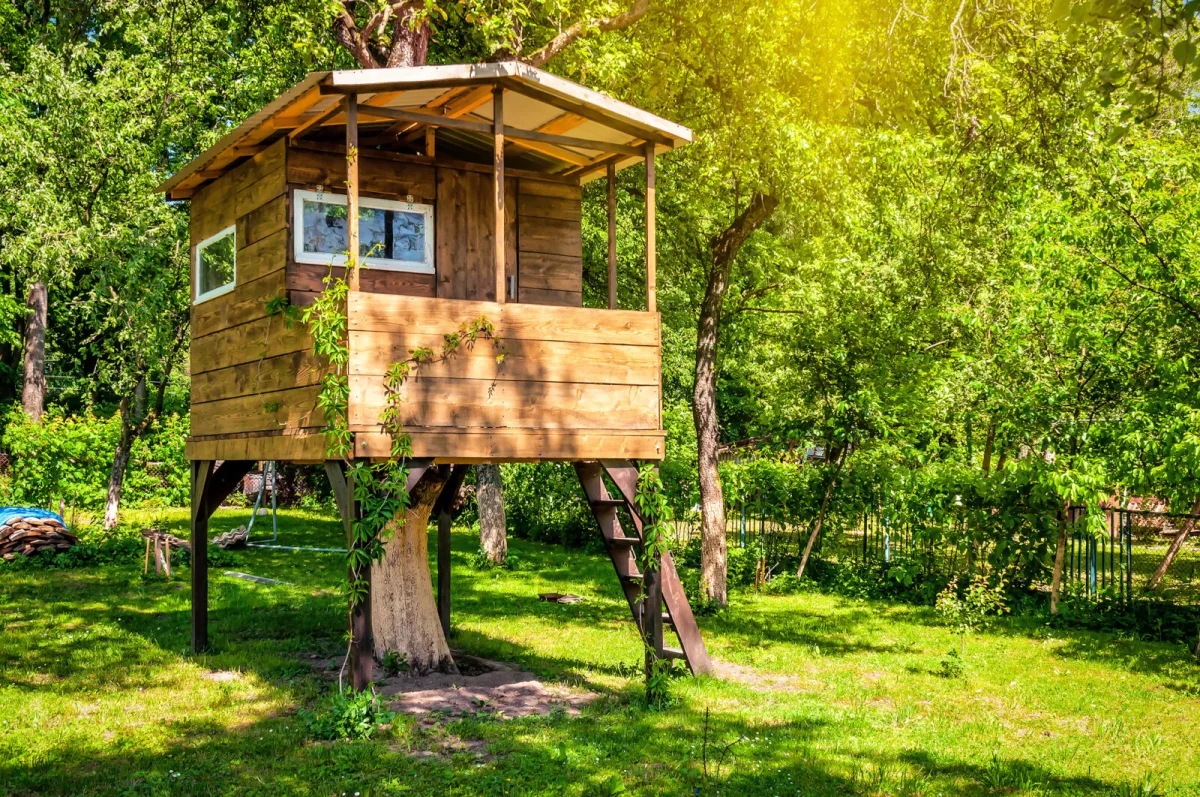
Taking cover from the world for a moment is natural at any age. For the youngest children, the best hideaway is one an adult can easily keep an eye on, while the child still feels they’ve found a secret spot. It might be a simple shelter made from a tarp, a small canopy propped on poles, or a low nook tucked behind a tree trunk. The sense of adventure matters more than an elaborate build.
With older children and teenagers, the need shifts. A corner that offers privacy for reading, listening to music or chatting with friends becomes valuable, without them feeling constantly on display. Planting is excellent for softly screening an area and creating the impression of being in a different world. That kind of green backdrop also fuels imaginative role-play, where one day a child becomes a giant and the next a woodland creature.
A shared space where the whole family comes together
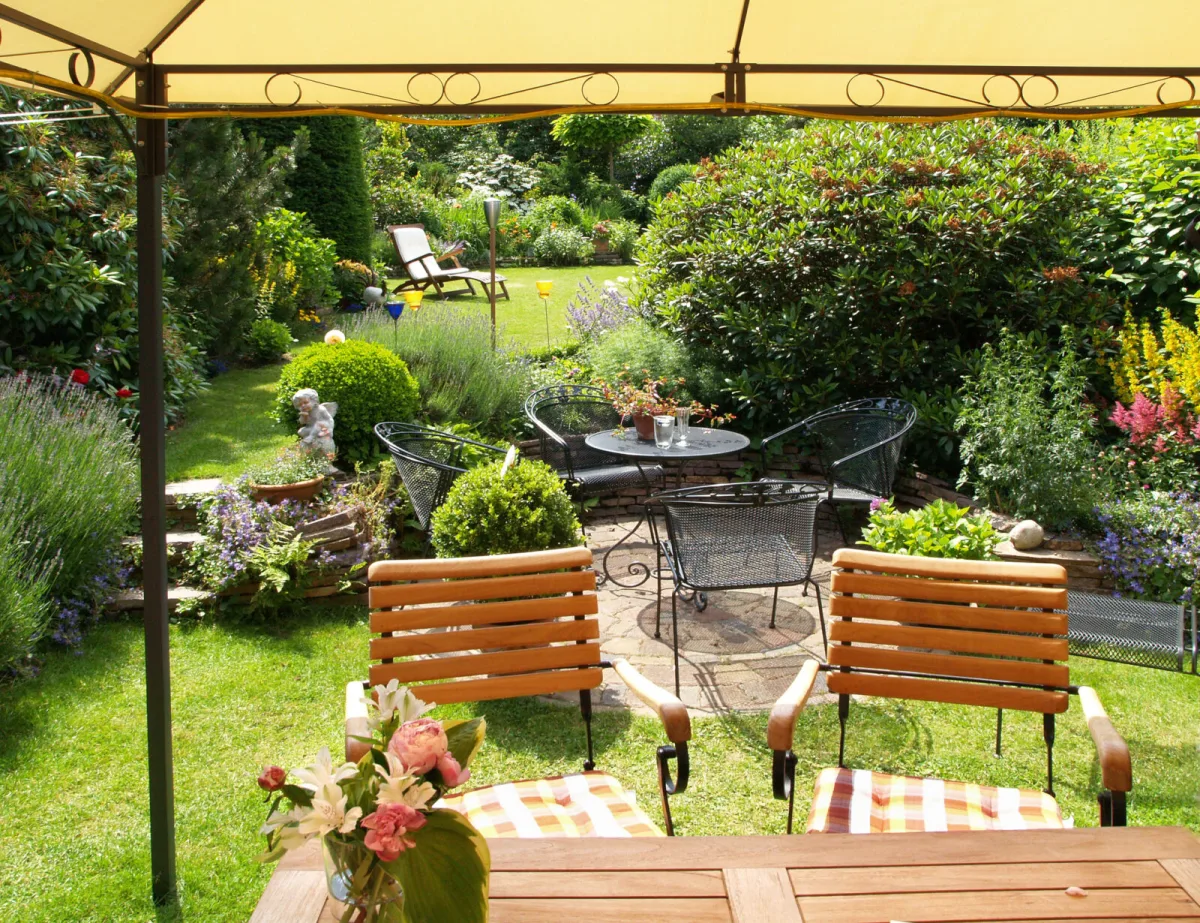
Children love building their own worlds, but it’s just as important to have a place everyone returns to together. That might be an outdoor dining area, a patio, or simply a part of the garden with seating. Even a few log stools around a fire pit can create a strong sense of togetherness, as long as the space feels inviting and is actually used.
The atmosphere can be shaped with simple décor the whole family can contribute to. Outdoor cushions, fairy lights, candles in jars, or small arrangements made from garden-picked flowers give the spot a personal feel. Children then sense that the garden isn’t only a place for play, but also a place for shared time.
Space for learning and creativity without complicated kit
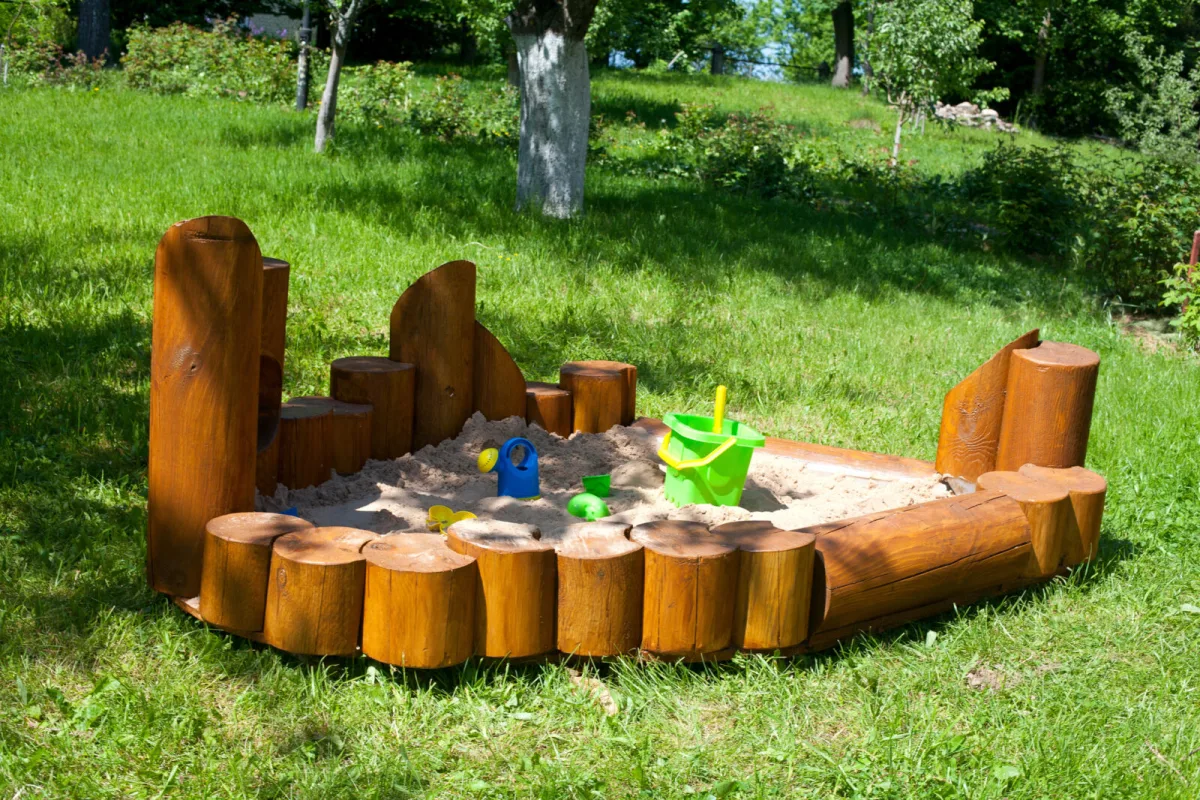
A garden can be an outdoor classroom without feeling like school. Drawing and writing outside is easy, for example on a chalkboard or on a simple work surface protected from rain. For small experiments, sand, soil, twigs and pebbles are perfect and can become tools, brushes and building materials.
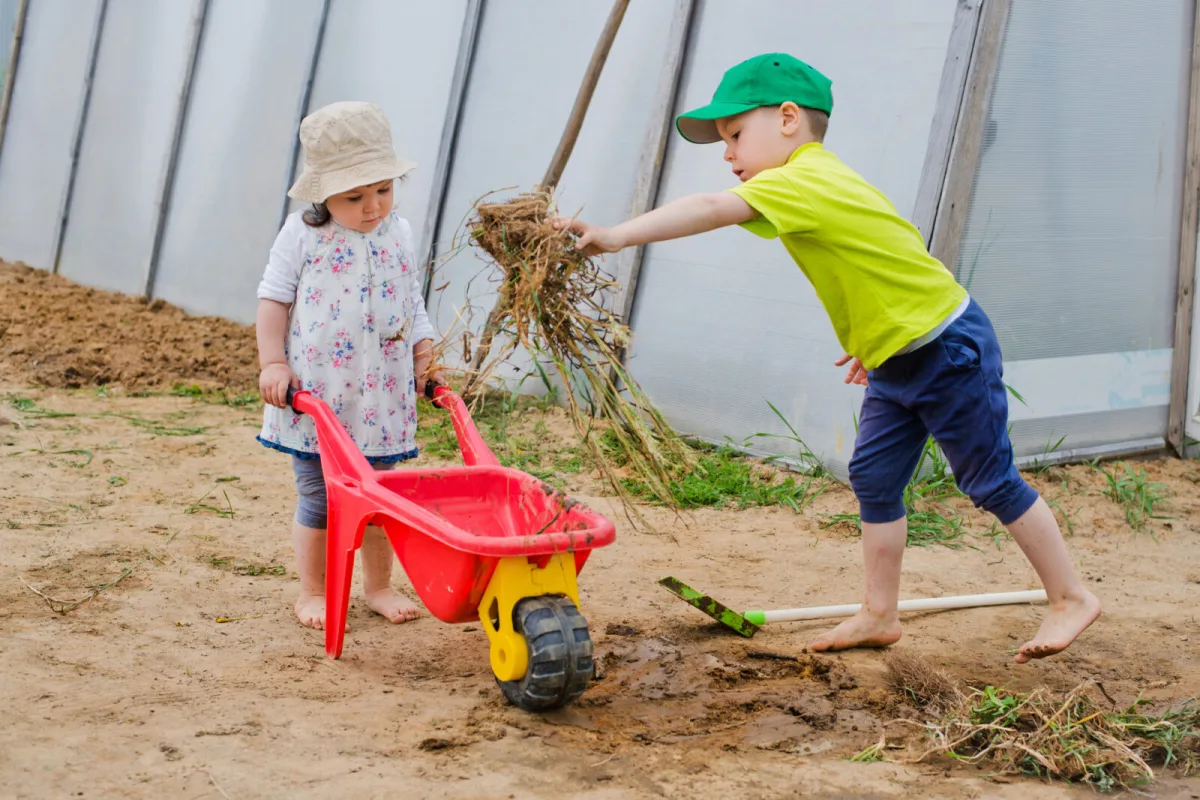
As children grow, it’s worth giving them a place where they can dig, pot on and try their own ideas. A few growing containers, a small bed, or even a little tool shed they can decorate in their own style is enough. When a child sees something grow from their care, they learn patience and responsibility and build a relationship with the world around them. There’s real value, too, in understanding where food comes from and experiencing that nature takes time.
A space for discovery that builds confidence
The chance to explore safely helps children feel secure, strengthens resilience and supports a healthy relationship with nature. Contact with soil and the everyday microorganisms found outdoors is often linked with the body learning to respond better to outside influences. Most important, though, is that children have space to observe and ask questions.
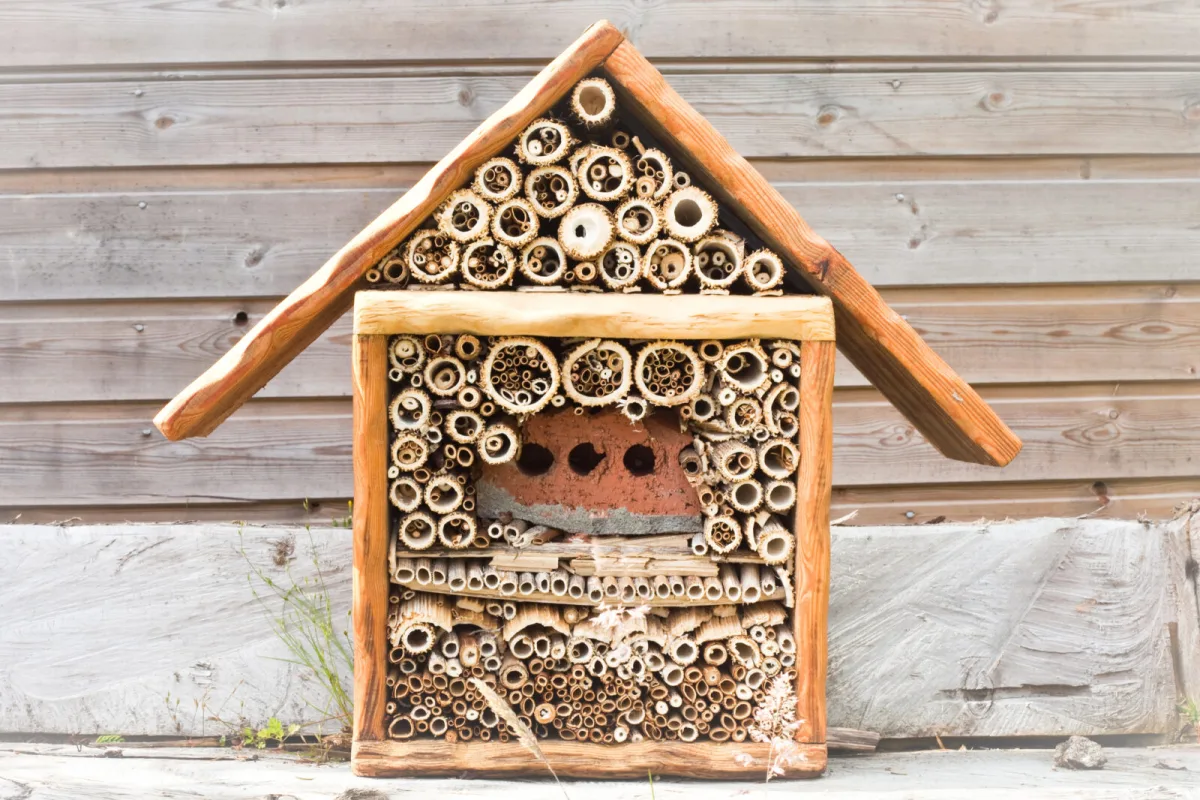
Let them discover life in the garden. They can watch tiny creatures near water, look for insects in longer grass, notice butterflies on shrubs and bees in flowers. When they have time and adults don’t unnecessarily interrupt the moment, imagination switches on fully and an ordinary corner of the garden becomes an expedition into the unknown.
Extra tip: Let the garden mature along with your children
Think ahead. Your child won’t stay small and delicate forever, so it pays to design the garden so it can be adjusted over time. Hideaways can gradually gain more privacy, play features can evolve into attractive garden elements, and the growing area can expand as interest increases.
Inspiration that works every day
The best children’s garden isn’t usually the most expensive, but the one that provides different kinds of space. When a child gets the chance to move, hide away now and then, meet others, make something and discover something, the garden becomes a place they’ll return to for years. And for adults, it remains a pleasant, attractive setting that doesn’t feel like a temporary playground, but like a true outdoor home.
Source: Rhs, The Den Kit company , Pestrazahrada.cz
Related articles
Ten Minutes in Autumn Decide Your Currant Crop
Currants crop best on younger wood, while old stems drain the plant and shade out productive new growth. A quick autumn prune keeps the bush open, healthy, and reliably fruitful next season.
White Painted Trunks in Orchards Protect Trees from a Hidden Winter Threat
Whitewashing tree trunks in winter isn’t decoration. It helps prevent bark cracking caused by sharp day-to-night temperature swings and reduces the risk of disease entering through wounds.
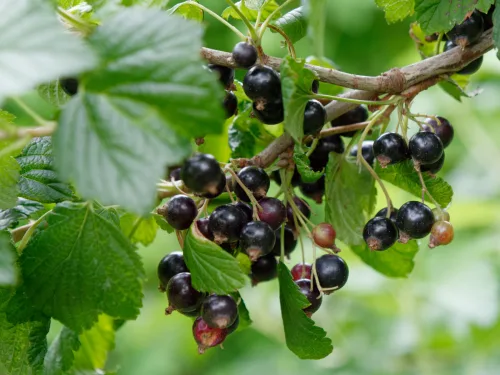
What to do for currant bushes in October so they’re loaded with fruit next year
October is the best time to set currant bushes up for a strong spring and a heavy crop. With the right pruning, protection and autumn feeding, you’ll encourage more flower buds and better winter hardiness.
Comments (0)
Be the first to comment.