
 English
  Polski
  Deutsch
  Nederlands
  Svenska
  Norsk
Norsk  Dansk
Dansk  Français
  Italiano
  Español
  Português
  Slovenčina
  Suomi
Suomi  Gaeilge
 Russian Sage Flowers from Summer into Autumn with Almost No Care
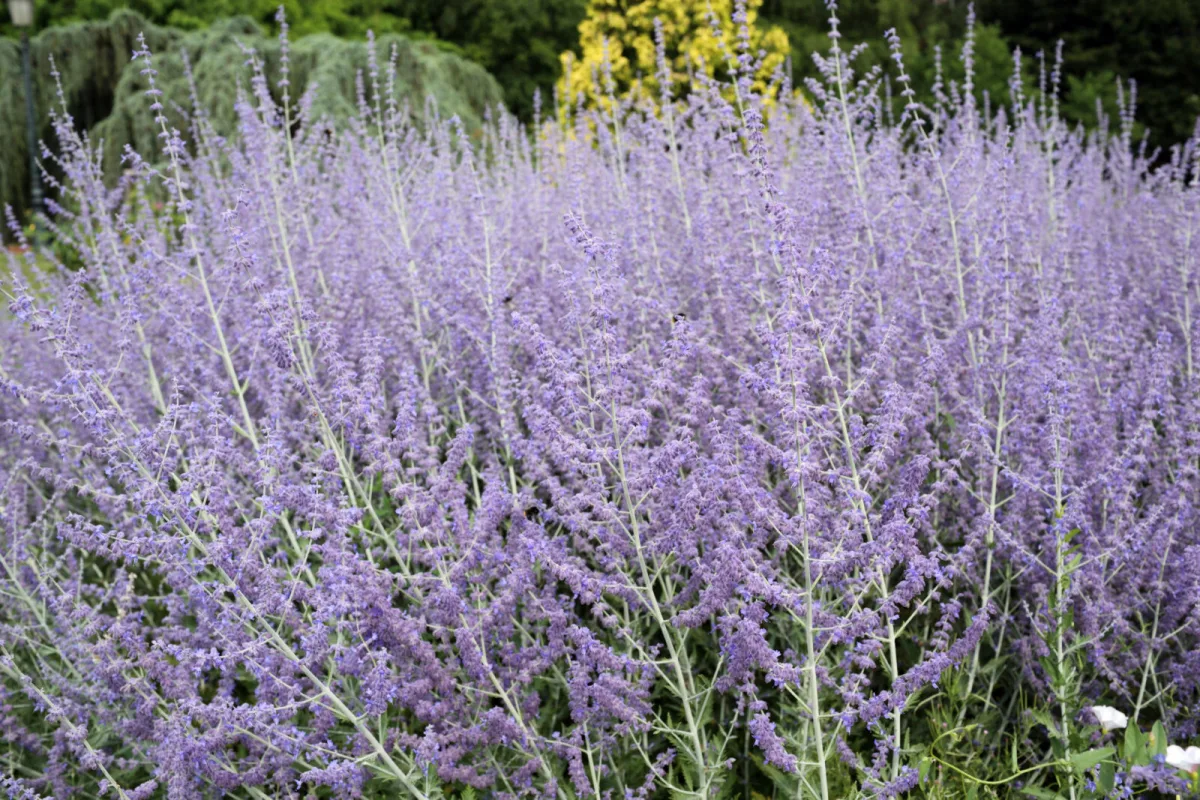
Russian sage, botanically Perovskia atriplicifolia (also known as Salvia yangii), is one of those perennials that can give borders a light, airy look and long-lasting colour without fussy care. It forms an open, cloud-like habit and from mid-summer right through to autumn carries delicate lavender-blue flowers that seem to float above the silvery green foliage. That long flowering season makes it a standout for sunny plantings, where it can be hard to keep colour going right to the end of the season.
It’s a herbaceous, woody-based perennial to subshrub that, once rooted in, behaves as an almost no-maintenance plant. The flowers draw pollinators including bees and butterflies, and even hummingbirds where they occur. The leaves are aromatic; when rubbed they release a stronger, rather sharp scent typical of relatives in the mint family. It originates in Central Asia, which shows in its tolerance of heat and drought.
Where Russian sage grows best
It suits a wide range of regions, roughly corresponding to hardiness zones 4 to 9. In colder locations, it’s worth planning for winter protection, especially for younger plants. Most common varieties reach about 60 to 90 cm in height and spread, though taller forms exist. Thanks to its drought tolerance, it’s ideal for water-wise plantings, spots with limited irrigation, or borders designed to reduce maintenance.
In a planting scheme it works well as a filler in mixed perennial borders, and it can also form a low, living edging along paths or soften the look of a fence. It looks best in larger drifts where its hazy effect really shows, and some more compact cultivars can be grown in containers without any trouble.
Planting step by step
The most important thing is to choose a site in full sun. Ideally, it needs at least 6 to 8 hours of direct light a day, because too little sun leads to leggy growth and flopping. Russian sage likes hot, on-the-dry-side conditions and soil that drains quickly. When planting, allow spacing of about 60 to 90 cm so plants have room and air can circulate well.
Loosen the soil where you’re planting and dig a hole slightly wider and deeper than the root ball. Remove the plant from its pot and gently tease the outer roots. Set it so the top of the root crown sits level with the surrounding soil. Backfill, firm lightly to eliminate air pockets, and then water thoroughly so the soil settles.
Soil, watering and feeding without common mistakes
It performs best in average to lean soil with a slightly alkaline reaction, but it will tolerate other soil types as long as they’re not waterlogged. Paradoxically, overly rich, heavily fertilised soil can make the plant shoot up quickly, go soft and sprawl outwards. Good drainage is essential, because prolonged wet conditions lead to disease and root rot. In containers, use a quality all-purpose compost and make sure the pot has reliable drainage.
Once established, it copes well with drier conditions and needs only minimal watering. In the first year after planting, however, water regularly to build a deeper, stronger root system. Once it’s settled, it’s better to water less often but deeply than to give frequent small amounts. Overwatering is a more common problem than drought.
Feeding is usually unnecessary. If you want to support vigour without encouraging lanky growth, a light top-dressing of compost in spring as a gentle mulch is enough. Heavy nitrogen feeding isn’t desirable, as it reduces stem strength and spoils the plant’s shape.
How to prevent flopping and when to cut it back
Taller cultivars can tend to splay, especially in partial shade or overly fertile soil. If stems start to lean, you can tie them in, but often the site choice and planting approach are the real fix. A good preventative is growing it in larger groups or among sturdier perennials that provide natural support and also highlight contrasting textures.
Spent stems and seed heads can be left over winter, as they add structure to the border during dormancy. The main cutback is done in early spring, once the plant starts to break into growth again. At that time, cut back to about 15 cm to encourage compact growth and abundant flowering.
Recommended varieties for different spots
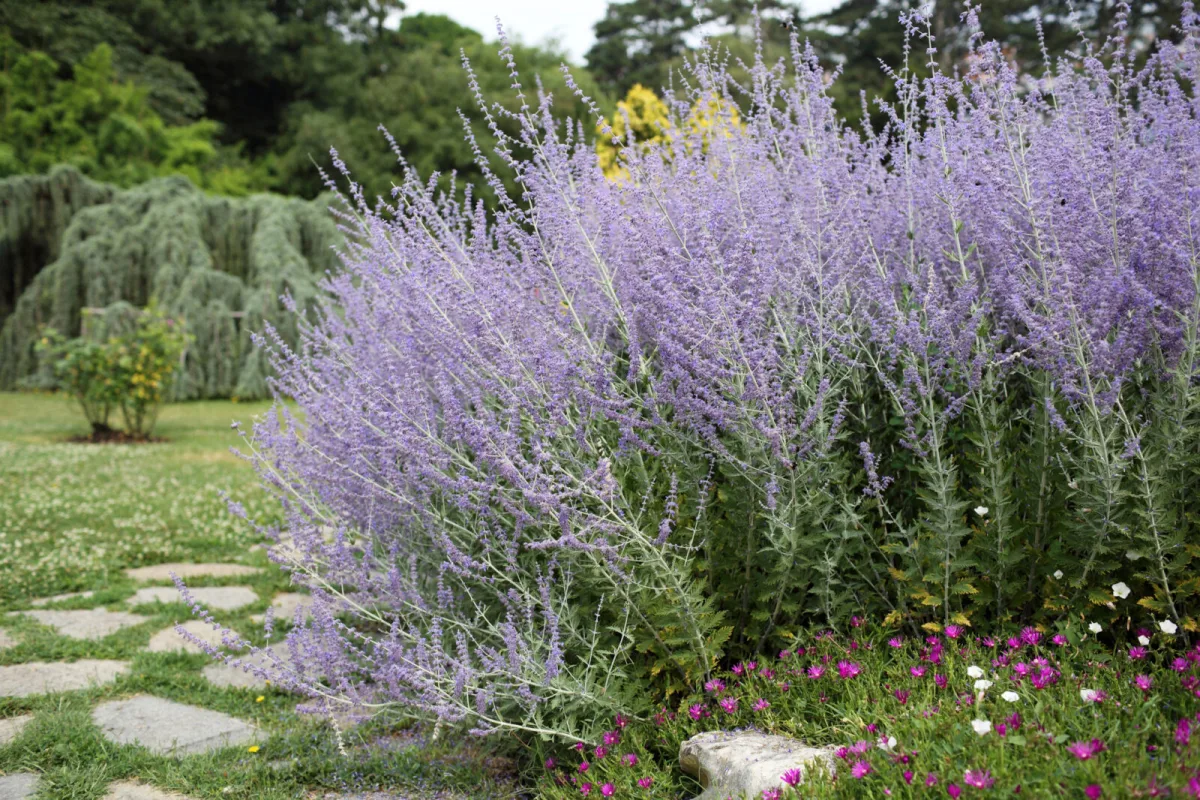
If you’re looking for a compact plant that stays reliably upright, the cultivar Denim n Lace is a proven choice. It carries clouds of pale sky-blue flowers above grey-green foliage and usually grows to around 60 to 90 cm. Stronger stems help it hold its shape without support, making it suitable for smaller gardens, container planting, or more continuous plantings along paths.
For a richer, darker flower colour, Sage Advice is often chosen. The blooms tend to be a deep lavender-purple, and the plant keeps a compact height of about 90 cm. It works well in dry strips beside paths, as low structure within the garden, in containers, and on drier slopes where it also helps stabilise the soil.
Common questions about growing Russian sage
Is Russian sage edible The leaves aren’t recommended for consumption and may be mildly toxic. It’s more often used dried in scented mixes, for example in potpourri or sachets for linen drawers.
When does it flower The main flowering period runs from mid-summer and often lasts into autumn, making it one of the most rewarding perennials for late-season colour.
When to plant It establishes fastest when planted in late spring, once the soil has warmed sufficiently. You can also plant later, roughly up to six weeks before the first typical frost. In the worst summer heat, it’s better to delay planting to avoid heat stress.
Is it deer resistant Thanks to the strong aroma of the foliage, it tends to be less appealing to deer and is not usually browsed.
Can it spread uncontrollably In ideal conditions it can self-seed or spread via rhizomes. Unwanted seedlings are best removed early, and any creeping growth can be contained. Newer cultivars are often better behaved and tend to be less inclined to spread.
Uses in garden design and colour combinations
The fine texture of both flowers and foliage makes it an excellent plant for the back or middle of a border, where it can knit stronger colours together. Blue and purple tones pair beautifully with yellow and orange, so it works well alongside plants with warm-toned flowers. Used over larger areas it looks calm and elegant, while in smaller gardens it can serve as a striking focal point in a container if you choose a shorter variety.
It’s also practical on dry banks, where Russian sage visually softens the slope and helps with stabilisation. In urban plantings it proves itself in narrow strips by kerbs as a low-water perennial that can partly replace more demanding lawn.
Similar plants and how to tell them apart
Lavender and Russian sage
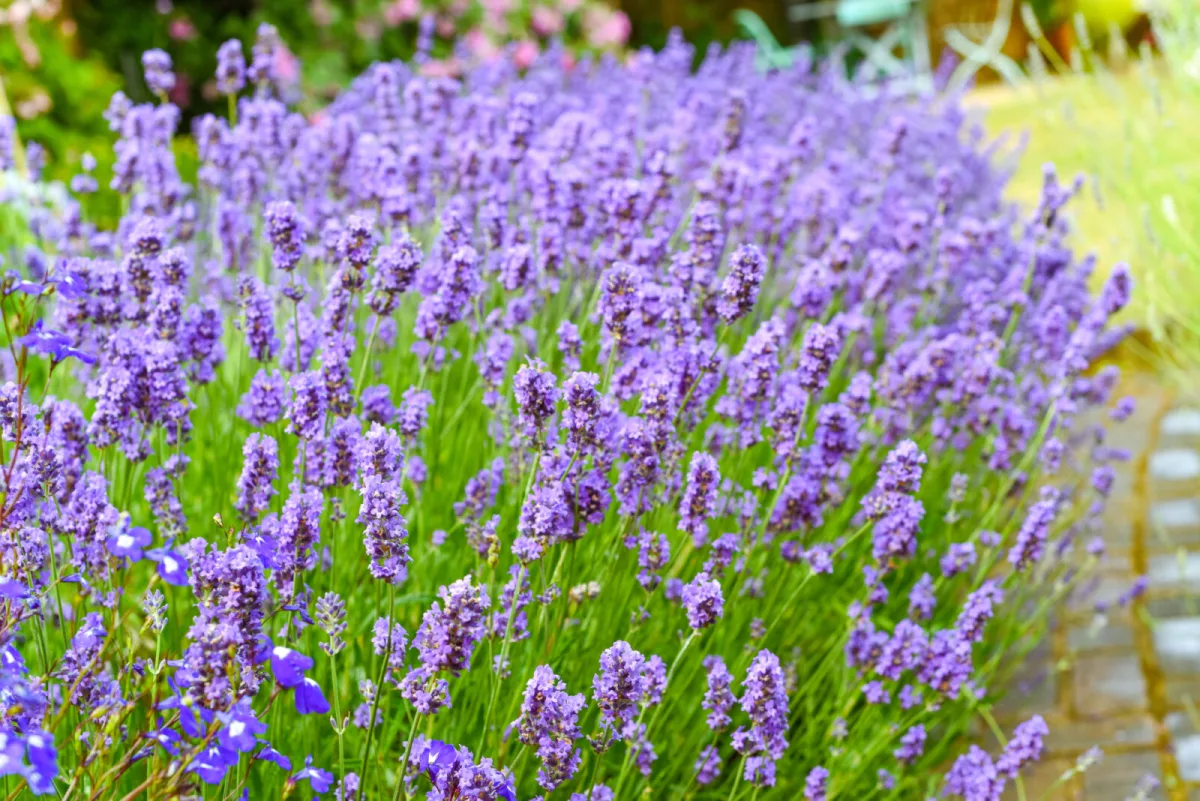
Lavender can look similar at first glance and thrives in the same conditions: sun and drier, free-draining soil. Russian sage is usually larger, however, and its flowers are shaped differently, typically more distinctly tubular. Lavender offers a wider colour range, usually flowers earlier, and has a sweeter, more pleasantly intense scent with common culinary and medicinal uses. Russian sage smells sharper and is more often used simply as an aromatic ingredient in scented mixes. A benefit of Russian sage is greater toughness in colder regions where lavender can sometimes suffer winter damage.
Catmint and Russian sage
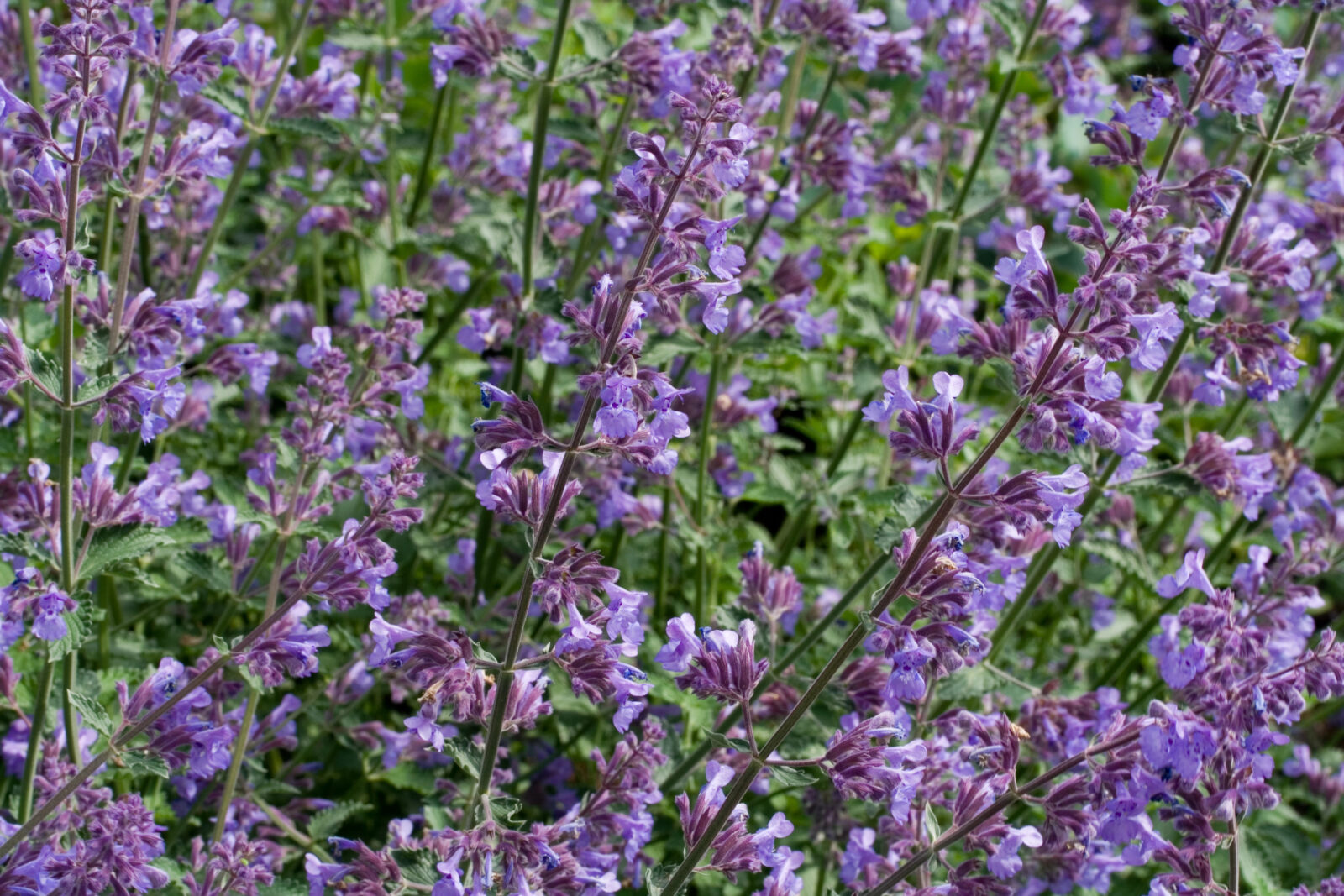
It’s even more often confused with catmint, because both flower for a long time and love sun. Catmint is usually about half the size, starts flowering earlier, and may have blooms not only blue but also white or pink. Russian sage flowers are longer and more tubular, while catmint looks looser and its flowers have softly fringed edges. Catmint leaves are smaller and often softly felted, whereas Russian sage tends to have longer, smoother leaves with more distinct lobing. In hot sites Russian sage is often tougher, while catmint can be a bit more cold-hardy in the very coldest locations.
Plants that pair well with Russian sage
It combines best with species that also require full sun and free-draining soil. For low-maintenance planting, it works well alongside tough shrubs and perennials that tolerate drought and hold their structure. For late-season interest, add late-flowering plants or ornamental grasses to extend the border’s effect into autumn. It also fits naturally into xeriscape and water-wise schemes with other plants that handle heat, wind and irregular watering, creating a stable, long-lasting composition.
Source: Proven Winners, Farmer Gracy , Pestrazahrada.cz
Related articles
The Christmas Amaryllis That Can Bloom for Years but Most People Throw It Away After Flowering
Hippeastrum is a spectacular winter-blooming bulb that, with the right care, will flower again year after year. Learn how to plant it correctly, look after it after flowering, and bring it into dormancy so it reliably reblooms.
How to Grow Winter Garlic for a Much Bigger Harvest
Autumn planting is the key to strong, healthy winter garlic, but the details make all the difference. With the right timing, bed choice, seed-clove treatment and a simple bicarbonate trick, you can noticeably boost yield.
A tree or shrub planted properly in autumn can outpace spring stock and improve fruiting
Many fruit trees and soft-fruit shrubs establish better when planted in autumn, because roots keep growing while the top is dormant. Done well, this head start means stronger spring growth, less watering, and a healthier first year.
Comments (0)
Be the first to comment.