
 English
  Polski
  Deutsch
  Nederlands
  Svenska
  Norsk
Norsk  Dansk
Dansk  Français
  Italiano
  Español
  Português
  Slovenčina
  Suomi
Suomi  Gaeilge
 How to Prune a Standard Oleander for Dense Growth, Health and Plenty of Flowers in a Cool Climate
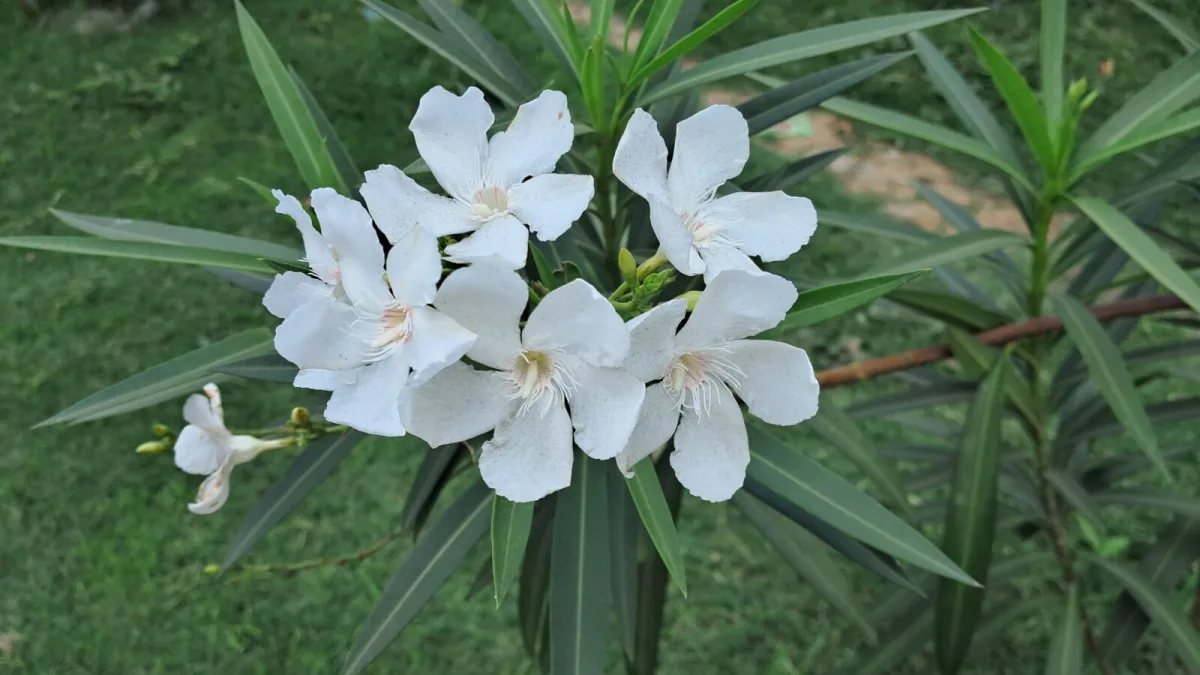
In Mediterranean countries, oleander is often seen in gardens trained as a standard with a raised crown. In the Czech climate, however, it is usually grown in containers because it doesn’t tolerate prolonged frost. That affects pruning too: it’s best timed so the plant overwinters well while not losing next season’s flowers.
It’s worth remembering that oleander naturally wants to grow as a shrub. Training it as a standard therefore means regularly maintaining a clean trunk while shaping the crown so it doesn’t break up into irregular, overly long shoots.
The basic rule is to shorten shoots by roughly one third
With oleander grown as a standard, you proceed much like with the shrub form. Most often, shoots in the crown are shortened by about one third of their length. This encourages branching, thickens the crown and keeps it more compact. If the standard has several longer branches off the main stem, it’s normal to shorten them so the overall shape looks balanced and the plant isn’t weighed down on one side.
The exact amount you cut back depends on the look you want. Some people prefer a neat, almost ball-shaped crown; others like a looser, more natural silhouette. With a more formal crown, you cut back more consistently; with a freer shape, you mainly select and remove what sticks out or opens the crown unnecessarily.
Shoots below the crown decide whether it really stays a standard
With the standard form, it’s important to watch for shoots that grow lower down below the crown on the trunk, or right above the surface of the potting mix. These shoots gradually pull the plant back toward a shrubby look. Depending on the shape you want, you can either shorten them hard or remove them almost flush to the trunk. The cleaner you want the trunk, the more consistently you remove these shoots.
If weak or poorly placed little branches appear on the trunk and spoil the outline, it’s better to remove them early. The plant then puts its energy into the crown, where you want the main mass of leaves and flowers.
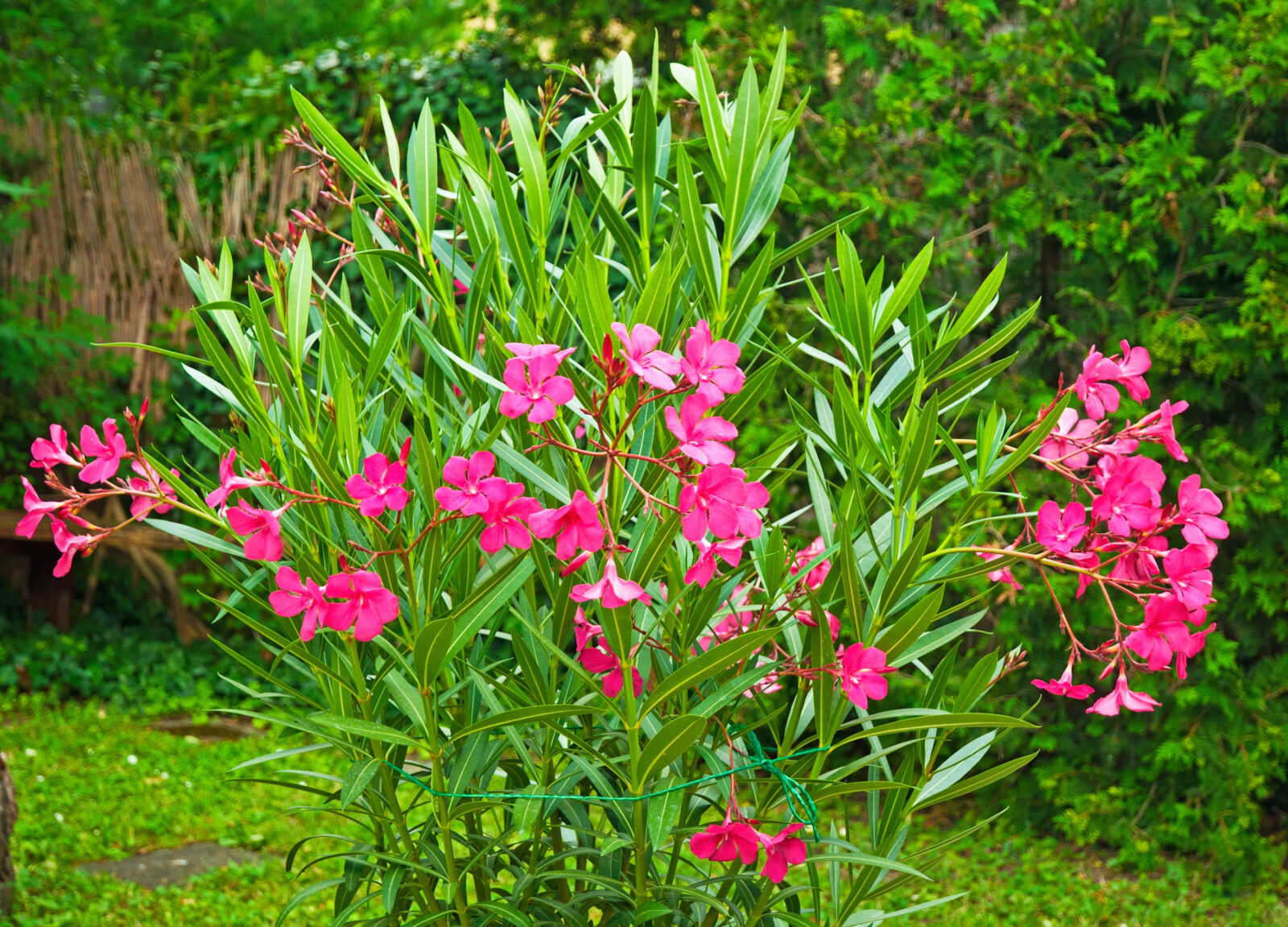
When to prune and why overwintering matters
The best period for pruning is usually late summer to early autumn. Practically speaking, do it just before you move the oleander from its outdoor spot into winter quarters. The plant then fits the space better, the crown is tidied up, and you also avoid accidental damage during handling.
An important reason to aim for this window is how oleander flowers. Oleander sets flowers mainly on one-year-old shoots that grow in spring. Pruning at the right time minimizes the risk of removing parts that would later carry buds and flower clusters.
Oleander tolerates pruning well, but work safely
Oleander is among the plants that usually tolerate shortening very well. Even a heavier prune is generally handled without problems as long as it has enough light, reasonable watering and correct overwintering. Even so, think about safety while you work. Oleander’s milky latex sap can irritate the skin, so always prune in gloves and wash your hands thoroughly afterwards.
How to grow oleander through the year so pruning has the best effect
In our conditions, oleander is most often grown in a pot. In summer it benefits from being outside, for example on a balcony or terrace, where it has plenty of light and fresh air. For winter, it’s moved to a bright room with windows, ideally somewhere the temperature stays roughly between 4 and 8 °C. A cooler garage or another bright, unheated room can provide these conditions.
It’s useful to know that oleander only copes with light, short-lived frosts, roughly down to −10 °C, and even that only exceptionally. So it’s better not to underestimate timely winter protection. Pruning at the right time before moving it indoors helps keep the plant compact, healthy and ready for the new season.
A tip for shaping a young trunk
With young plants, the trunk can be shaped a little more creatively. If an oleander has several stems that haven’t yet fully hardened, they can be carefully braided, for example into a simple plait. This kind of shaping needs to be done gently and gradually so the tissues don’t snap. The result can be an original trunk that gives the standard form more character.
Source: Gardening Know How, Niepodlewam, Pestrazahrada.cz

A lover of nature, gardens, and everything that moves, blooms, or grows. He literally grows everything, from herbs to rare species, and he enjoys caring for animals just as much. In his work, he connects modern technology with tried-and-tested grandmotherly methods and is happy when both paths lead to the same goal.
Related articles
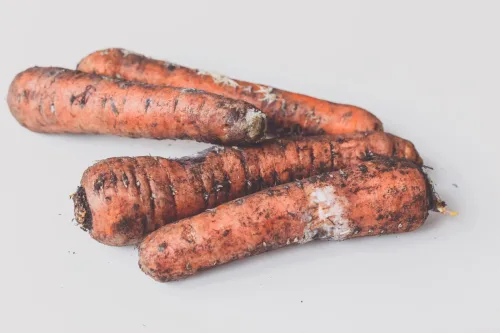
Next year you can harvest better if you don’t sow carrots where they won’t thrive
Carrot root fly can ruin carrots, parsley and celery from the inside out, often without obvious warning until harvest. Better site choice, rotation, later sowing and simple physical barriers can dramatically cut damage next season.
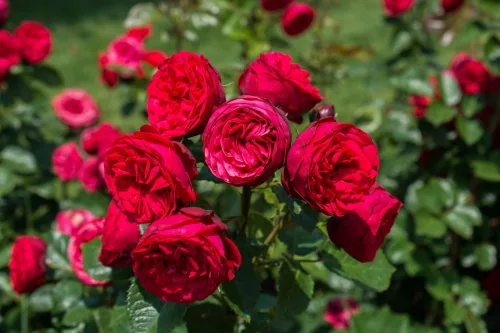
How to Propagate Roses from Cuttings at Home and Fill Your Garden with Blooms Almost for Free
Want more roses without paying for new plants? With a few healthy cuttings and a simple plastic-bottle mini greenhouse, you can root new bushes at home in just a few weeks.
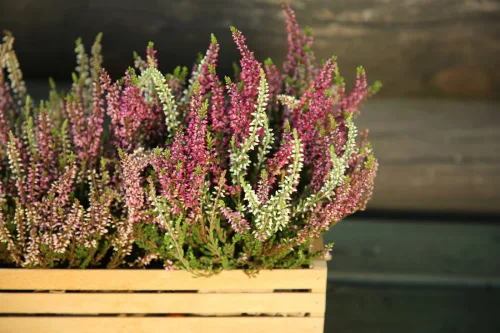
Heathers can cope where other plants won’t, but one soil detail decides everything
Heathers and heaths are tough evergreen shrubs that can flower across the seasons when you choose the right types. Success hinges on matching the plant to your soil pH and ensuring free drainage.
Comments (0)
Be the first to comment.