
 English
  Polski
  Deutsch
  Nederlands
  Svenska
  Norsk
Norsk  Dansk
Dansk  Français
  Italiano
  Español
  Português
  Slovenčina
  Suomi
Suomi  Gaeilge
 Healthy Cucumbers Without the White Coating Proven Tips for a Bigger Summer Harvest
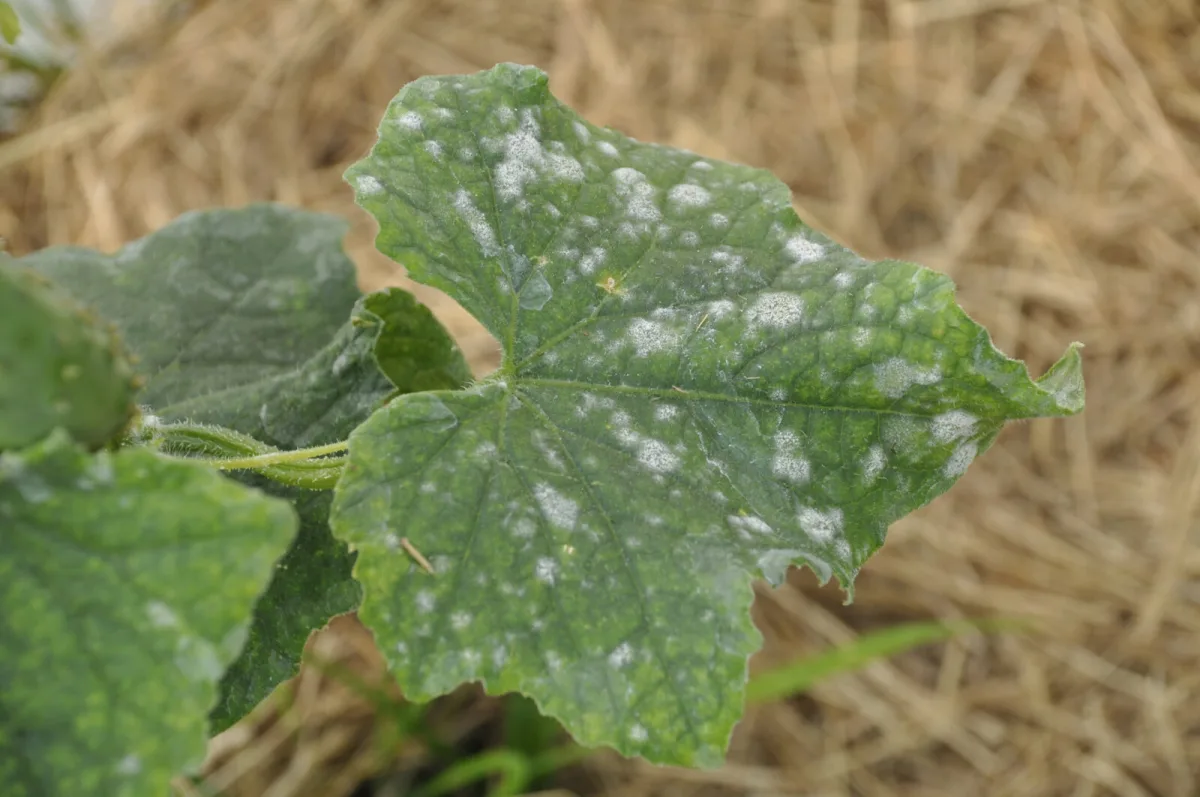
Towards the end of summer it happens almost every year. The leaves of cucumbers, courgettes and other cucurbit plants start to look as if someone dusted them with flour or sprinkled them with a grey-white coating. Many growers automatically call it blight or rot, but in most cases it’s something else. This problem is called powdery mildew, specifically true powdery mildew, a disease caused by fungi that spread mainly through the air.
The good news is that powdery mildew is very common on cucurbits and doesn’t automatically mean immediate disaster. The bad news is that once powdery mildew really gets going, you can’t erase it completely overnight. The goal isn’t a miracle cure, but sensible control so the plants stay in good condition for as long as possible and you don’t lose your crop unnecessarily.
Why powdery mildew shows up so often on cucurbits
Cucumbers, courgettes, pumpkins, melons and squash all belong to the same large cucurbit family. In gardens, powdery mildew appears so often on them that in practice it’s almost expected as a normal part of the season. As soon as airflow worsens, plants age, nights turn cooler and leaves stay damp for a long time, the fungus has ideal conditions to spread.
The biggest problem with powdery mildew isn’t the white coating itself, but what it does to the plant’s vitality. Infected leaves gradually lose their ability to photosynthesise well. The plant has less energy, sets and feeds fruit less effectively, and overall declines faster. That’s why it pays to respond early and steadily, not only when almost the entire plant has turned white.
Can powdery mildew be removed once it has started
Completely removing powdery mildew once it has spread on a plant is very difficult. In normal garden practice, you try to slow its progress and keep the plant functional for as long as possible. The key is to judge well what to cut off and what to leave.
If a leaf has only small spots or a light coating, it’s often better to leave it for now. The plant still needs it for photosynthesis so it has energy for growth and ripening fruit. If you remove too many leaves at once, you can weaken the plant more than the mildew itself. On the other hand, leaves that are heavily infected, yellowing, brittle, or no longer doing much should be removed as soon as possible to reduce spread to other parts.
A careful trim instead of drastic defoliation
With cucurbits it’s common for a grower to panic and almost strip the plant bare. That usually leads to smaller fruit or the plant finishing its season sooner. A better approach is gradual, restrained removal of only the worst leaves. Watch how the situation develops and take more leaves only when the mildew is truly pronounced.
What to remove right away so it doesn’t spoil and rot
Besides leaves, it’s important to keep an eye on flowers and fruit. Spent blooms, flower remnants stuck to young fruit, and especially unpollinated small fruit that stop developing often start to rot. These parts can become a source of further contamination and needlessly attract disease. It’s sensible to pinch them off in time and remove them from the planting.
The point isn’t to have a perfectly spotless plant, but not to leave anything in the canopy that will start to break down and become a hotspot for further problems.
Container-grown plants have one big advantage
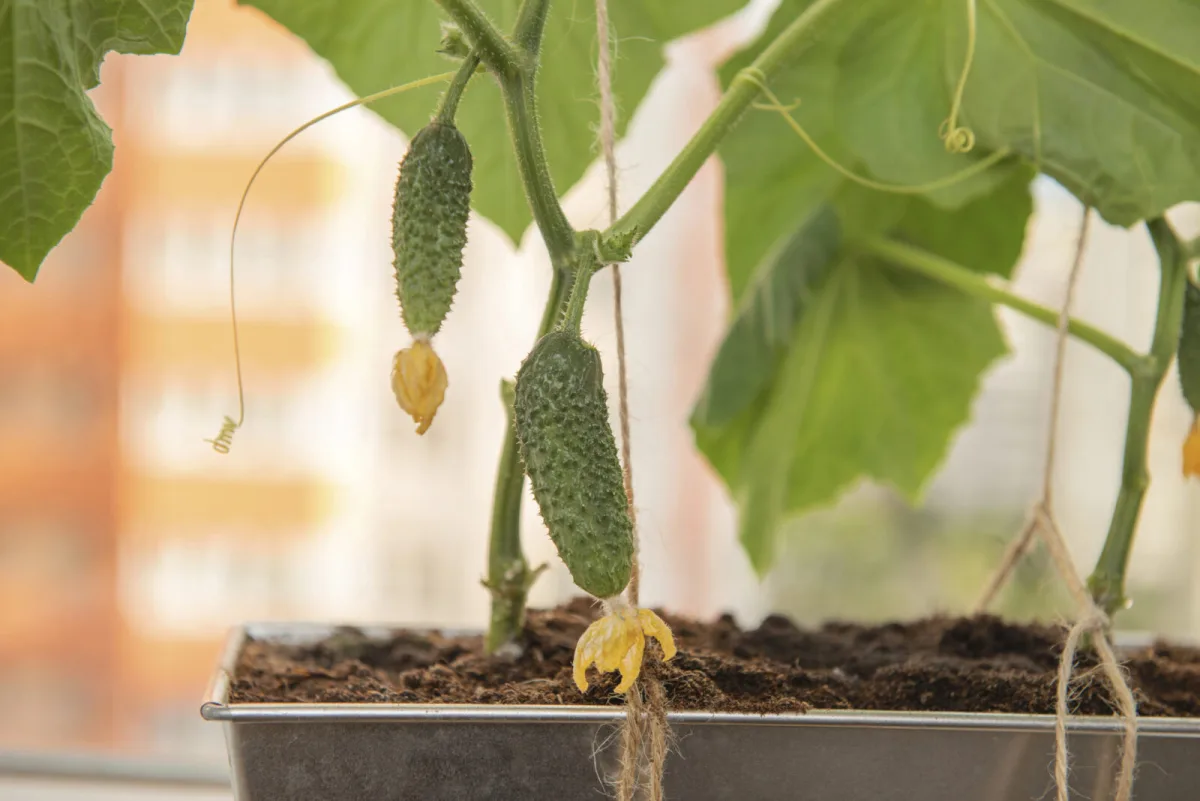
If you grow cucumbers or courgettes in pots, planters or large containers, you have an advantage over an in-ground bed: you can change their position. Powdery mildew thrives where there’s little light and stagnant air. When possible, move containers to a sunnier spot that also gets more breeze. It also helps to rotate pots now and then so different sides of the plant take turns in the sun and the leaves dry faster.
Why to avoid sprays on edible crops
In some places, fungicides or various homemade mixes are recommended. But with edible crops, it makes more sense to focus on prevention and hands-on care than on chemicals. If you regularly remove the most affected parts, improve airflow and give plants more sun, you can often manage without spraying anything on the leaves and fruit.
The aim is to get powdery mildew under control early, so you never end up considering heavy-duty sprays.
How to prevent powdery mildew from the start of the season
Prevention rests on a few simple principles worth following all season. The first is regular inspection and prompt removal of affected leaves, stems, flowers and fruit. The second is the right site: plenty of sun and, above all, good airflow. The third is sensible spacing and making sure leaves and fruit aren’t left lying on the ground for long periods.
Infected material doesn’t belong in the compost
Once you cut anything off because of powdery mildew or rot, don’t throw it on the compost. You could be setting yourself up for trouble next season, because spores can spread again around the garden. It’s safer to dispose of infected material away from compost intended for beds with edible crops.
Light and air as your first line of defence
Cucurbits don’t tolerate overcrowding. When plants are packed together, leaves overlap, stay damp for a long time, and the canopy becomes stuffy. That’s exactly the environment where powdery mildew wins. Give plants space, and if you’re growing in containers, position them so air can move between them.
Keep leaves and fruit as far off the ground as possible
Contact with soil means longer periods of damp and a higher risk of disease. Training vines up a support, netting or a simple fence helps, and you can also prop fruit so it isn’t sitting directly on the soil. Any measure that shortens how long leaves stay wet and improves circulation counts in the fight against powdery mildew.
What to take away so the harvest lasts longer
Powdery mildew on cucumbers and squash is annoying, but it’s not a reason to give up. If you keep plants airy and in the sun, remove heavily infected leaves regularly and take out any parts that start to rot, you greatly increase the chance the season will keep going and the harvest won’t be needlessly reduced. Moderation matters: no drastic defoliation, and be consistent about clearing infected material away from the compost.
Source: The Food Garden, Rhs , Pestrazahrada.cz
Related articles
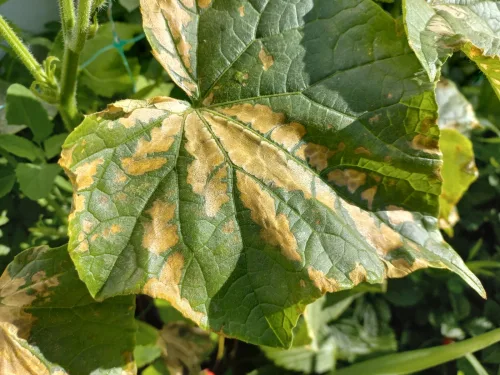
Yellowing cucumber leaves have a clear cause and with the right response plants recover quickly
Cucumber leaves turn pale and yellow when the plant is under stress—most often from watering mistakes, nutrient imbalance, or sudden temperature swings. Spot the pattern early and you can restore growth and protect your harvest fast.
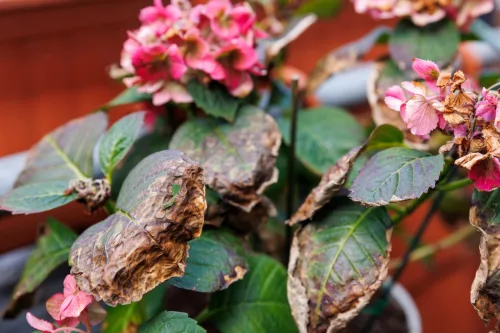
How to Get Browning Hydrangeas Back on Track Without Chemicals
Brown leaf edges or spots on hydrangeas usually point to a simple mismatch in light, watering, or airflow rather than a lost cause. Learn how to read the symptoms and restore your shrub quickly with gentle, practical fixes.
Turn Ground Cinnamon Into a Secret Weapon for Stronger, Tougher Plants
Ground cinnamon isn’t just for baking—it can help protect houseplants and garden plants from mould and fungal issues, support cuttings, and even act as quick first aid for minor wounds. Used lightly, it’s an affordable, gentle, natural add-on to good growing practice.
Comments (0)
Be the first to comment.