
 English
  Polski
  Deutsch
  Nederlands
  Svenska
  Norsk
Norsk  Dansk
Dansk  Français
  Italiano
  Español
  Português
  Slovenčina
  Suomi
Suomi  Gaeilge
 Gaura is an airy, light perennial that flowers all summer
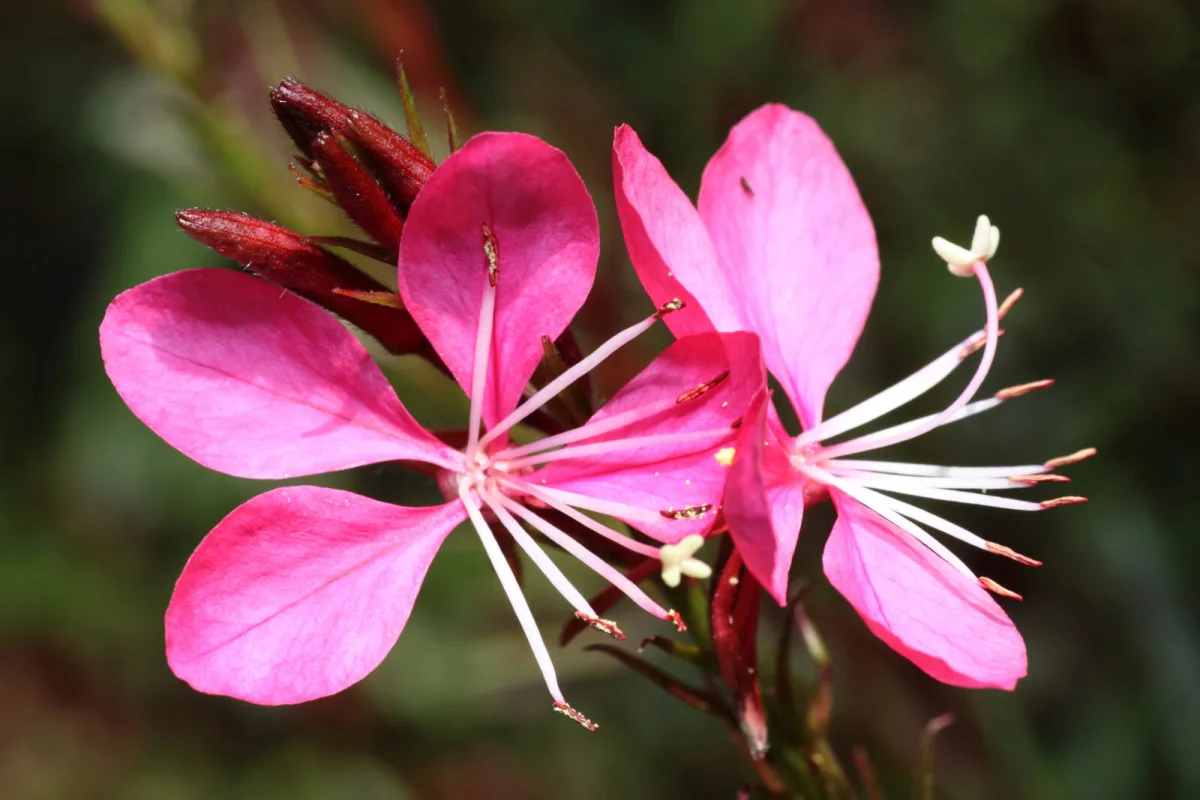
Gaura lindheimeri, also known as beeblossom, is one of those plants that can make a real statement in the garden without being difficult to grow. Although it’s often classed as a relatively short-lived perennial, it can still deliver an exceptionally long and generous flowering season. It suits borders, but it thrives just as well in containers too, so it’s a great option for balconies, terraces, and roof gardens. A practical bonus is that you can plant it even in summer while it’s already in bloom—just remember to water more carefully after planting.
Origin and a look that feels light and lively
Gaura (Gaura lindheimeri) comes from North America, where it grows naturally in prairie plant communities. In its native habitat it can reach over 1 m, but in our conditions it is usually lower, roughly 50 to 90 cm. In recent years it has become a sought-after perennial here because it brings movement, delicacy, and an airy quality to plantings—something many other species lack.
Flowers that resemble butterflies
One of the main reasons for its popularity is its flowering period. Beeblossom typically starts flowering in June and, in good conditions, can keep blooming right into autumn. Depending on the cultivar, the flowers may be white, pink, or a rich crimson. On thin but fairly sturdy stems they can stand upright or gently arch, and it’s this slight wavering that creates the impression of tiny fluttering butterflies. The leaves are elongated and lance-shaped, often with stronger colouring, which contrasts beautifully with the flowers.
Why it suits both modern and naturalistic gardens
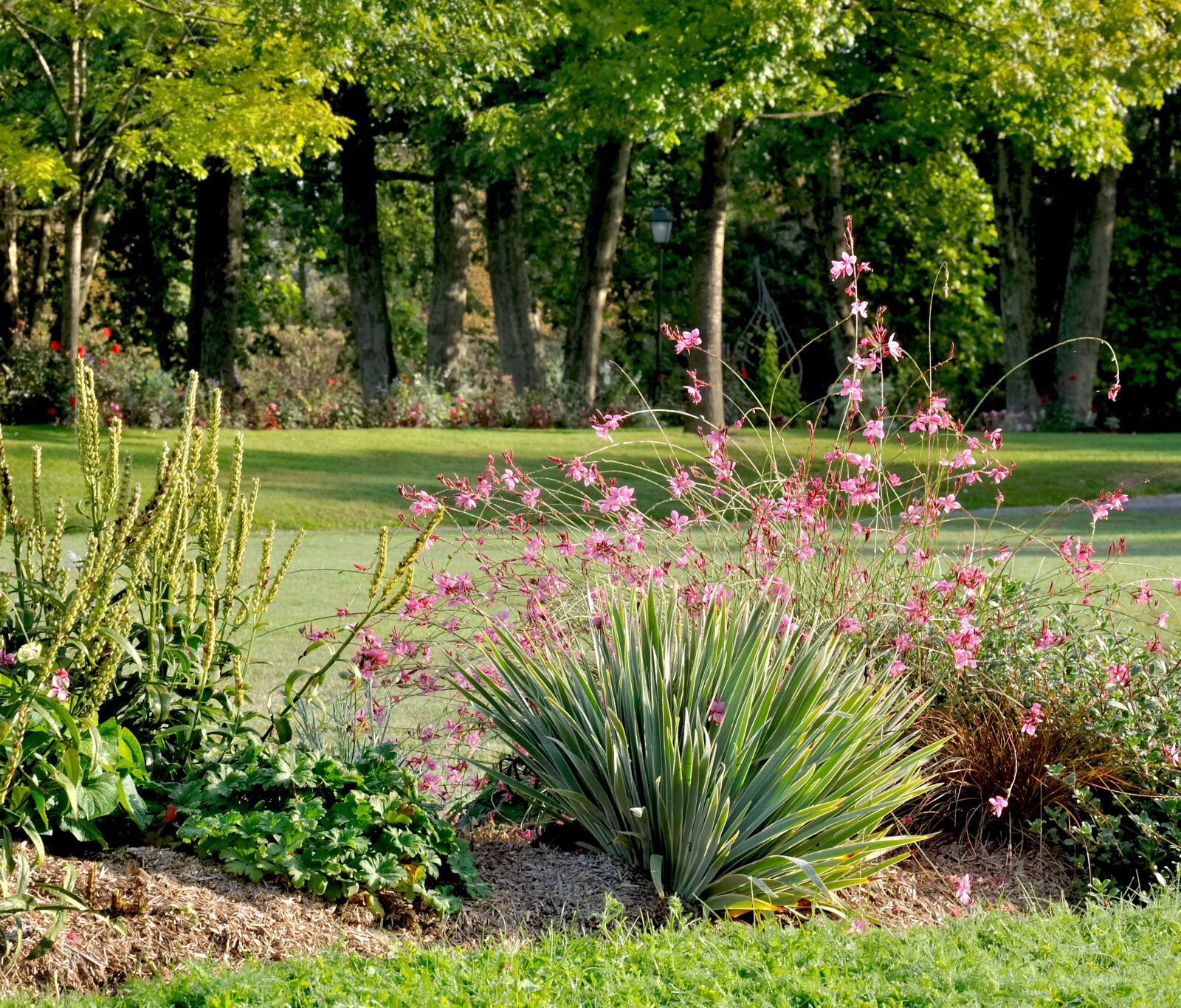
In a spot it likes, gaura quickly develops into fuller clumps that look substantial without losing their lightness. White-flowering varieties in mixed borders resemble a fine pale veil, while pink forms can brighten compositions at a time when many other perennials are already past their peak. That’s why gaura is seen as a modern, fresh, stylish plant that fits equally well into contemporary schemes and naturalistic borders.
A wide choice of cultivars and planting through summer
Garden centres now offer a range of cultivars that differ in flower colour, overall habit, and height. Plants are available in spring and throughout the summer. If you choose to plant in summer, it’s important not to underestimate regular watering in the first few weeks until the plant has properly established. It’s best to pick specimens with a compact, intact root ball, so they cope better with transplanting and warmer weather.
Ideal position and soil
Gaura performs best in full sun. It needs free-draining soil, ideally with a higher proportion of sand, where water doesn’t linger for long after rain or watering. Once it has rooted in well, it tolerates longer dry spells surprisingly well. Right after planting, though, it appreciates consistent moisture while it is building its root system.
What to avoid
Partial shade and shade are not suitable for gaura; flowering is weaker and the plant loses its compact shape. Heavy, permanently damp soil or areas that are intensively watered are also problematic. In those conditions, the roots may rot and the plant gradually declines.
Fertiliser isn’t needed and can sometimes do more harm than good
Beeblossom doesn’t need nutrient-rich soil and does not require regular feeding. In fact, when it gets too many nutrients it often flowers less, grows tall and lanky, the clumps become looser, and they tend to flop outward. In practice, that means modest conditions with good drainage suit it better than an over-pampered border.
Use in borders and containers
Beeblossom works well in mixed perennial plantings, naturalistic compositions, and modern borders that focus on light textures and long seasonal interest. It also fits beautifully into gravel gardens and drought-tolerant areas. Thanks to how well it performs in pots, it’s also ideal for sunny terraces and balconies, where it can create an elegant, long-flowering focal point.
Simple care through the year
Maintenance is easy and for most of the season it needs little intervention. After the first main flush of flowers, it’s worth lightly cutting back the clumps, which encourages more blooms and keeps the plant more compact. Each spring, remove all dead growth, because over winter the plant is usually left uncut. Gaura should not be cut back before winter.
Health is usually trouble-free
This perennial generally doesn’t suffer from diseases and is only rarely attacked by pests. If problems do occur, they are most often linked to an unsuitable site—especially waterlogging and heavy soil. With the right placement, gaura (beeblossom) offers reliable growth, a long flowering season, and very few worries.
Source: Záhrada, The Spruce, Pestrazahrada.cz

A lover of nature, gardens, and everything that moves, blooms, or grows. He literally grows everything, from herbs to rare species, and he enjoys caring for animals just as much. In his work, he connects modern technology with tried-and-tested grandmotherly methods and is happy when both paths lead to the same goal.
Related articles
The Christmas Amaryllis That Can Bloom for Years but Most People Throw It Away After Flowering
Hippeastrum is a spectacular winter-blooming bulb that, with the right care, will flower again year after year. Learn how to plant it correctly, look after it after flowering, and bring it into dormancy so it reliably reblooms.
How to Grow Winter Garlic for a Much Bigger Harvest
Autumn planting is the key to strong, healthy winter garlic, but the details make all the difference. With the right timing, bed choice, seed-clove treatment and a simple bicarbonate trick, you can noticeably boost yield.
A tree or shrub planted properly in autumn can outpace spring stock and improve fruiting
Many fruit trees and soft-fruit shrubs establish better when planted in autumn, because roots keep growing while the top is dormant. Done well, this head start means stronger spring growth, less watering, and a healthier first year.
Comments (0)
Be the first to comment.