
 English
  Polski
  Deutsch
  Nederlands
  Svenska
  Norsk
Norsk  Dansk
Dansk  Français
  Italiano
  Español
  Português
  Slovenčina
  Suomi
Suomi  Gaeilge
 Gardening Cheat Sheet a Cucumber Support Means Bigger Harvests Fewer Diseases and Less Mess
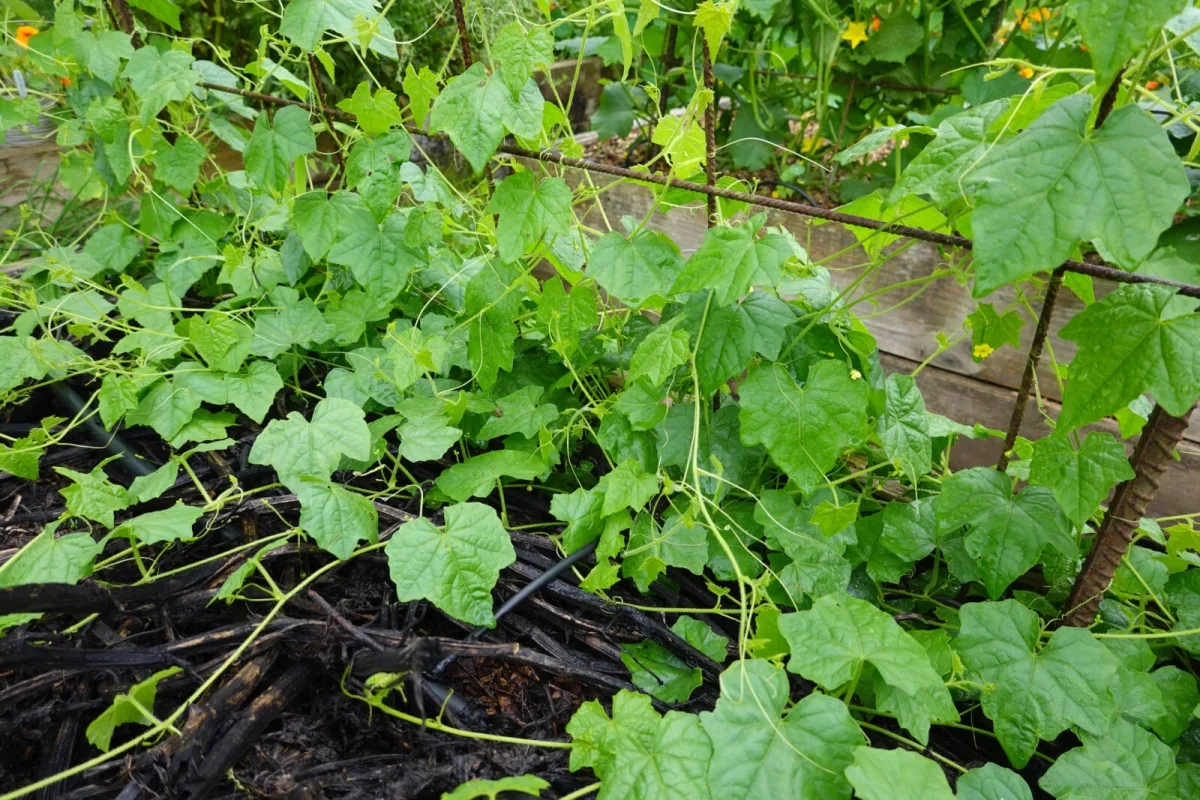
When growing vegetables, you often come across tips that work only sometimes and only for some people. Training cucumbers up a support, however, is one of those methods that proves its worth year after year. While slicing cucumbers in polytunnels are usually tied in as standard, pickling cucumbers in the garden often end up sprawled across the ground. Yet these cucumbers have tendrils too, and a natural urge to climb. All they need is something they can grab onto. It doesn’t have to be complicated: stakes, wire mesh, a net with larger openings, a pergola, or even a sturdy string stretched between two solid anchor points will do the job.
You can train cucumbers vertically, or let them climb at an angle. In both cases the plant develops better, you get a clearer view of the crop, and harvesting is more practical. This shift in approach doesn’t mean a radical change to the garden, just a small adjustment that pays you back with healthier plants and better-looking fruit.
Main benefits of growing cucumbers vertically
Saves space in beds and on the balcony
When cucumbers creep along the soil, they can take up a surprisingly large area. On a support they grow upwards, leaving the ground clearer and easier to use for other planting. You’ll appreciate this in a small garden, in raised beds, and when growing in containers, where every centimetre of space matters.
Better airflow and a lower risk of disease
Cucumbers love water, but prolonged dampness on leaves and around the fruit increases the likelihood of fungal disease. Once the crop is lying on the ground, after rain or watering it often stays wet for far too long. On a support, leaves dry more quickly, the plant is more open, and the risk of problems such as downy mildew is usually lower. It also helps that the fruit isn’t constantly in contact with damp soil.
Easier watering and overall care
Ideally, cucumbers should be watered at the roots, without needlessly soaking the foliage. With a crop spread across the bed, that’s harder to do because the leaves cover the soil and water often ends up where it shouldn’t. On a frame, you have better access to the base of the plants, you can check their condition more easily, and you’ll spot yellowing, pests, or overgrown fruit that needs picking much sooner.
Better-quality, cleaner fruit
Cucumbers hanging in the air tend to colour up more evenly because they receive more light. They’re also not pressed against the ground, so they deform less and the risk of early rotting is reduced. Another advantage is less contact with soil-borne pests and less dirt on the fruit, which is especially noticeable in wet, rainy spells.
Are there any downsides and what to watch out for
This method of growing doesn’t usually have major disadvantages, but do factor in the materials and time needed to build the support in good time. Easy access for harvesting matters too, so you can reach the hanging fruit from all sides. If you want to reuse the support for multiple seasons, it’s worth cleaning and treating it in autumn. That reduces the risk of pathogens lingering on the structure and returning to new plants next year.
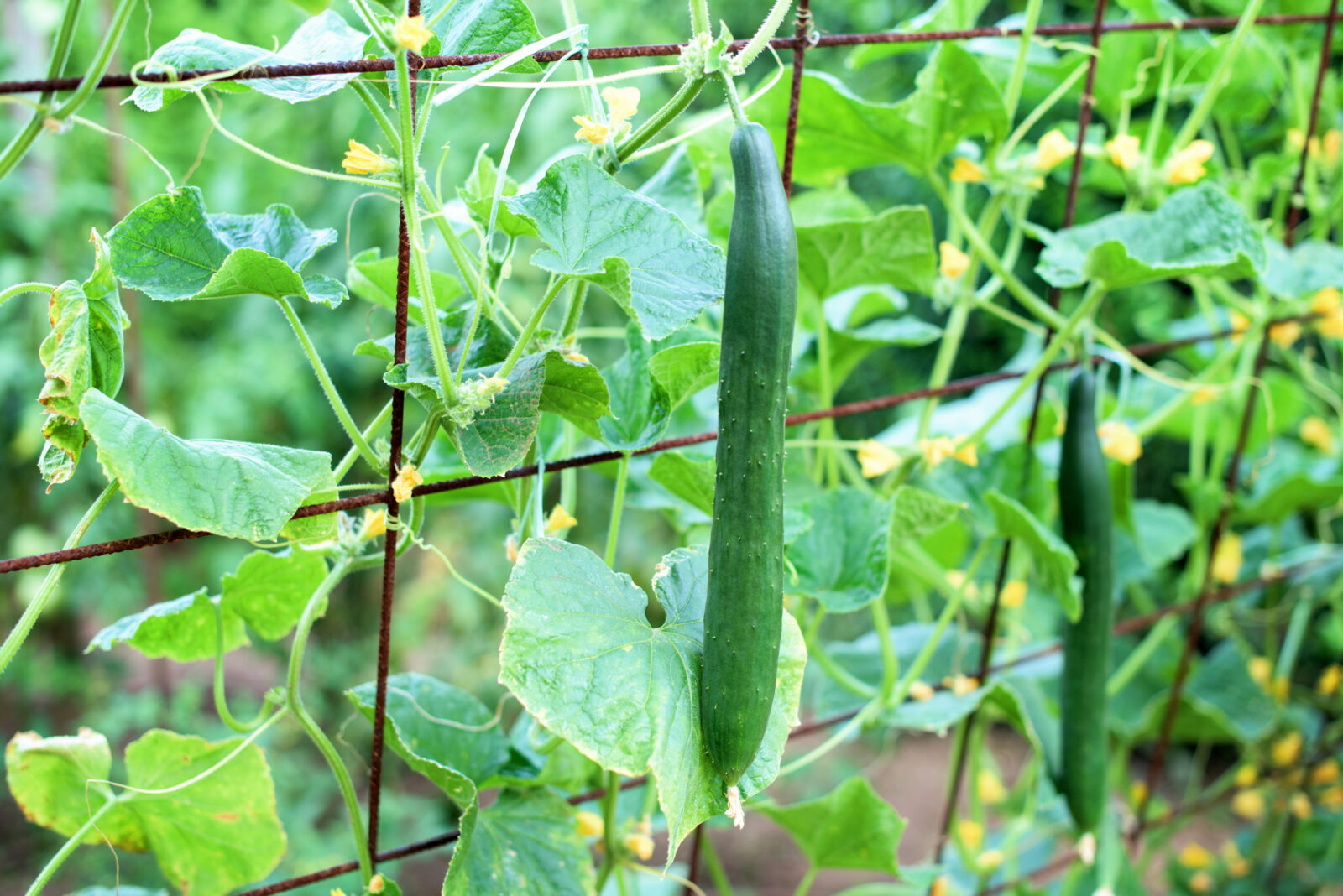
Simple support types you can manage without major changes
In the garden you have plenty of freedom when choosing a structure. Older fence mesh, metal rods, wooden stakes, or specialist netting for climbers are all practical options. Some people even repurpose an old ladder split into sections, or build a roof-shaped frame that cucumbers can grow up and out along. The goal isn’t the prettiest solution, but one that will work reliably all season long.
Stability is key. Even a basic support must withstand wind and the steadily increasing weight of the plants. At peak season, the growth is surprisingly heavy, and a collapsed frame means snapped shoots, damaged fruit, and an unnecessary last-minute rescue. It’s worth sinking stakes deep enough and checking the tension of nets or strings as the season progresses.
Cucumbers in a raised bed or a pot
In small spaces, a support is almost essential. In raised beds and containers, cucumbers without training will quickly fill the entire area and turn into an unmanageable mass of leaves. Once you give them the chance to climb, you get a more open crop and, at the same time, space for other plants or easier movement around the bed.
After a few weeks, even a handful of seedlings can turn into a dense green wall. Then comes the period when fruits start to appear steadily and harvesting is often more frequent than you’d expect. Cucumbers are great for eating fresh, but with good care the crop can be enough for preserving too. Training them on a support helps mainly because you’ll see the fruit more easily, pick it at the right time, and the plant will keep setting new cucumbers.
Source: Záhrada, RHS, Gardening Know How, Pestrazahrada.cz

A lover of nature, gardens, and everything that moves, blooms, or grows. He literally grows everything, from herbs to rare species, and he enjoys caring for animals just as much. In his work, he connects modern technology with tried-and-tested grandmotherly methods and is happy when both paths lead to the same goal.
Related articles
Next year you can harvest better if you don’t sow carrots where they won’t thrive
Carrot root fly can ruin carrots, parsley and celery from the inside out, often without obvious warning until harvest. Better site choice, rotation, later sowing and simple physical barriers can dramatically cut damage next season.

How to Propagate Roses from Cuttings at Home and Fill Your Garden with Blooms Almost for Free
Want more roses without paying for new plants? With a few healthy cuttings and a simple plastic-bottle mini greenhouse, you can root new bushes at home in just a few weeks.
Heathers can cope where other plants won’t, but one soil detail decides everything
Heathers and heaths are tough evergreen shrubs that can flower across the seasons when you choose the right types. Success hinges on matching the plant to your soil pH and ensuring free drainage.
Comments (0)
Be the first to comment.