
 English
  Polski
  Deutsch
  Nederlands
  Svenska
  Norsk
Norsk  Dansk
Dansk  Français
  Italiano
  Español
  Português
  Slovenčina
  Suomi
Suomi  Gaeilge
 Garden spritz made from kitchen scraps to protect plants without extra chemicals
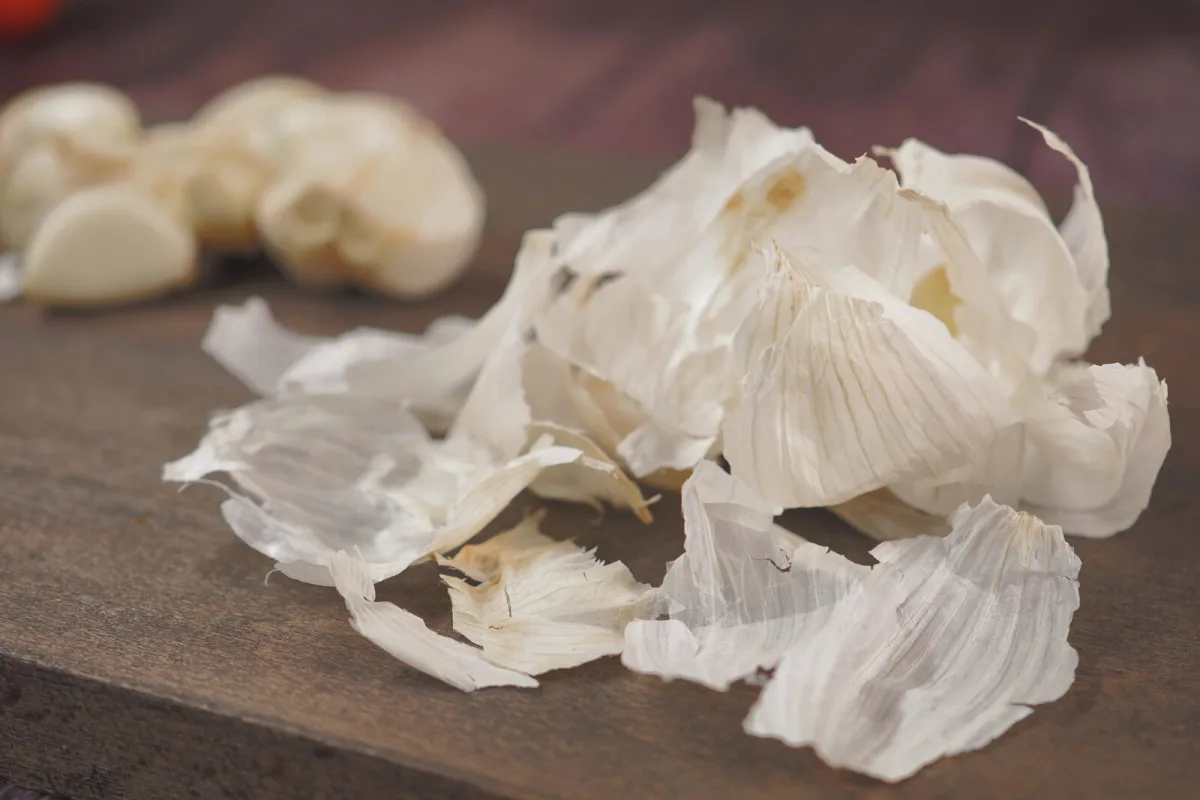
Garlic skins often get thrown away automatically, yet they’re an unassuming material that can easily be turned into a useful home-made garden preparation. By steeping the skins in water, you’ll obtain an infusion that’s suitable both for protecting plants and for giving them a gentle feed. It’s practical and economical, because you use organic kitchen waste and at the same time reduce the need for bought sprays.
Garlic is known for its strong aroma and for containing substances that many pests find unpleasant. As a macerate, it can act as supportive prevention at the time when the first signs of infestation appear on plants, or when you want to reduce pest pressure through the season.
How to make garlic-skin macerate
Preparation is straightforward and anyone can manage it. Collect the skins from several bulbs of garlic, put them into a clean jar or other container, and pour over about 1 litre of lukewarm water. Close the container and leave the mixture to stand for at least 24 hours, ideally 48 to 72 hours, so that as many of the active compounds as possible are released into the water.
Then strain the infusion through a fine muslin cloth or a fine sieve. It’s important that no small particles remain in the liquid, as they could clog the sprayer. If, on the other hand, you plan to use it mainly as a soil drench, you can also blitz the skins in the water, producing a more nutritious but thicker mixture.
A garlic-skin spray as protection against pests and diseases
The most common use of garlic macerate is as a foliar spray. Garlic’s volatile compounds are irritating to insects, so regular applications may reduce the presence of aphids, whitefly or spider mites. Many gardeners also find it helpful against caterpillars, because treated plants are less appealing to them and attract them less.
Garlic infusion is also regarded as an aid in preventing certain fungal issues. Thanks to its natural fungicidal effect, it can support plant protection in periods when powdery mildew and other surface diseases appear more often. It isn’t a miracle one-off cure, but rather a gentle tool that works best with repeated use.
Dilution and application frequency
Before spraying, it’s best to dilute the strained liquid with water at roughly 1 part macerate to 5 parts water. Because it’s made only from skins and not whole cloves, the effect tends to be milder and the spray needs repeating more often. It’s practical to keep a sprayer ready and treat plants during regular checks about every 5 to 7 days, or after rain.
Garlic skins as a gentle home-made fertiliser
Macerate made from skins doesn’t have to be used only for protection, but also as a light feed. The skins contain trace elements such as sulphur, zinc and manganese. Even though these are micronutrients, they matter for plants because they contribute to overall vigour, growth and resilience. This kind of fertiliser is mild and is especially useful when you don’t want to burden plants with strong nutrient doses.
When to dilute a soil drench and when not to
If you steeped the skins only briefly, typically 1 to 2 days, the infusion can be used as a soil drench without further dilution. With longer steeping, roughly 3 to 5 days, it’s sensible to soften the mixture with water at about 1:3 so it isn’t unnecessarily concentrated. With the blitzed version, bear in mind it’s thicker and is best applied directly to the roots, not to the leaves.
Which plants typically benefit from garlic infusion
As both a soil drench and a supportive spray, growers of strawberries, tomatoes and peppers often praise this home-made preparation. It also works well for leafy greens, where regular gentle treatment is generally better than a one-off intervention. The key is to watch how your specific plants respond in your garden and to stick to sensible dilution and application intervals.
What to watch out for when using it
With any home-made spray, it’s better to start cautiously. Test the infusion first on a small part of the plant, especially with young seedlings or sensitive species. Apply in the morning or evening, when the sun isn’t strong, so the leaves aren’t stressed unnecessarily. If you use the macerate regularly, you’ll build a simple habit that can improve the garden’s condition over the long term while reducing the need for chemical products.
Tip: If you want to keep garlic macerate always to hand, collect the skins continuously and make smaller batches more often, so the infusion is always fresh.
Source: Fertilizer Daily, RHS, Pestrazahrada.cz

A lover of nature, gardens, and everything that moves, blooms, or grows. He literally grows everything, from herbs to rare species, and he enjoys caring for animals just as much. In his work, he connects modern technology with tried-and-tested grandmotherly methods and is happy when both paths lead to the same goal.
Related articles

Yellowing cucumber leaves have a clear cause and with the right response plants recover quickly
Cucumber leaves turn pale and yellow when the plant is under stress—most often from watering mistakes, nutrient imbalance, or sudden temperature swings. Spot the pattern early and you can restore growth and protect your harvest fast.
How to Get Browning Hydrangeas Back on Track Without Chemicals
Brown leaf edges or spots on hydrangeas usually point to a simple mismatch in light, watering, or airflow rather than a lost cause. Learn how to read the symptoms and restore your shrub quickly with gentle, practical fixes.
Turn Ground Cinnamon Into a Secret Weapon for Stronger, Tougher Plants
Ground cinnamon isn’t just for baking—it can help protect houseplants and garden plants from mould and fungal issues, support cuttings, and even act as quick first aid for minor wounds. Used lightly, it’s an affordable, gentle, natural add-on to good growing practice.
Comments (0)
Be the first to comment.