
 English
  Polski
  Deutsch
  Nederlands
  Svenska
  Norsk
Norsk  Dansk
Dansk  Français
  Italiano
  Español
  Português
  Slovenčina
  Suomi
Suomi  Gaeilge
 Eight Places You Should Never Plant Cucumbers If You Want a Good Crop

Cucumbers are among the most rewarding and fast-growing fruiting vegetables, but only when they have the right conditions. It’s often underestimated that even an “easy” plant can struggle in the wrong place, set flowers slowly, produce bitter or misshapen fruit, and readily fall victim to pests or fungal diseases. Cucumbers have a shallow root system that’s sensitive to both waterlogging and drying out, lush foliage prone to mildew, and long runners that need space and light. If you want to harvest steadily all summer, avoid the following sites.
You can tell a good spot for cucumbers because it’s sunny and airy but not windy, with loose, free-draining soil and enough room for both shoots and roots.
1) Permanent shade and low-light spots
Cucumbers need long hours of sun, ideally at least six to eight a day. In the shade of trees, by north-facing walls, or behind a tall fence, the plant stretches, makes fewer leaves capable of photosynthesis, and most importantly fewer flowers—so yields are poor. Low light also raises humidity within the canopy, and leaves dry more slowly after dew or rain, creating ideal conditions for powdery mildew and other fungal diseases. Fruit grown in shade tends to be smaller, less well coloured, and ripening is noticeably slower.
2) Places where water regularly sits
Standing water is one of the quickest routes to trouble for cucumbers. Waterlogged soil pushes oxygen out of the root zone, roots begin to rot, and the plant responds with yellowing, wilting, and stalled growth. Wet beds also make it easier for soil-borne pathogens and moulds to spread, which can wipe out a planting in a short time. The riskiest spots are hollows, under downspouts, or anywhere puddles form after rain. A raised bed, drainage, and improving the soil with compost can help, but if the site is naturally soggy, cucumbers will struggle there year after year.
3) Heavy, compacted, poorly draining soil
Cucumbers thrive in loose, humus-rich, well-drained soil where roots can breathe and the plant can take up nutrients quickly. In clay, trampled, or long-compacted ground, water lingers around the roots—and once it dries, the surface can turn into a hard crust. The plant then swings between waterlogging stress and drought stress, which shows up as weak growth and inconsistent fruiting. Compacted soil also restricts root development, so cucumbers cope poorly with hot days and wilt faster. If you have heavier soil, it pays to improve it with compost before planting and grow in a raised bed.
4) Exhausted beds with low fertility
Cucumbers are fairly hungry for nutrients and moisture because they grow quickly and crop for a long time. In beds that haven’t been fed with organic matter for years, plants are often pale, flower poorly, and fruit develops unevenly. A lack of potassium and magnesium commonly shows up as poorer flavour, lower vigour, and greater susceptibility to disease. If cucumbers get off to a slow start in poor soil, they usually won’t make up the difference later in the season. It’s essential to work in compost—or well-rotted manure well in advance—and to make sure the soil holds moisture without staying waterlogged.
5) Containers that are too small and cramped beds
Cucumbers make long shoots and need space not only above ground but also for the root ball. In a small pot, the compost heats up and dries out quickly, roots have nowhere to expand, and the plant suffers from uneven watering. That leads to flower drop, irregular fruit set, and more frequent bitterness. Crowded growing conditions also reduce airflow between leaves, so after watering or rain the foliage stays damp for a long time and fungal diseases have free rein. If space is limited, training vertically on a sturdy support can help—but the container still needs to be large enough and stable.
6) Overcrowded planting and a “jungle” among other plants
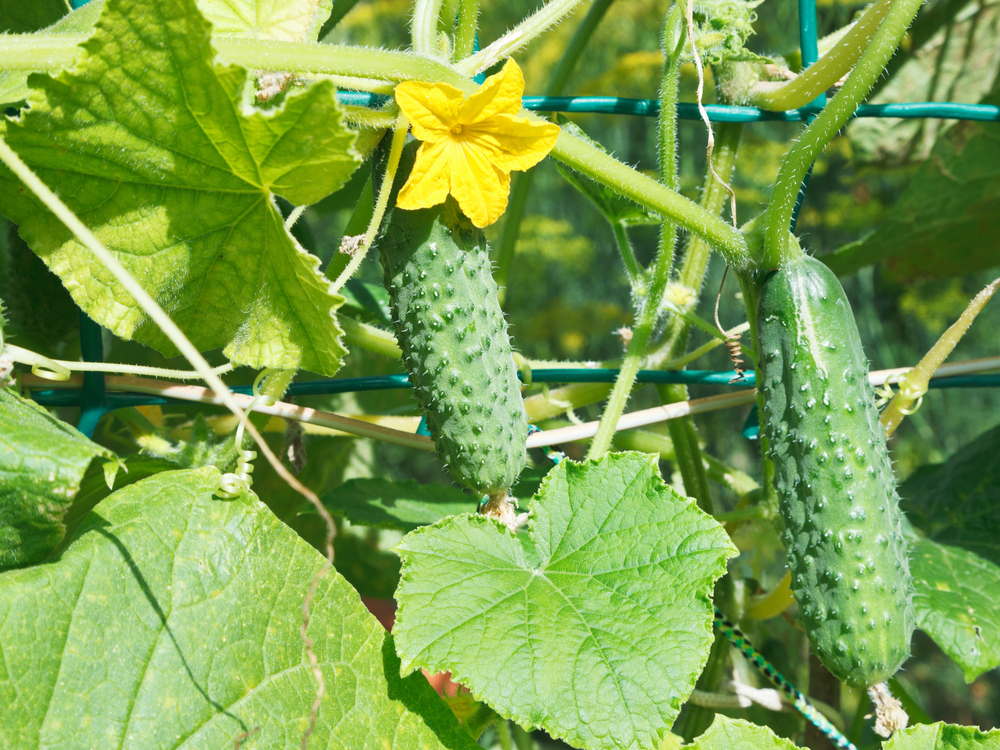
When cucumbers are packed too closely together or sprawl into neighbouring crops, they start competing for light, water, and nutrients. The vines tangle, leaves overlap, and a persistently humid microclimate develops inside the planting. That’s exactly the environment that encourages powdery mildew, other fungal diseases, and rapid pest spread. Plant crowding shows up as fewer flowers, weaker growth, and smaller fruit. Proper spacing and training onto a support greatly improve air circulation and the quality of your harvest.
7) Too close to other cucurbit plants
Cucumbers are cucurbits and share the same enemies as courgettes, pumpkins, and melons. If you place them right next to each other, you increase pest pressure and the risk of disease transmission because insects and fungal spores have a “bridge” between host plants. On top of that, there’s competition for nutrients and water, as cucurbits can be very greedy. The result is often weakened cucumbers, poorer fruit set, and faster spread of problems through the whole bed. Crop rotation and sensible spacing between cucurbit crops are key prevention.
8) Exposed, windy locations without shelter
Strong wind dries cucumbers out, tears leaves, and rocks the vines so they break more easily or rub against the support. The plant is stressed, loses water faster, and can wilt even with regular watering. With cucumbers trained up a structure, there’s also the risk of the support being toppled or fruit being damaged by battering. Windy sites also worsen the microclimate during cooler nights, when cucumbers slow down and growth stalls. The ideal place is sunny but protected by a hedge, wall, or windbreak.
How to choose a better spot and avoid disappointment
If you avoid shade, waterlogging, compacted soil, poor beds, and cramped conditions, you’ll do more for your crop than any “miracle” spray ever could. Cucumbers want sun, steady moisture without standing water, rich crumbly soil, and space. Thoughtful crop rotation also helps a great deal by limiting disease carry-over and reducing pest pressure. In the right spot, cucumbers reward you with fast growth, healthy foliage, and a long, regular harvest of tasty fruit.
Source: Martha Stewart, Green Life Zen, Pestrazahrada.cz

A lover of nature, gardens, and everything that moves, blooms, or grows. He literally grows everything, from herbs to rare species, and he enjoys caring for animals just as much. In his work, he connects modern technology with tried-and-tested grandmotherly methods and is happy when both paths lead to the same goal.
Related articles
Don’t Plant Garlic in Freshly Dug Soil
For big, firm, strongly flavoured bulbs, garlic needs settled soil, the right planting window, and careful handling of the cloves. A few simple steps from bed prep to drying make the difference between a weak crop and a long-storing harvest.

In autumn, ginkgo lights up the garden like a spotlight, and five other trees can do the same even in a small plot
Ginkgo is famous for its pure golden autumn colour, but several other trees and shrubs can deliver equally striking fall colour, even in limited space. Choose by mature size and site conditions, and plant in autumn or spring for the best establishment.

When Other Flowers Fade Asters Are Just Getting Started
Asters step in just as summer colour starts to wane, flooding borders with late-season blooms. They’re also a valuable nectar source for pollinators and later a seed larder for birds.
Comments (0)
Be the first to comment.