
 English
  Polski
  Deutsch
  Nederlands
  Svenska
  Norsk
Norsk  Dansk
Dansk  Français
  Italiano
  Español
  Português
  Slovenčina
  Suomi
Suomi  Gaeilge
 The Perennial That Loves Heat and Still Flowers When Others Dry Out
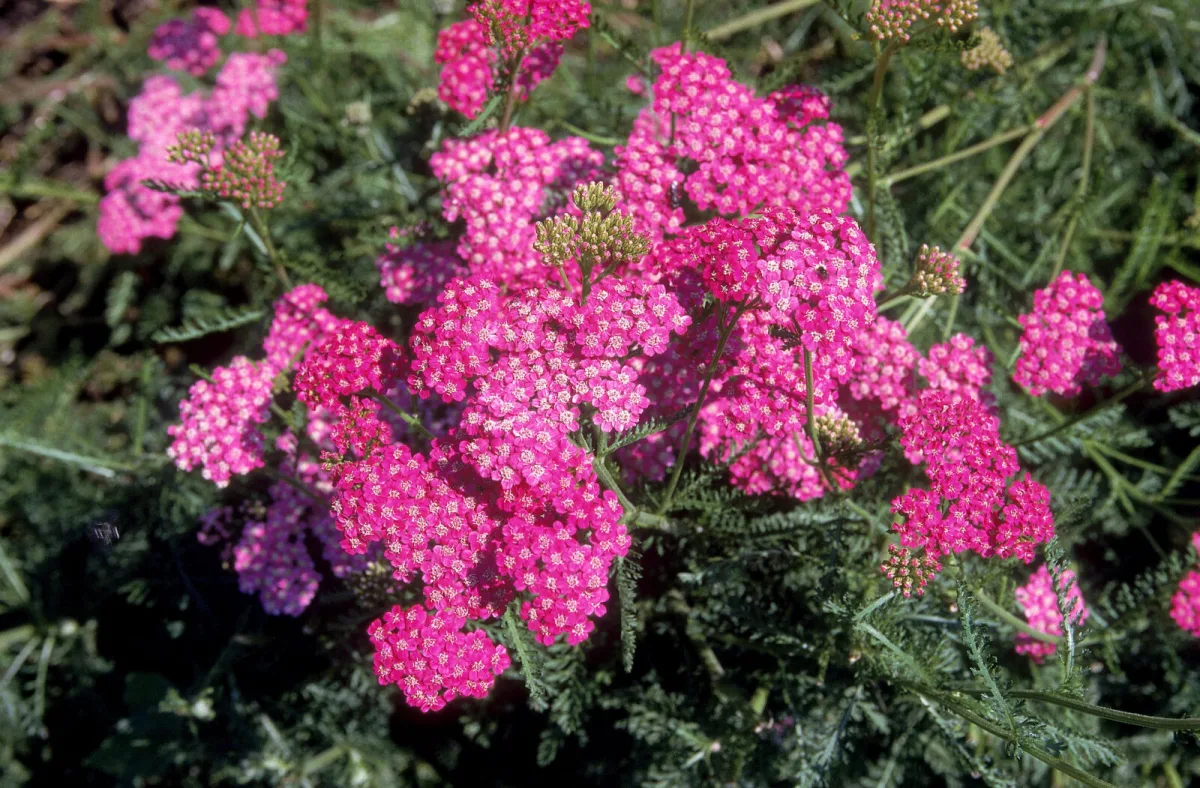
Common yarrow (Achillea millefolium) is one of those perennials that can deliver a long flowering season even where other plants fail. In cottage-style gardens, naturalistic plantings and sunny borders, it’s valued above all for its drought tolerance, low fuss nature and ability to hold colour for much of the summer. It forms flat, umbel-like heads of tiny flowers that stand out beautifully above finely divided, ferny foliage.
Yarrow flowers come in several colour forms, from white through yellow and peach tones to vivid pinks and reds. It’s also highly attractive to butterflies and other pollinators, making it a great choice for gardens designed to support biodiversity. Yarrow is also a traditional herb with well-known uses in folk medicine, though in ornamental plantings it’s mainly grown as a reliable, decorative species.
Site and planting step by step
For strong growth, yarrow primarily needs sun. The ideal spot gets at least 6 to 8 hours of direct light a day. It will cope in partial shade, but flowering is usually weaker and plants may grow more leggy. You can plant in spring once frosts have passed, or in autumn, but early enough before the first frosts so it has time to root in.
When planting, allow roughly 30 to 60 cm between plants depending on the variety and vigour. The process is straightforward and beginner-friendly. Loosen the soil at the planting site and, if needed, lightly improve it with organic matter so it drains better. Carefully remove the plant from its pot and, if the roots are tightly circling, gently tease them out. Dig a hole slightly deeper and about twice as wide as the root ball. Set the yarrow so the crown sits level with the surrounding soil, backfill, firm lightly, and water thoroughly. For the first few weeks, keep the soil just slightly moist until the plant is established.
Soil, watering and feeding without common mistakes
Yarrow prefers leaner, free-draining soil. In overly rich soil it often puts on lots of leafy growth, stems can flop, and the overall habit is less compact. Heavy, constantly wet soil is risky because it encourages root rot and other diseases. If you’re growing it in a container, choose a good quality all-purpose compost, ideally with an emphasis on excellent drainage.
Once established, yarrow handles drought very well. Too much water tends to do more harm than good, can cause flopping, and increases the chance of fungal problems. Water only when the soil has clearly dried out. Adding mulch can help even out moisture levels, but yarrow still prefers a drier regime. During prolonged heat, an occasional deep watering can support another flush of flowers.
Feeding usually isn’t necessary. If you want to give plants a little extra, a thin layer of compost around the clump in spring is enough. Overfeeding leads to excessive growth and weaker stems, so in this case less really is more.
Pruning and in-season care for longer flowering
Correct pruning is an easy way to keep a compact shape and encourage new blooms. In spring, remove any dry stems left from the previous season before new growth starts. Through summer, snip off spent flower heads as they fade; this often extends flowering and reduces unwanted self-seeding.
After the main flush in mid to late summer, you can cut plants back by about a third to a half. This often triggers another, late-summer to autumn bloom. At the same time, the clump thickens and looks tidier, which you’ll especially appreciate in more formal borders.
Varieties with sturdy stems and strong colour
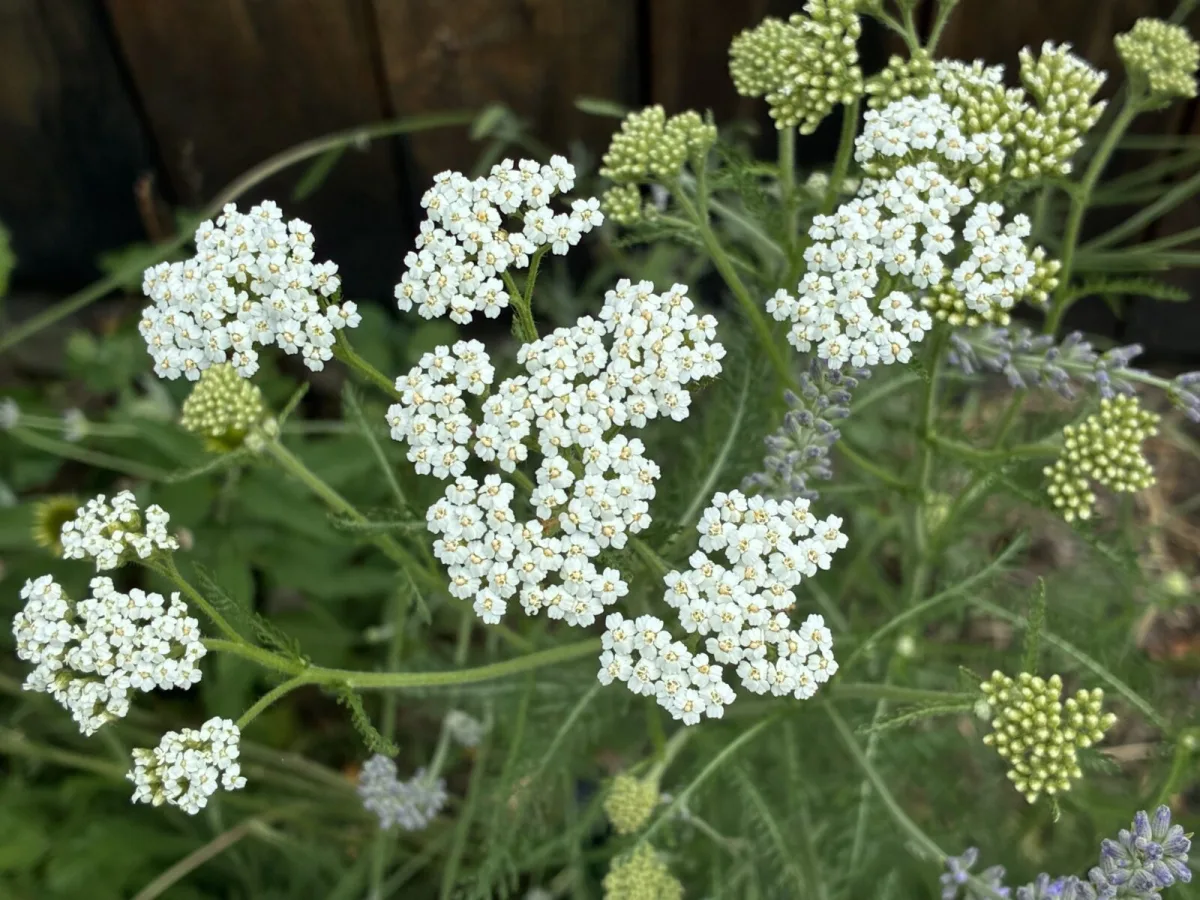
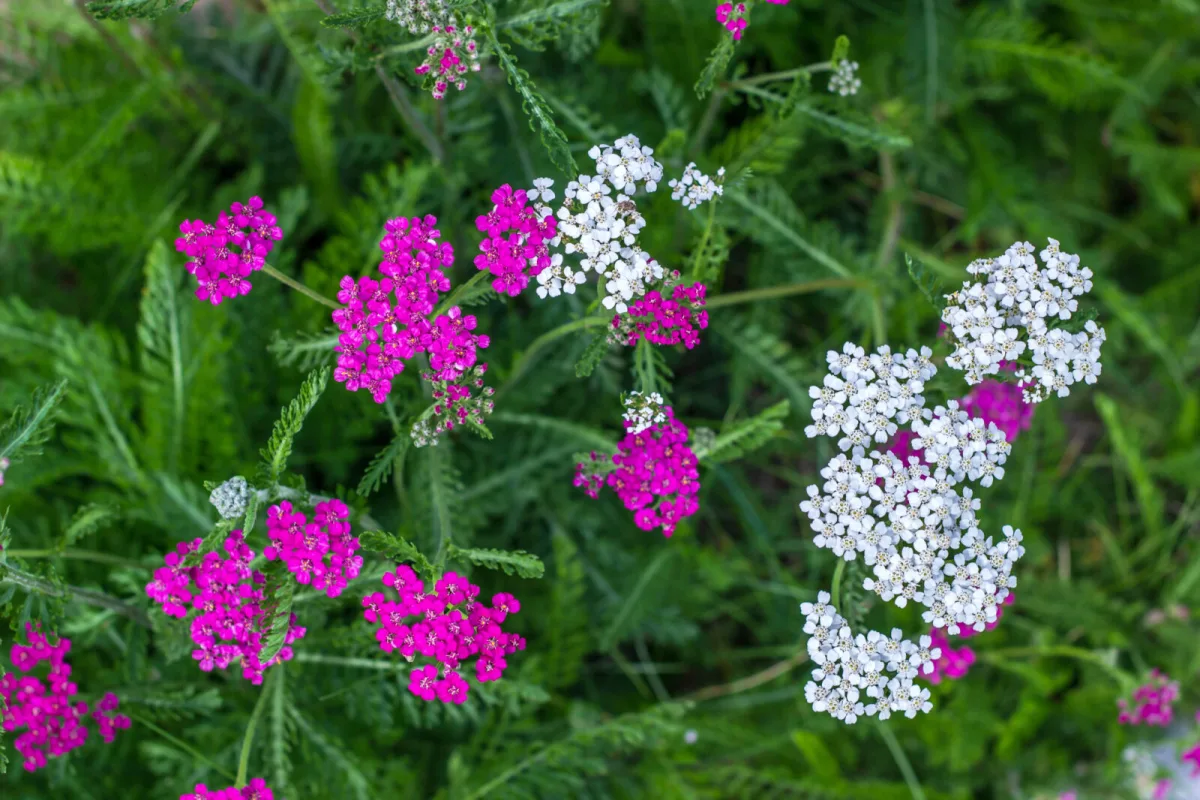
When choosing varieties, it pays to focus on those that form compact clumps and have sturdier stems so they’re less likely to flop. Popular options include cultivars with yellow flowers that brighten dry borders, as well as peach and pink shades that pair well with more romantic perennials. White forms give plantings a clean, elegant look and combine easily with almost any colour. Vivid pink to fuchsia cultivars work well as a colour accent in mixed borders, while red forms stand out in pollinator and drought-tolerant designs.
The most common questions about growing yarrow
Is yarrow a perennial that comes back every year
Yes, it’s a hardy perennial that, under suitable conditions, reliably regrows and can stay in the same spot for many years. It generally copes with colder winters as long as it isn’t sitting in waterlogged soil.
When to cut back yarrow
In spring, remove the remains of last year’s stems. After flowering in summer, you can cut the plant back to encourage a new flush of blooms and a more compact habit.
Does yarrow spread sideways
Yarrow typically forms upright clumps that gradually widen. In sunny positions it can quickly fill gaps, making it a good choice for larger plantings where you want a more continuous drift.
What to do with yarrow after it flowers
The simplest approach is to snip off the spent flower heads and then cut the plant back by about a third to a half. This often encourages late flowering and a fresher overall appearance.
What not to pair yarrow with
Because it prefers full sun, free-draining, relatively lean soil and restrained watering, it doesn’t suit plants that need consistently moist, humus-rich soil and partial shade. In practice, it’s better not to place it in the same border with moisture-loving species, because a compromise watering routine usually ends up suiting neither.
Ideas for using it in the garden and in containers
Yarrow is excellent for pollinator-friendly beds, where it works well alongside other summer perennials and insect-attracting shrubs. For a cottage-style planting, it pairs nicely with aromatic, classic flowers that create a lush, natural feel. If you want a low-maintenance border, it’s very dependable in combinations with other drought-tolerant perennials and ornamental grasses that hold their structure in heat.
It also grows well in containers on sunny patios and balconies, either on its own as a bold specimen or as a steady element in mixed plantings. It suits strips along paths and driveways, where conditions are often hot and dry, and it’s also frequently used on slopes, where it helps bind the soil and reduce erosion. In naturalistic gardens it can be part of a wildflower meadow, and in an herb section it complements other Mediterranean-style plants with similar needs for sun and modest watering.
If you want to get the most from yarrow, give it sun, free-draining soil and don’t overwater. It will reward you with long flowering and sturdy clumps even in a dry summer.
Source: Proven Winners, Rhs , Pestrazahrada.cz
Related articles
Drought tolerant fruit trees for Czech gardens that handle heat and winter frosts
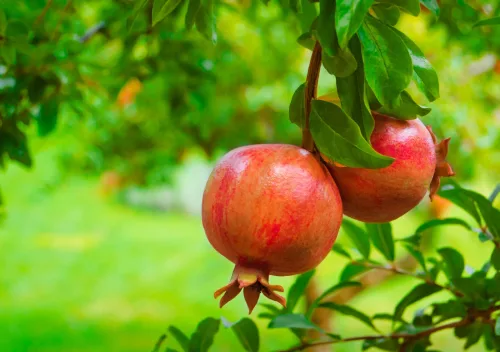
Warmer summers and longer dry spells are changing what can be grown in Czech gardens. With the right variety and a sunny, sheltered spot, olives, pomegranates and figs can cope with heat, drought and even winter cold.
Thuja hedges are on the way out gardeners are choosing a shrub that shrugs off frost and drought and never looks dull
Thuja may be a long-standing classic, but today’s hedges are increasingly built from more varied shrubs that look better through the seasons. One standout choice is ninebark, prized for its toughness, colour and easy care.
Autumn planted grapevines bud earlier the most common mistake happens before they even go in the ground
Planting grapevines in November can give them a head start in spring, as roots can still establish in warm soil. Success depends mainly on proper planting depth and reliable winter protection.
Comments (0)
Be the first to comment.