
 English
 Polski
 Deutsch
 Nederlands
 Svenska
 Norsk
 Dansk
 Français
 Italiano
 Español
 Português
 Slovenčina
 Suomi
 Gaeilge
A Proven Tip for Overwintering Geraniums Add a Substrate Ingredient Most People Throw Away
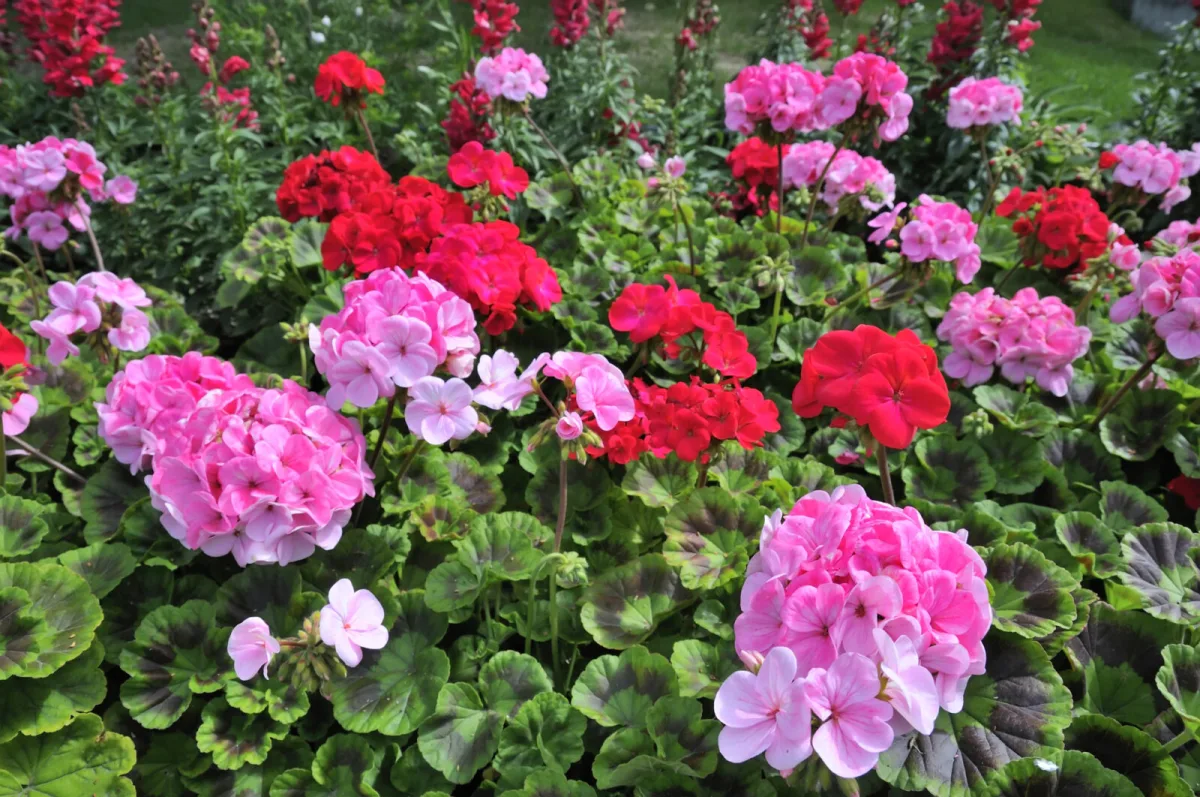
Geraniums (pelargoniums) are among the most popular balcony and garden plants because they flower for a long time and, with good care, form wonderfully full, vigorous clumps. If I grow them outdoors and want them to last into the next season, it isn’t enough to simply bring them into the warm. The key is to prepare them for winter the right way. Thanks to that, they wake up in spring strong, healthy, and ready to burst back into bloom.
First, carefully lift the plant from the soil
The foundation is to lift the geranium gently from the soil with its root system intact. It’s worth working carefully so the roots aren’t damaged unnecessarily. Once the plant is out, I pot the root ball into a container. This gives me a mother plant I can keep over winter, and at the same time I can use the pruned pieces to make new plants.
Pruning helps rejuvenate the plant
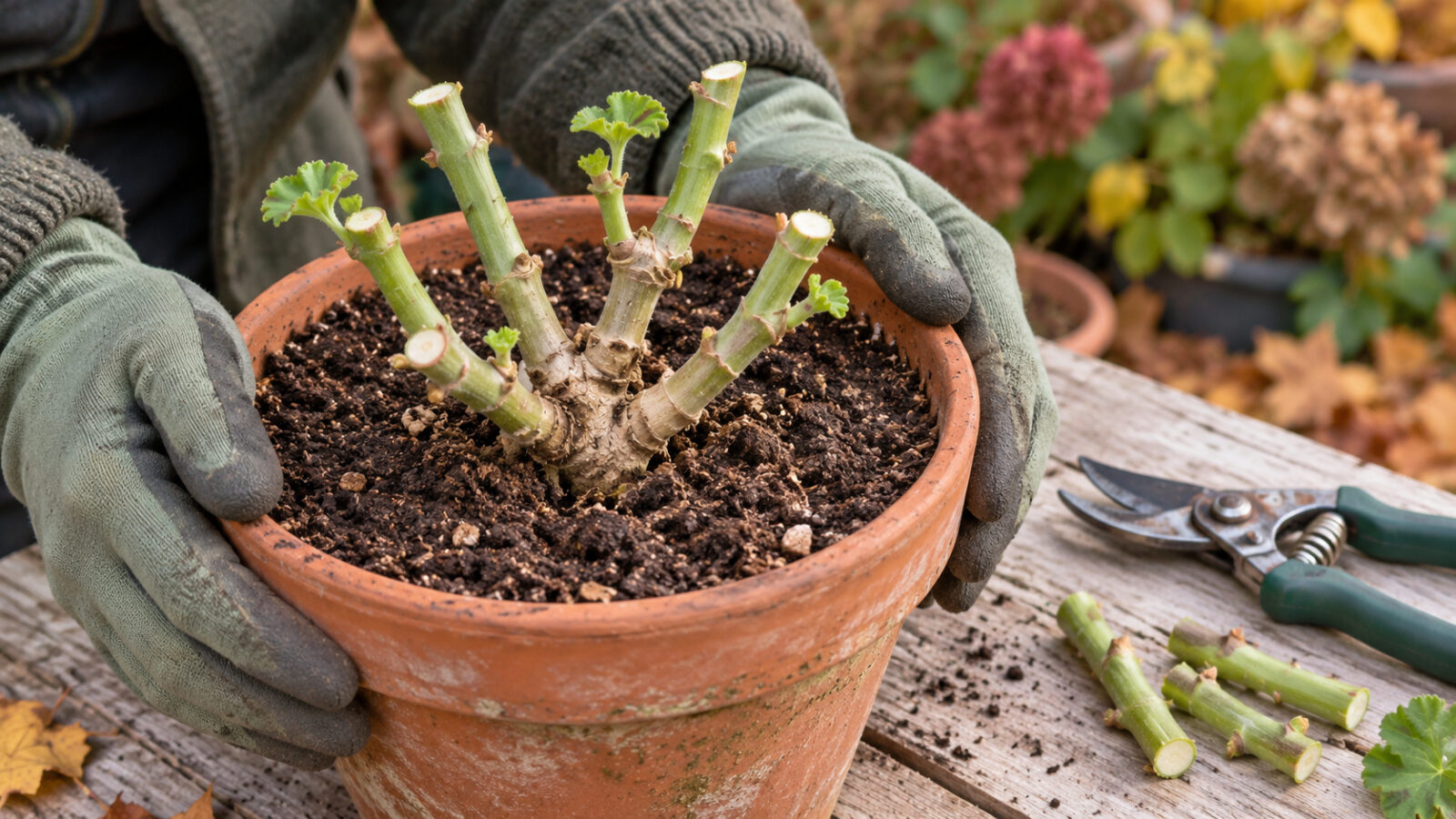
After lifting the plant, it’s time to cut it back. I strip the leaves from the stems, but I leave the stems themselves. New shoots and leaves can grow from them later. This step matters not only to save energy through winter, but also so the plant breaks into growth more compactly and densely in spring.
How to prepare the pot and the right compost mix
It helps to place a piece of polystyrene in the bottom of the pot. It improves drainage and partly insulates the roots from the cold of the container. Then I fill the pot with a mix of soil, sand, and wood ash. The sand opens up the mix and the ash can contribute some mineral nutrients. I settle the plant’s roots into the prepared hole and backfill with this mixture.
If the soil you’re using is already moist, there’s no need to water immediately after potting. It’s better to wait a few days until the compost dries slightly, and only then add moisture. Overwatering straight after transplanting can do more harm than good.
You can easily propagate more geraniums from cuttings
From the pruned pieces I choose the strongest, firmest cuttings. I remove the leaves and trim the tip. If a cutting is too long, I can safely shorten it by about half. The bottom cut is best made on a slant with secateurs, because it creates a good surface for rooting.
Planting cuttings during autumn and winter
I prepare a separate pot for the cuttings as well. Polystyrene goes in the bottom again, and the same mix of soil, sand, and ash on top. With a knife or another suitable tool I make small holes and insert the cuttings to a depth of roughly 4 to 5 centimetres. I firm the compost lightly around them so they sit securely and hold well.
I place the finished pot on a windowsill or another bright spot indoors. I don’t rush watering. I top up with water as needed after one to two days, or only once the compost begins to dry. Waterlogging is a more common issue with overwintering cuttings than a short spell on the dry side.
Spacing affects the spring result
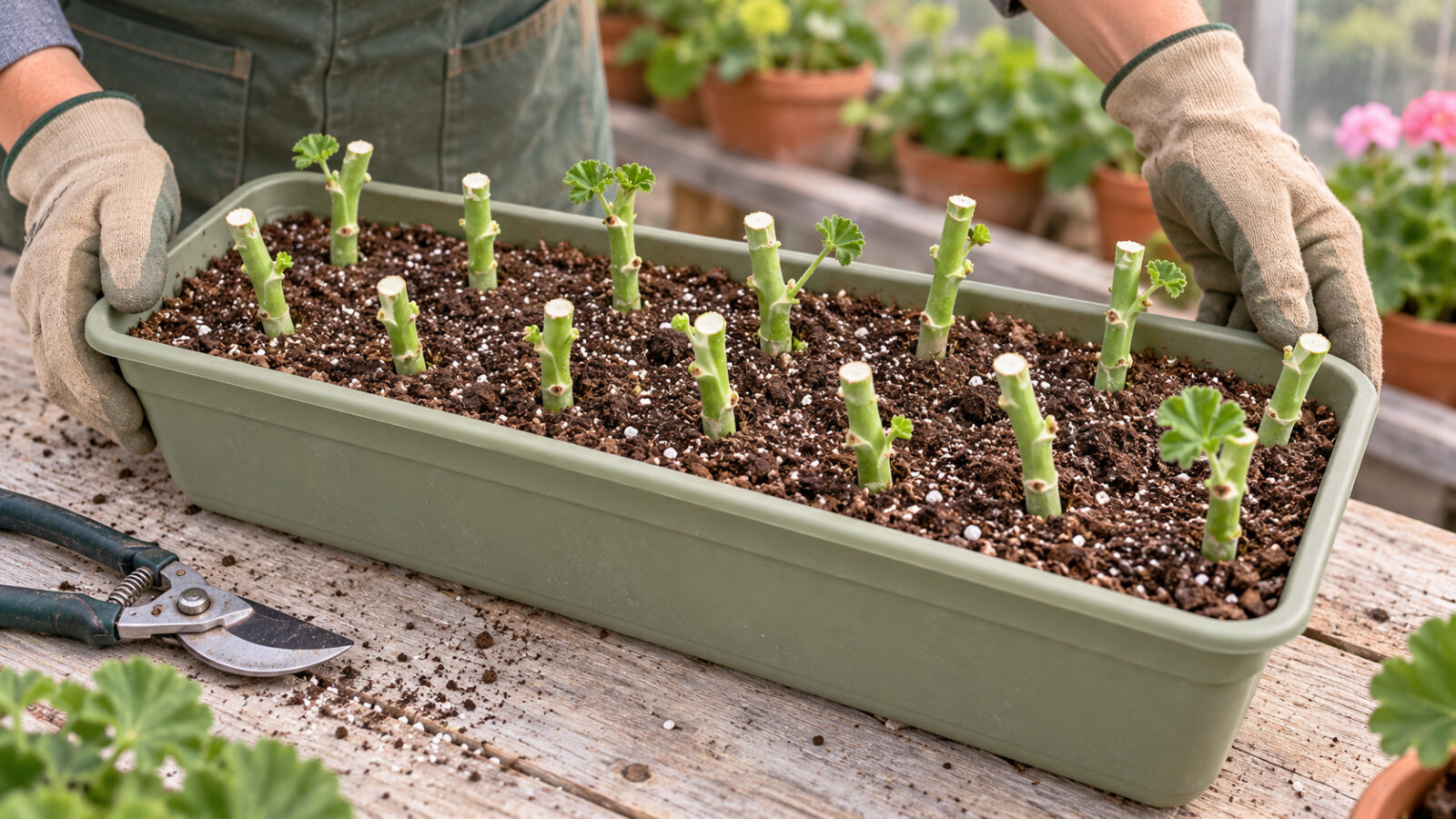
If I have enough space at home, it’s worth planting cuttings with wider spacing. That way, plants have more room and by spring can develop not only roots but also a stronger top growth. The result is usually a more fully developed geranium in better condition for planting back outside.
With tighter planting the cuttings will root too, but they often remain as smaller rooted pieces without much development. For some people that’s enough if they simply want to keep a variety, but anyone who wants truly handsome, robust plants in spring should give each cutting more space.
Feeding and other care during overwintering
During winter, both geraniums and cuttings can be fed. It works well to alternate natural feeds and readily available commercial fertilisers so the plants receive nutrients steadily and in balance. There’s no need to reach for growth stimulants. Geraniums adapt very well and will root reliably without them.
A carefully overwintered geranium rewards you in spring with strong growth, healthy leaves, and abundant flowering—without the need to buy new plants.
That’s the biggest advantage of this method. It’s nothing complicated—just a few well-timed steps. Anyone who keeps geraniums over winter this way can enjoy not only money saved in spring, but above all plants that are already acclimatised and ready to shine again.
Source: Gardening Know How, To je nápad, Pestrá zahrada, Pestrazahrada.cz

A lover of nature, gardens, and everything that moves, blooms, or grows. He literally grows everything, from herbs to rare species, and he enjoys caring for animals just as much. In his work, he connects modern technology with tried-and-tested grandmotherly methods and is happy when both paths lead to the same goal.
Related articles
Dahlias need the right care before winter or one mistake can ruin the tubers for good
Dahlias won’t tolerate hard frost or prolonged winter wet, so your overwintering method should match your local conditions. Learn when you can leave tubers in the ground and when lifting and proper storage is essential.
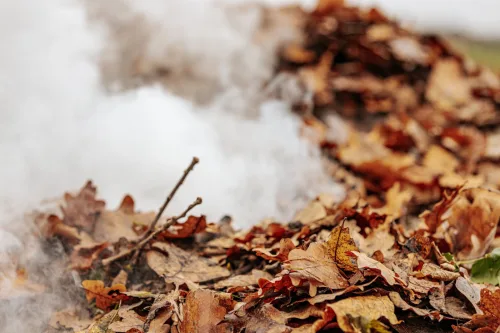
Burning Leaves in the Garden Is No Longer Allowed in Czechia
Since 1 March 2025, burning garden waste is banned across the Czech Republic, and even notifying the fire brigade does not make it legal. Here’s what is still allowed, what fines you risk, and what to do if smoke from a neighbour is bothering you.

Mice Look for a Way Indoors in Autumn, Stop Them with a Cheap Trick Without Chemicals or Traps
As temperatures drop, mice start searching for warm, dry shelter—and your home is an easy target. A simple barrier made from ordinary aluminium foil can make key entry routes uncomfortable enough to discourage them.
Comments (0)
Be the first to comment.